1 Player
Designer: Rômulo Machado
Artist: Rômulo Machado
Publisher: Reaver Workshop
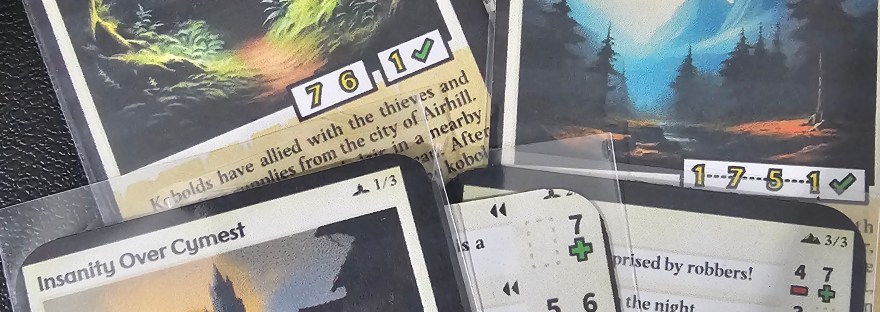
Trimod is an adventure game that takes place in exactly 3 cards. That’s it! But are 3 cards enough will it leave you wanting more?
How to Play
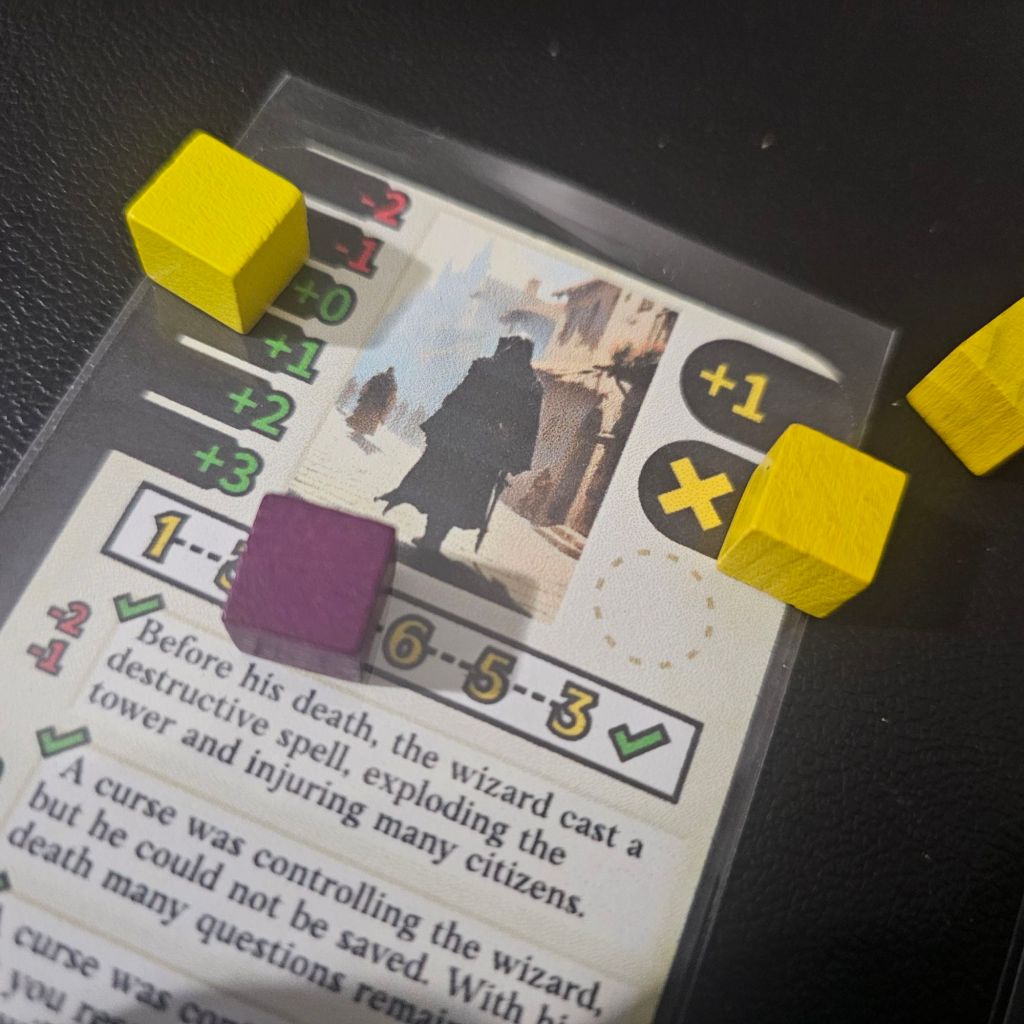
To setup. the game, you need to get the 3 cards for the campaign. Put one cube on each starting resource and on the 0 of the modifier, you only attribute.
On each turn, you chose where to move on the map. If it’s a numbered location you resolve its encounter, if it’s a symbol you roll on the event table to see which one is triggered, and then resolve it.
Most times you will resolve a location or event with a roll. There will be a result if you roll equal or under a number and/or one if you roll equal or higher. Then you roll a d6 and apply your current modifier.
You win a game of Trimod if you are able to resolve all locations or the main quest, and you lose if your modifier falls below – 2.
Rules and Components
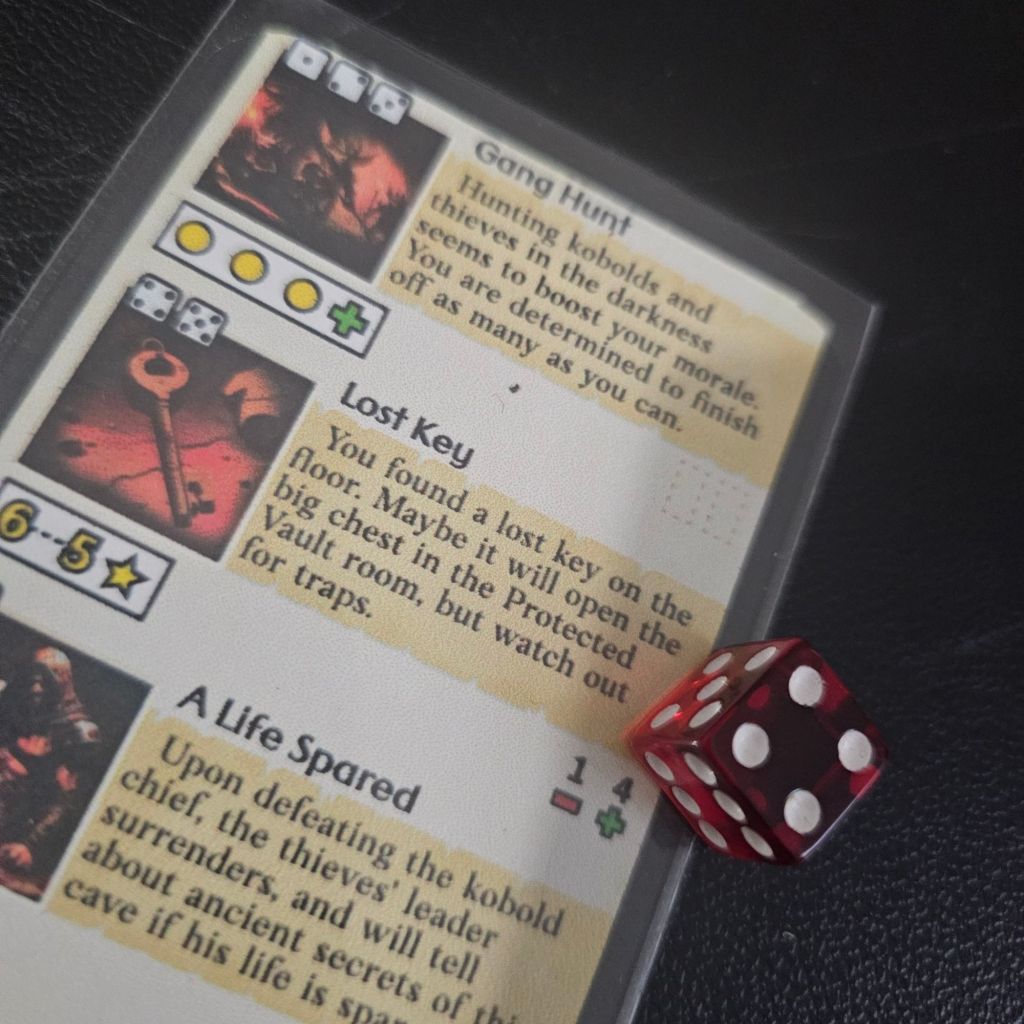
This is an important section for this game because of its very design. Trimod is, gameplay wise, Pentamod. There are 5 card faces you need to actively use, the main quest, map, encounter, events and side quests. This means that you have to keep flipping cards over the whole game. It’s not ideal, but it’s functional.
However, it also mean that you can’t mark things like available side quest, events you already faced and your location. It all has to be by memory, which is an element I don’t really like. Trimod is a 10 minute game, though, so that is less of an issue.
Rules are well written and clear, and you can pretty confidently play a game after the first read. However, a huge issue is that the rules are formated to be printed and assembled as a booklet. If you do that, no problems. But I’d you, like me, read on the pdf, the pages are all over the place and you have to keep jumping between the sections.
Score: 6/10
Gameplay
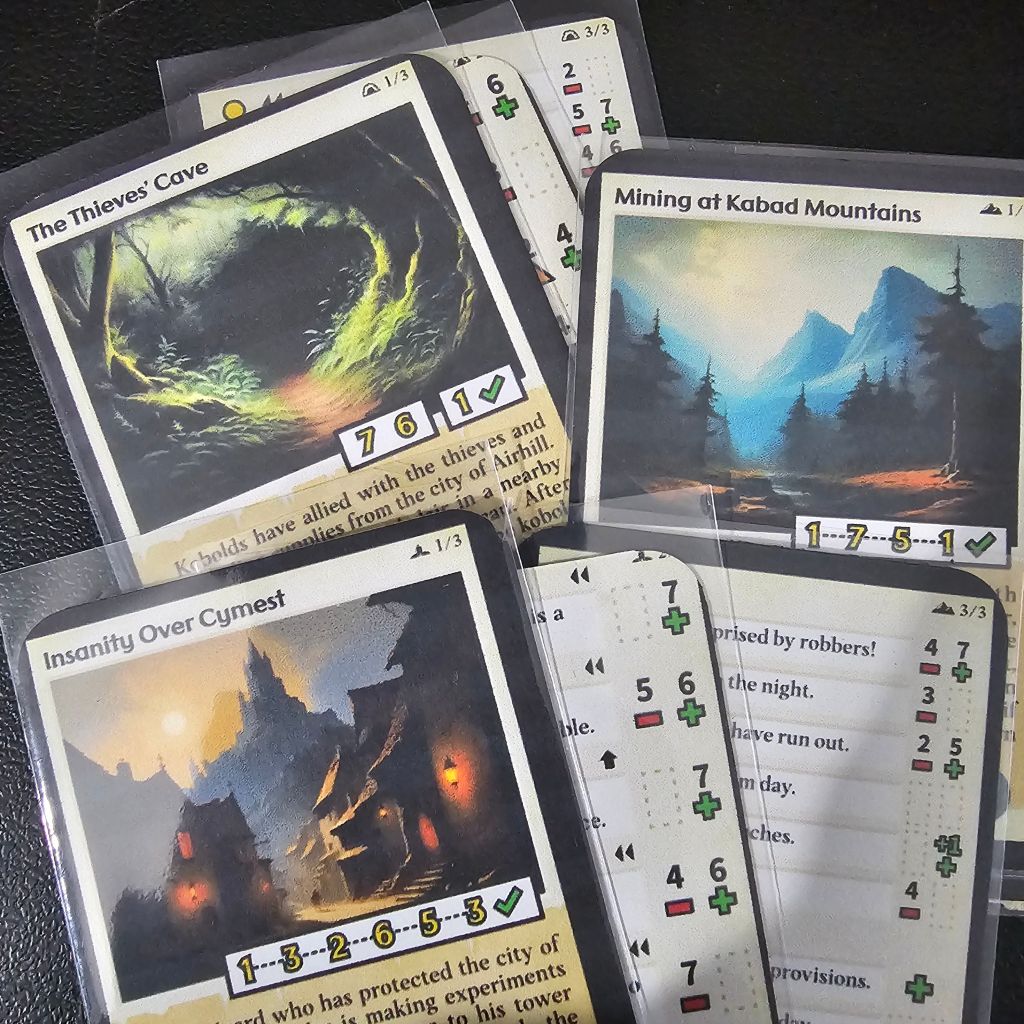
Trimod is a dice rolling fest. Each turn is a dice roll of two until you either win or lose. But it’s also a very intuitive and fluid game, that does condense an adventure in its time frame.
There is a surprising amount of control over your outcome. You’re given resources to. mitigate your luck, and the different paths allow you to reduce your bad outcomes or try to push for better results.
However, it is snowball-y. Bad results lead to more bad results, good results lead to more good results. If you don’t start well it can feel. a bit jarring to keep going knowing that you’ll have a much harder time. But, again, it’s a quick enough game that you can just go again easily.
Score: 7/10
Theme and Art
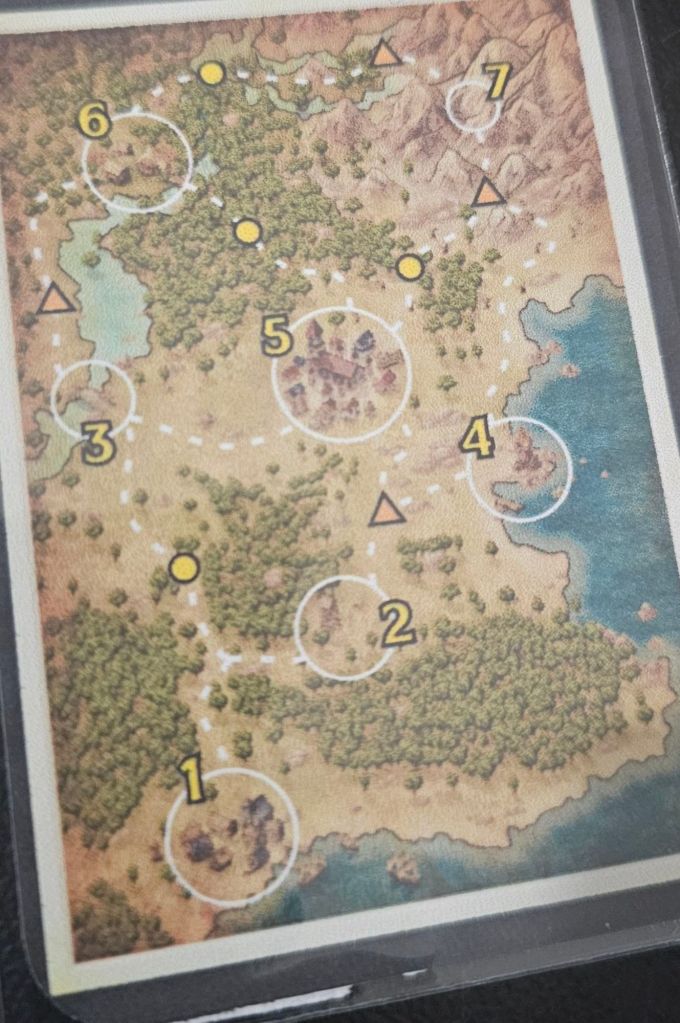
This game has 3 cards, so it would be easy to have it all dedicated to gameplay. It’s not the case. Everything has a thematic element to it. Every location has a short description, every event has a name and a thematic hook, and each adventure has a full page just for its story. It is a lot of dedication to make the player feel in a film fledged world.
The art style is clearly inspired by classic fantasy books and TTRPGs, and it shines with personality of each distinctive adventure.
Score: 8/10
Conclusion
Trimod is game built on a restriction, and I’m always fascinated by this style of design. I feel like most of its flaws are inherent to the 3 card limit, but it does rise above that to deliver an enjoyable experience.
But one thing is Trimod the game as it exists now. But, for me, Trimod is a system all on its on, and one I would love to see expanded upon. It can fit any theme, there are a lot of clever new mechanisms that could be introduced, and even more variations of Quests and events for the existing adventures. I hope Reaver Workshop keeps exploring it.
Rules and Components : 6/10
Gameplay: 7/10
Theme and Art: 8/10
Score: 7/10

 Let's Game More