1-2 Players
Designer: Dennis Furia
Artist: Lauren Brown
Publisher: Furia Games
Deck of Wonders gets the whole idea of dueling TCGs and boils it down to one single deck, shared by the player and the rival. But is this deck really or wonders or does it leave you wondering?
How to Play
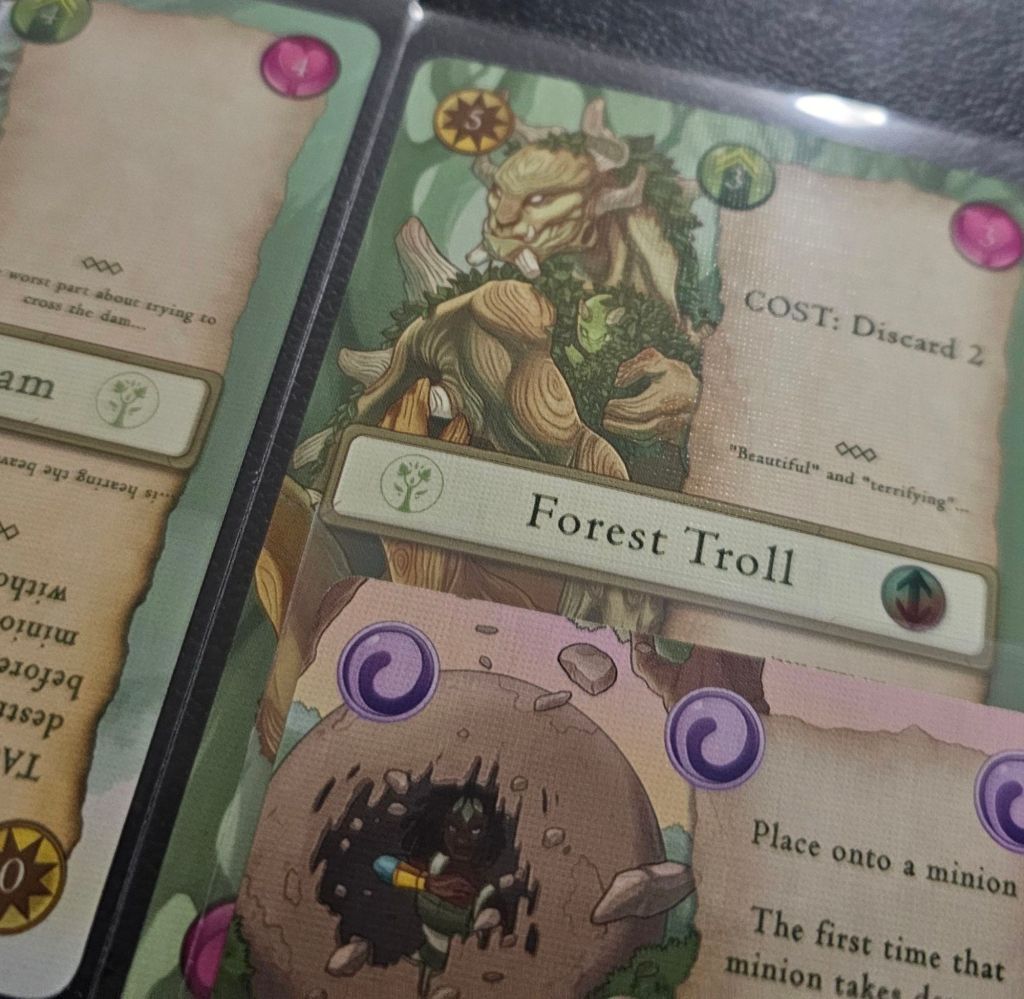
To setup the game, you first to setup the deck. You get all the cards for the villain you’re facing, then a number of base cards. The base cards have a “suggested color” so the base cards with the green icon go well with the green villain, but they can be mixed in any way.
You then shuffle and deal 4 cards to the player and the game begins. At the player’s turn, they can play any number of cards they want and are able to. Cards are paid by discarding other cards. Creatures you play are ordered by their priority, and cards with the same priority you decide. Then you can use your ready creatures to attack either the villain’s cards or the villain itself freely.
Then it’s the villain’s turn, where you simply draw and resolve the top card (except for the first turn, when 3 are drawn). Then their creatures try to attack your highest priority creature they can kill. Any left over attack you directly.
Game continues until either the player or the villain are reduced to 0 life. The game comes with a campaign mode where you unlock more cards and modification to cards by achieving certain conditions during the game.
Rules and Components
I found the rules clear and well written, but they do lack in examples and illustrations that would make the understanding easier. However, I didn’t find myself lacking for the most part, but there are some doubts regarding specific cards and interactions that deserved an appendix or FAQ.
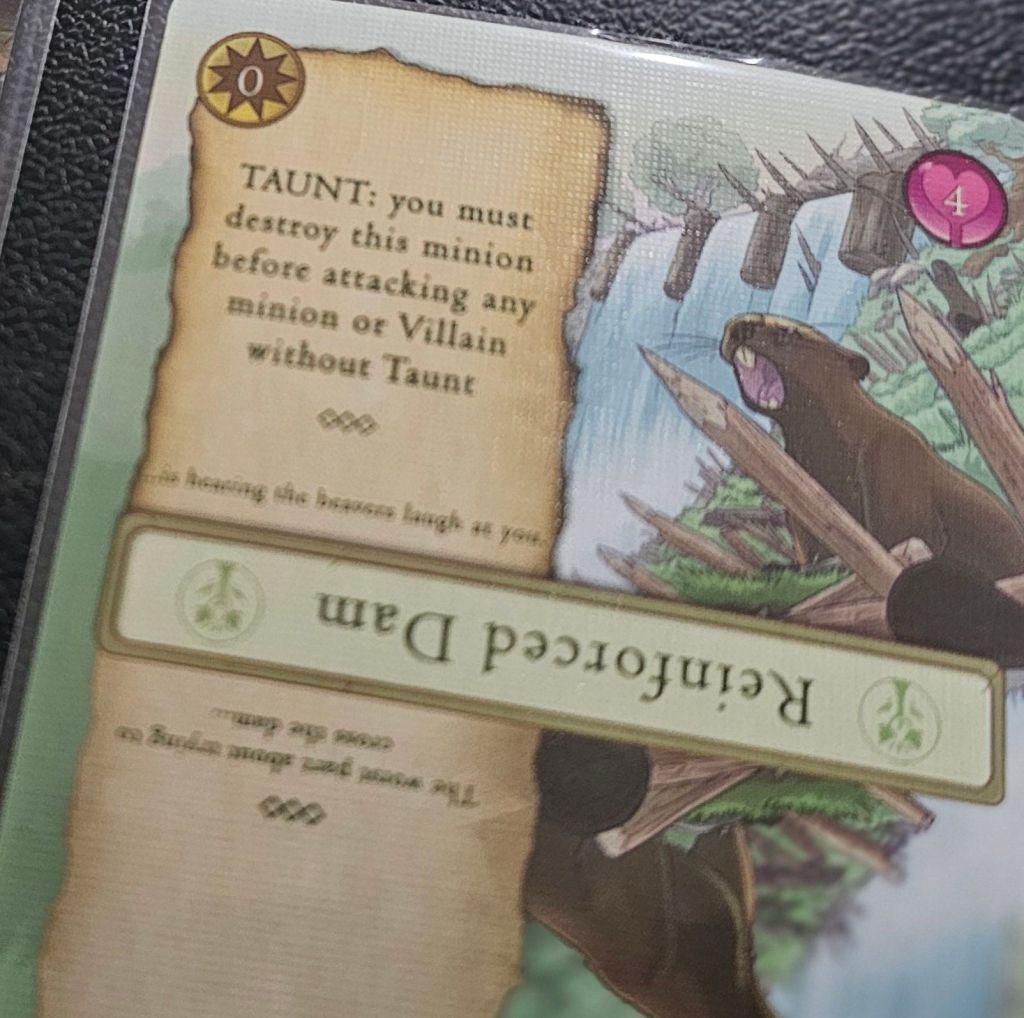
The game is all based on the cards, and thankfully they are very readable and easy to understand, even being double sided. It helps that the texts are never too wordy.
That being said, the font used is too small. That is noticeable on the minions, but it’s even more so on the villain cards. There is a lot of text regarding setup and gameplay elements, and the font is super tiny. In my opinion it would have been better to have more cards or use it double sided.
Finally, a minor quibble, but I think cards that don’t go on the main deck should not have the same cardback as cards in the main deck.
Score: 7.5/10
Gameplay
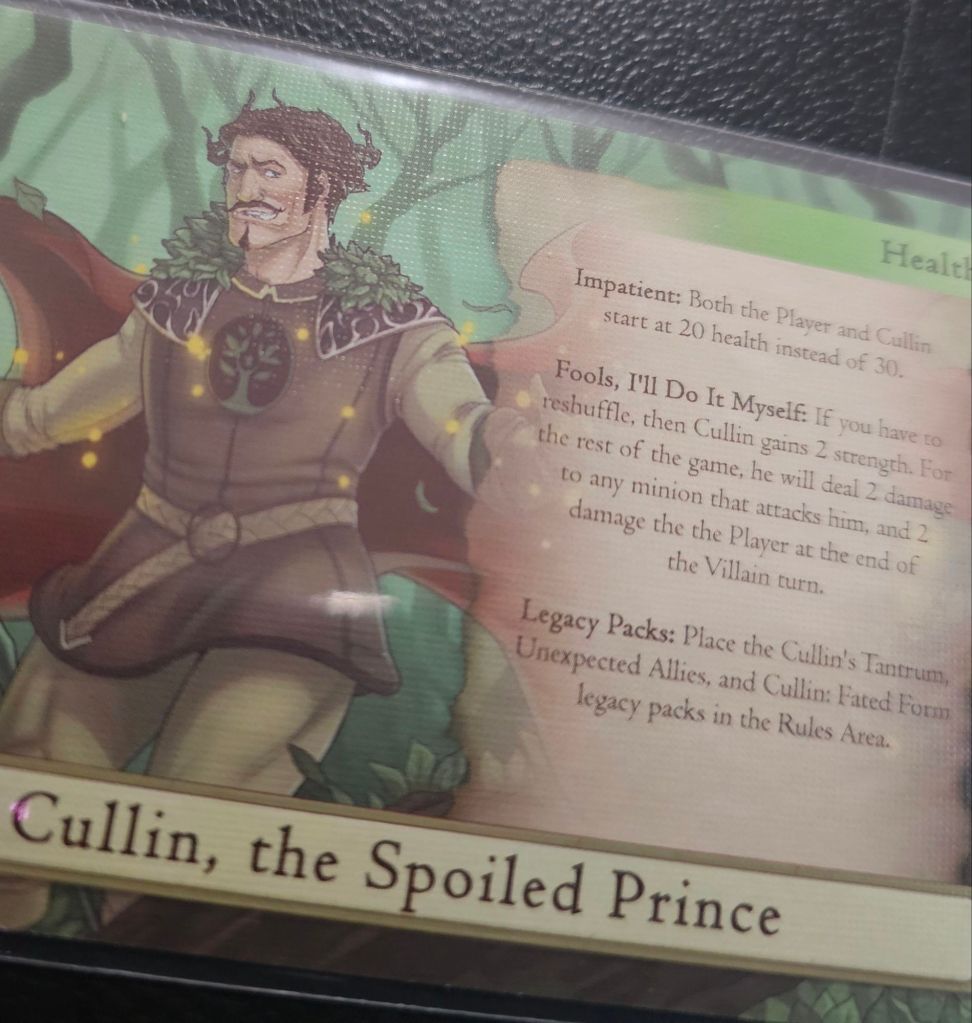
The game inspiration is clear, being Magic the Gathering and other dueling TCGs. But it threads a thin line between having all those elements available for the player while simplifying the villain side. And it does so very well. Villain’s cards attack in a predicate manner and are organized by the player, while the spells have very specific targets.
The players decision space is all about resource management and figuring out how to outsmart the villain. The cards on the villain side are both more dangerous and attack immediately, while the player’s minions have to wait a turn. But the player controls its own minions in terms of priority and how the enemies attack.
The decision space is quite interesting, with a lot for the player to decide on the risks they are willing to take. But the game has a steep learning curve, not for the rules, but for its tactics and strategies.
Part of that is because the game can be very swingy. The cards are well balanced for the player in terms of utility and cost, but there are some that are just better. If the villain happen to draw those or draw certain spells at the right time, the game can get to an unwinnable situation, sometimes even from the start.
Score: 7.5/10
Theme and Art

There is a lot of theme in this game. It takes its time in setting up the world and each villain. Not only that, but as the campaign progresses, each new pack brings in cards that not only add mechanically, but make sense thematically and evolve the characters and scenario presented.
Adding to that, the art on the game is really high quality. And, despite the game being packed with information they need to convey, the art is on full display. Not only that, the art is color coded. Cards from the green base set and green villain have lots of greens, so at a glance you can identify and place them.
All cards are double sided, and each side shows almost the same art, but one for the player and one for the villain side. The change between each side is subtle. It’s not as simple as good side and bad side. It’s things like a wolf just running or running with its teeth bare.
Score: 9/10
Conclusion
Deck of Wonders is a small game with big ambitions. Trying to boil down a full game to a single deck is a tall order, but it does so smoothly and successfully. It has, by its own design, a lot of luck involved. It is unmistakably a big factor, sometimes too big. But, then again, it’s a quick game, so it’s forgivable in my view.
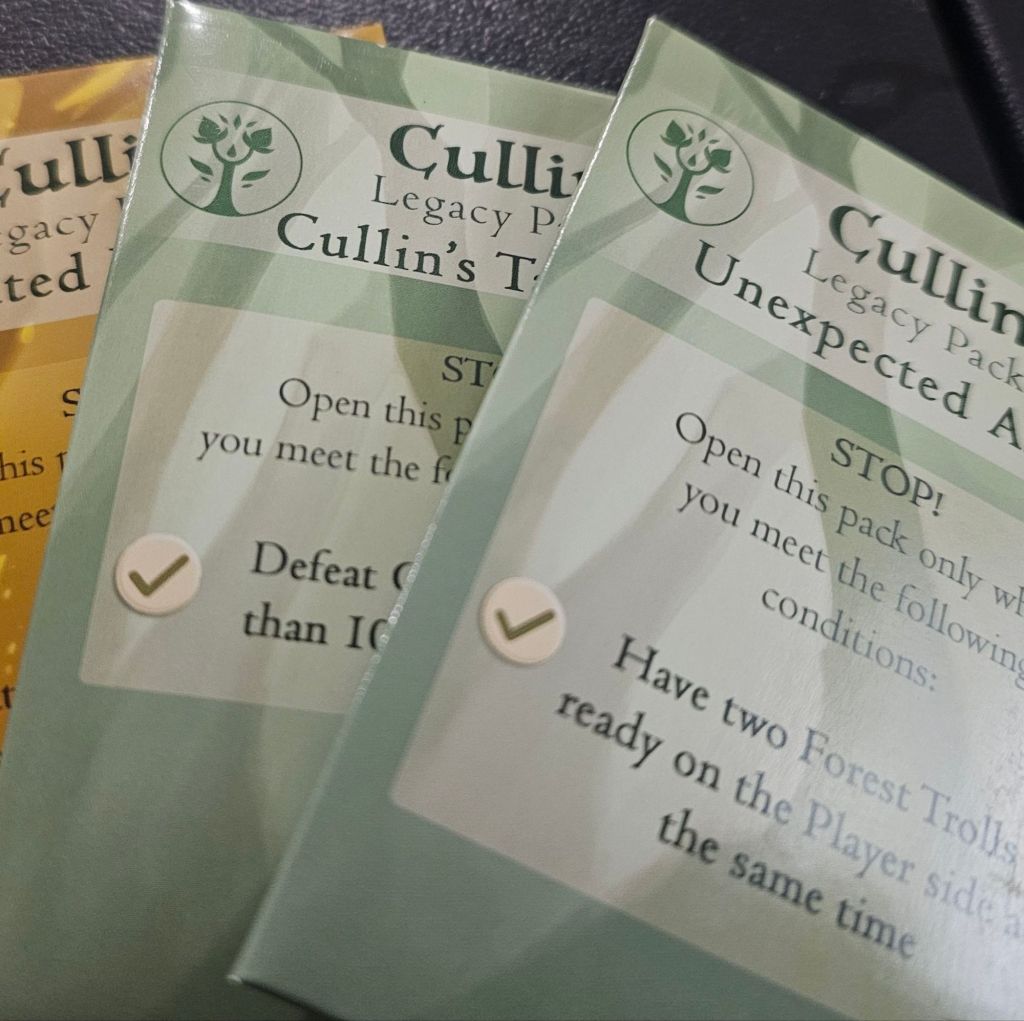
In addition to that, the ambition goes beyond just the initial set. It has deck building aspects, cards to unlock, a legacy mechanism to it. This is a small box with a big heart.
Rules and Components: 7.5/10
Gameplay: 7.5/10
Theme and Art: 9/10
Score: 8 /10

 Let's Game More