
Top 5

Top 5: In-Hand Games

Ever since I discovered these, I’ve been in love with games that you can play on the go, completely (or almost) without any surface at all. So, if any of you want to jump into this crazy and highly creative world, here are my favorites.

But before, a few caveats regarding this list:

1 – I’m only considering games that are made to be played in hand. There are some amazing games that have in-hand game variants, but I’m not considering those.

2 – No works in progress games. There are some absolutely amazing games in BGG design competitions, but I’m only considering those that have an official page.

3 – To add variety, only one game per designer or publisher. If not, this list would be pretty lopsided.

Without further ado, here we go!

5 – Palm Island
Just missing the Heart of Palms

By Jon Mietling / Portal Dragon Games

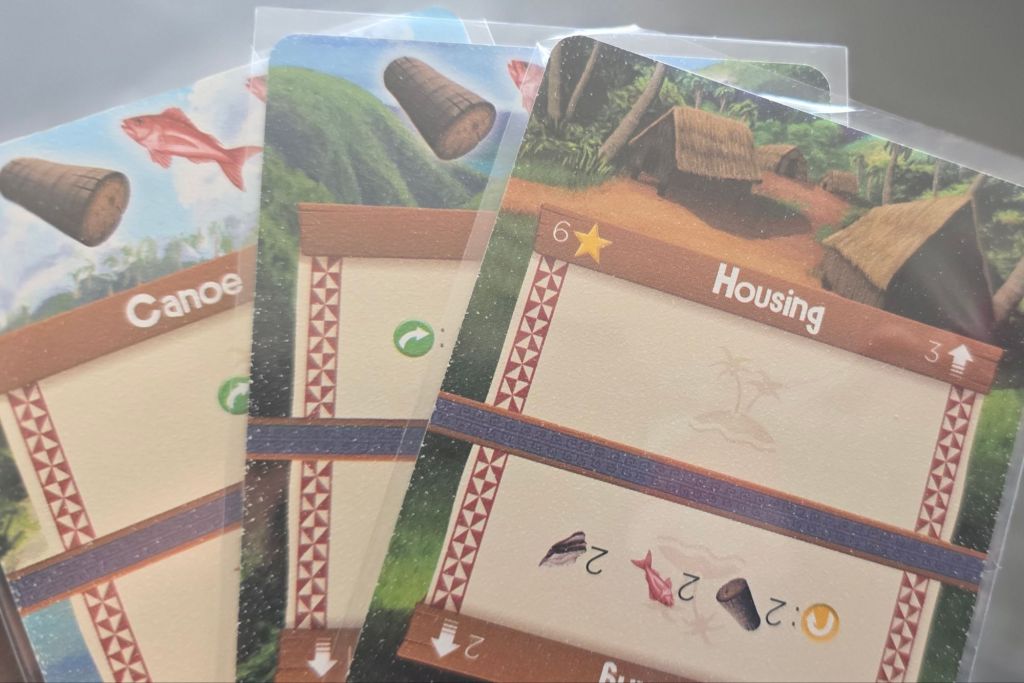
My first forage into this world, and still holds up incredibly well. On Palm Island, you have 8 runs through your deck to get resources and use those resources to upgrade cards for points or to produce even more resources.

Chowing between this and its sibling, Palm Laboratory was tough. I love that Palm Lab has different scenarios and clear win/lose conditions, but the unlock card system in Palm Island was just enough to take the cake.

This is a compact, highly thinky euro experience where you need to have long term planing and create an efficient machine, all in a quick play time that never fails to feel challenging and satisfactory.

4 – Handy Brawl
Hand to Hand Combat

By Igor Zuber / Self Published

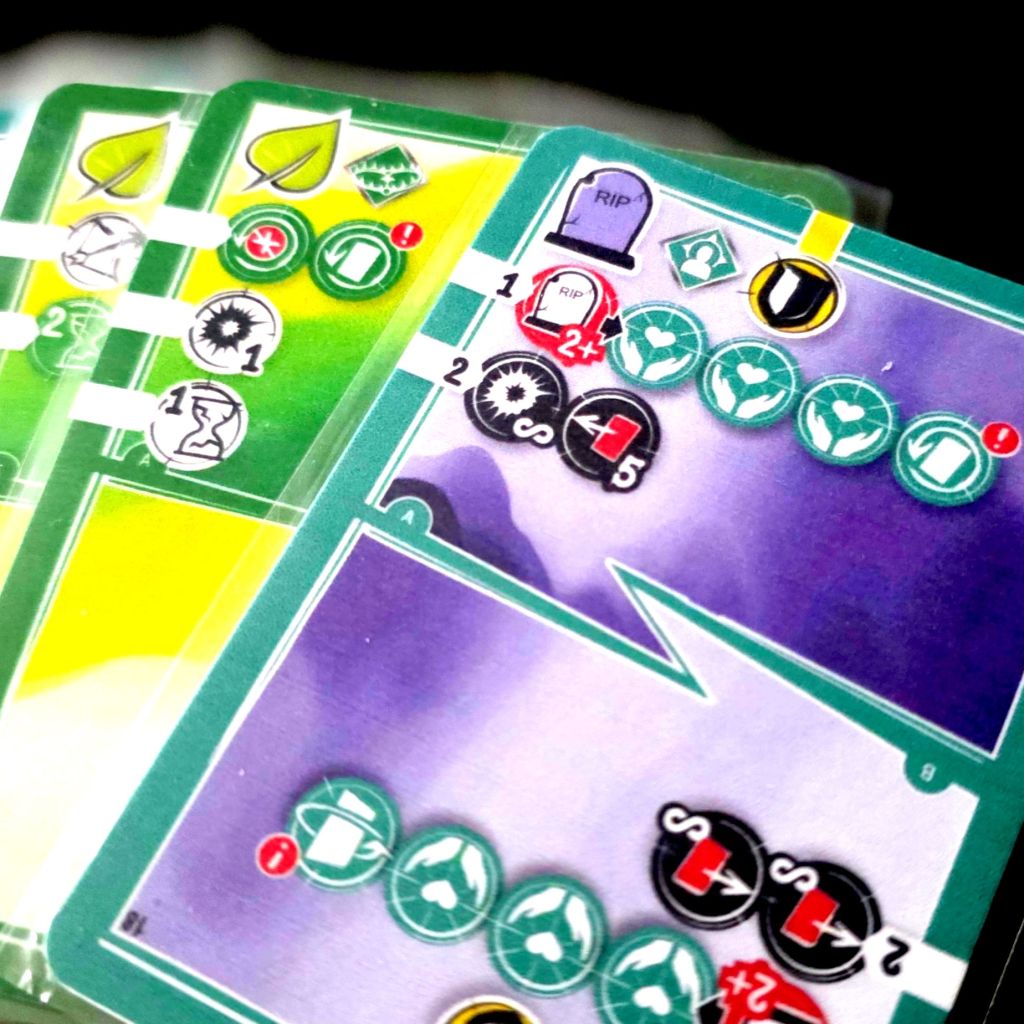
If any game symbolizes “having and idea and running with it” is this one. The basis is that you get 5 hero cards, 4 enemy cards, shuffle them and have a fight. Every turn you activate the top card. You make your choices, the enemy just activates the first thing that will actually do something. First to reduce the other side to all damaged cards wins.

If you get the first pair, Warrior and Ogre, it’s already a highly fun and tense back and forward. But Zuber created so many characters on both sides that expand and innovate, all based on this simple system. Honestly, the only two things that hold this game back is the lack of art and a need for a bit clearer symbology.

Handy Brawl is not just a game, it’s a whole system with so many possibilities and variety. Every combination so far feels well thought, exciting and unique. Get in some art and we have a bona fide classic in our hands.

3 – Loot the Loop
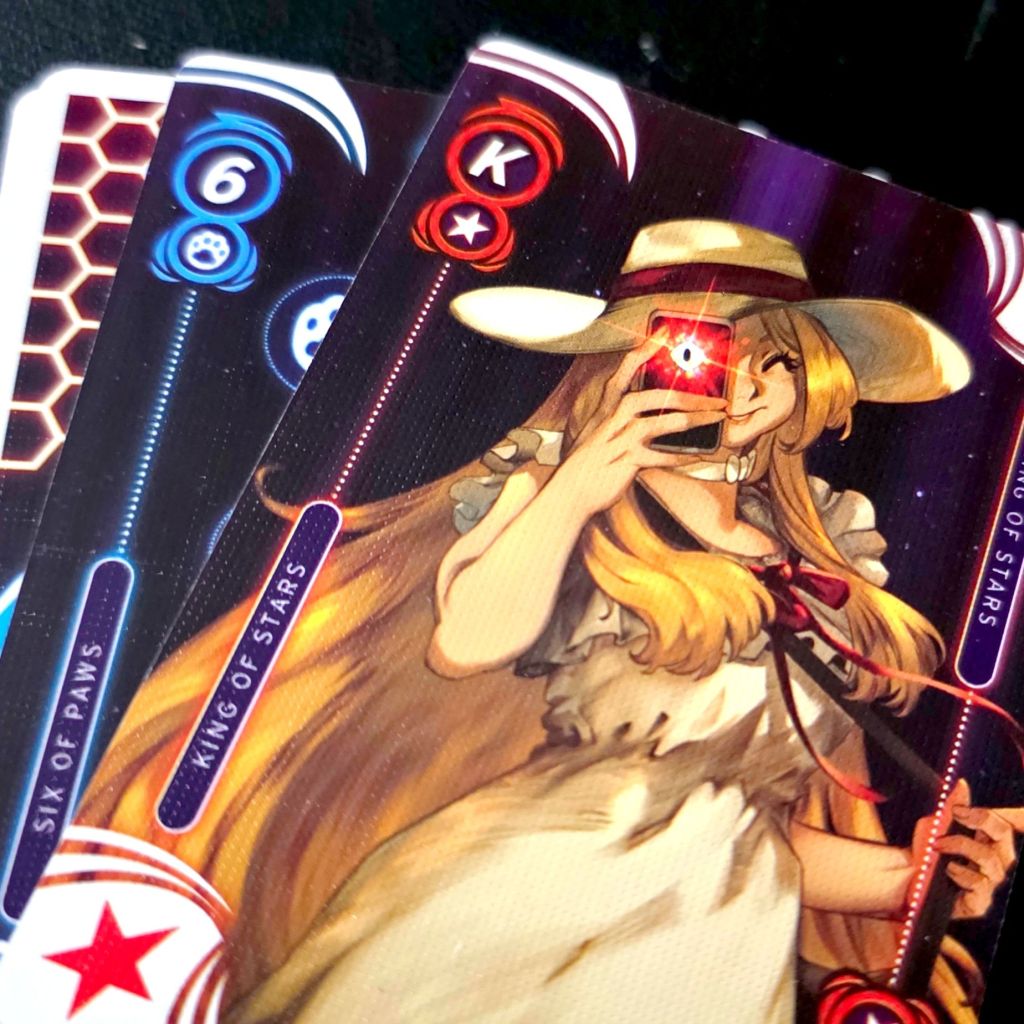
Smile! You lose!

By Wil Su / Self Published

If you want to start in this universe, start here. No investment needed, as Loot the Loop is simply played with a regular 52 card deck (and a joker).

The idea is simple, if the top 2 cards are face down, turn them face up, then chowing one number value of the two you move that many cards down, the famous travel mechanism, and then check. Find aces or numbers, you collect them, find the joker and you may exit, find any face card and you lose. Can’t travel? Lose as well. But if the top card is a number, you can save it for later and that one mechanism adds so much strategy and forward thinking.

Loot the Loop is simply addictive. It’s lightning fast, a bit random yes, but the flow is so fun that you just want to play again. Such an elegant and well thought out design, so much that inspired many other games in the genre.

2 – Galdor’s Grip
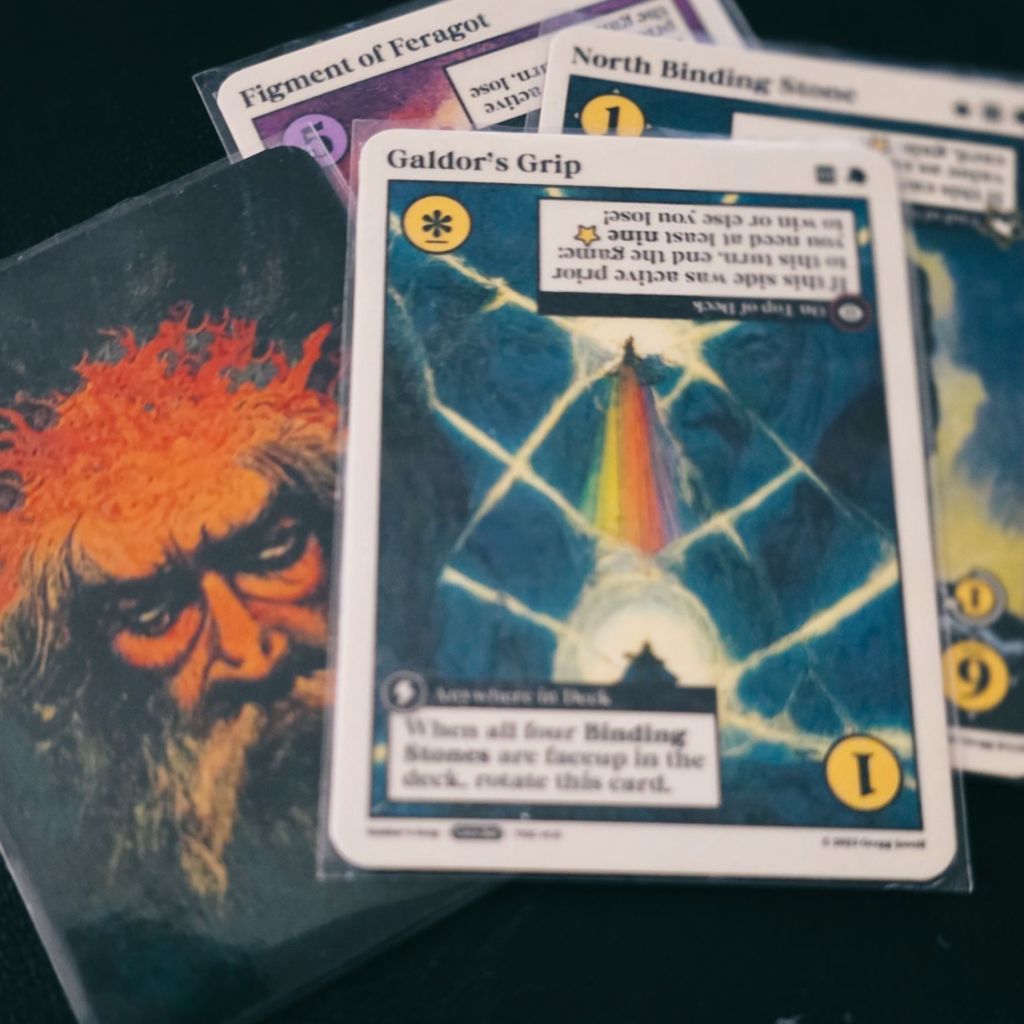
Get a Grip! Can be anyone’s…

By Gregg Jewell / Self Published

Galdor’s Grip takes the travel mechanism described above and elevates it to its max. On Galdor’s Grip, instead of collecting cards you need to find four binding stones and then the game’s namesake Galdor’s Grip while also manipulating other cards to reach 9 points. But some cards that give you points can also cause you to lose.

In its base, its an insanely addictive game that rewards repeated plays and knowing the deck. But there are 3 expansions so far. You take 12 base cards that always need to be there and ANY combination of 6 cards, and you have now an unique scenario where it’s up you to figure out how to manipulate them for a win. That is so much variety and replay value.

Galdor’s Grip is brilliant. It has everything you want an in-hand game. It’s lightning fast, portable and super easy to pick up or put away. But, allied with that, it’s a thinky puzzle where every game plays uniquely and require its own solution.

1 – Dragons of Etchinstone
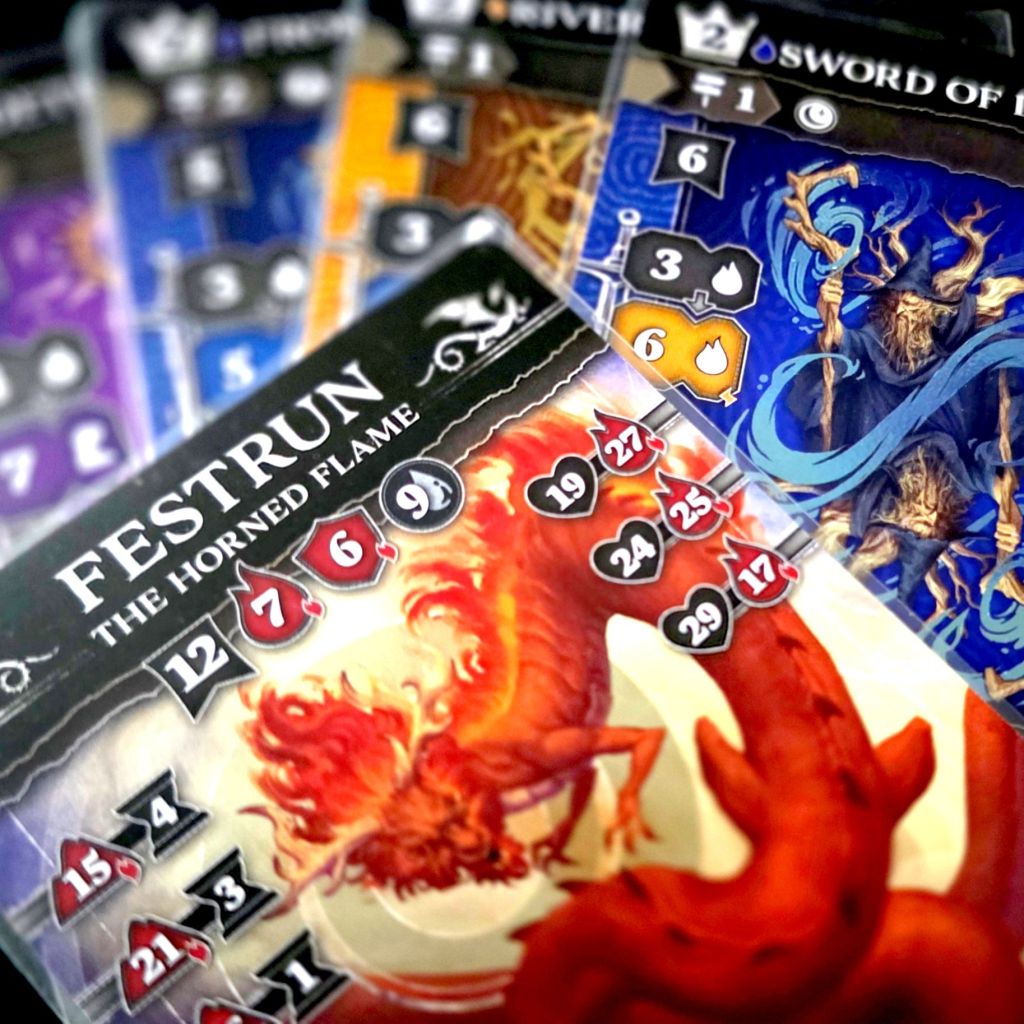
Run, Fest, Run!

By Joe Klipfel / Chip Theory Games

Coming from the master of compact and in-hand games Joe Klipfel, comes a game that combines all characteristics of the other games in this list. It’s thinky, compact, quick, easy to put away and pick back up and has great replay value.

The most interesting though, is that lots of in-hand games either use the travel mechanism or the store resources sideways one. Dragons goes a different route. Each the, you draw a hand of four, and try to overcome your challenge by having the right combination of element, spell and bonus, with one card being kept. It’s a simple system to understand, but there are so many variations and special abilities that makes this deep.

Dragons of Etchinstone is almost impossible put down. The design is inspiringly refined and offers so many great decisions and moments, while being perfectly portable and comfortable. And the base alone would be enough for the top spot, add in the unique characters and you have a classic for ages.

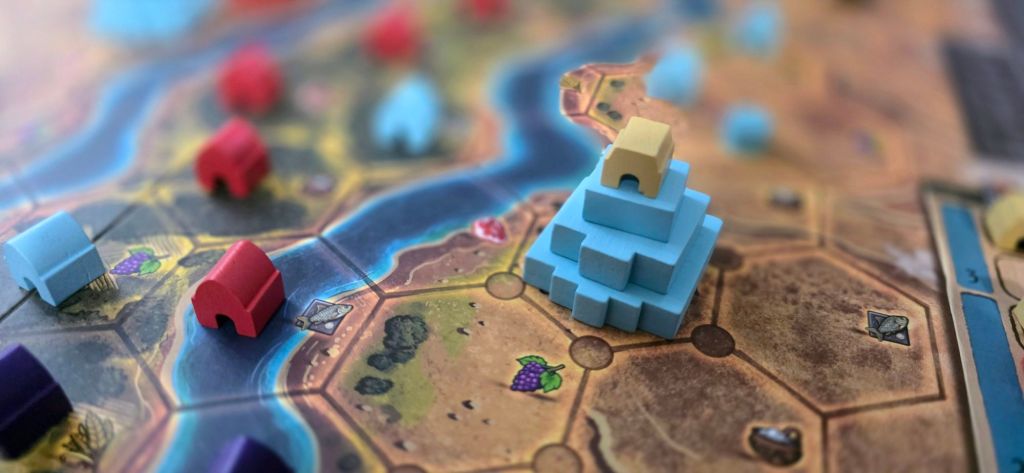
Top 5

Top 5: Ancient Anthology

Garphil’s Ancient Anthology is a very interesting group of games. They started as individual outings apart from their other sagas, but because they shared an overall theme and starting to get numerous, they became their own thing.

With two more coming soon and many more I hope in the future, here is my top 5 games in the line. And, just to be clear, there 7 games and all 7 are really good. These are the ones I play the most.

5 – Assyria

Why so Assyrious?

Though not originally from the series, or even from Garphil, Assyria found a new home and it fits perfectly.

It’s a game with a lot of elements: action points, auction, resource management and even light engine building. But it all comes together in a very fluid and intuitive flow.

Assyria feels like a gateway to heavier euros, where it presents you with a ton of interesting choices, but never weighs you down with rules overload.

4 – Raiders of Scythia

And after that, Raiders of Oakland?

The main reason this game is only on fourth is that its older sibling exists to share the space. The core elements that made Raiders of the North Sea amazing are kept here, but lots of improvements and ideas inspired by the expansions make this just as impressive.

Raiders of Scythia shows that the core mechanisms in North Sea are as good as ever, but it has enough identity to shine on its own feet.

3 – Skara Brae

Drafting, old school!

Do you like resource management? Well, there are few games as resource-y and management-y than Skara Brae. Aided by drafting and worker placement, but the heart is managing how you earn, spend, trade and store the whopping 16 types of resources. But, even though it’s a huge number, it never feels excessive.

In its surface, Skara Brae is a simple game in terms of rules. But beneath there is a tense and rich game of resources where efficiency, planing and perfect timing are crucial for winning.

2 – The Anarchy

Why do we build the wall, my children, my children?

A game that was up until very recently one of my favorite verb and writes, Hadrian’s Wall, is not even on this list. Why? Well, The Anarchy exists.

If you like both verb and writes and amazingly complex systems, both games are mandatory for your collection. The essence is receive workers, than spend them to advance different tracks, earn more works, rinse and repeat. All in hopes to raise defenses and prepare for attacks.

The Anarchy is everything that made Hadrian’s Wall amazing, but it streamlines what was excessive and expands on its more intesting parts. It’s equal parts intense and rewarding.

1 – Ezra and Nehemiah

Where do we even begin?

This is one of the heaviest games Garphil ever put out, and at first it does look daunting and intimidating. But once you start playing it’s surprisingly intuitive. The heart of the game is playing cards and adding banners, which will allow you to do certain actions better. But the one card you play have so many raficiations and possibilities that can make your head spin.

Ezra and Nehemiah feels like an amalgam of the best systems Garphil put out, but combined in a manner that feels unique. It’s a hard game to master, but one that offers something new each play.

Top 5

Top 5: Simply Solo

For me, the match of Scott Almes, a designer I’ve always enjoyed, and Button Shy, one of my favorite publishers, was a match for the ages. Well, this line did not disappoint one bit.

Even at its worst, the games are highly enjoyable and, as promised in the tag, strike a great balance of easy to get into and lots of replay value. We’re currently at number 10, but as of February of 2026, here are my top 5 favorites.

Note: A Dragon’s Gift is not included as I am yet to receive it.

5 – Lands of Amazement

Fun! With Shapes!

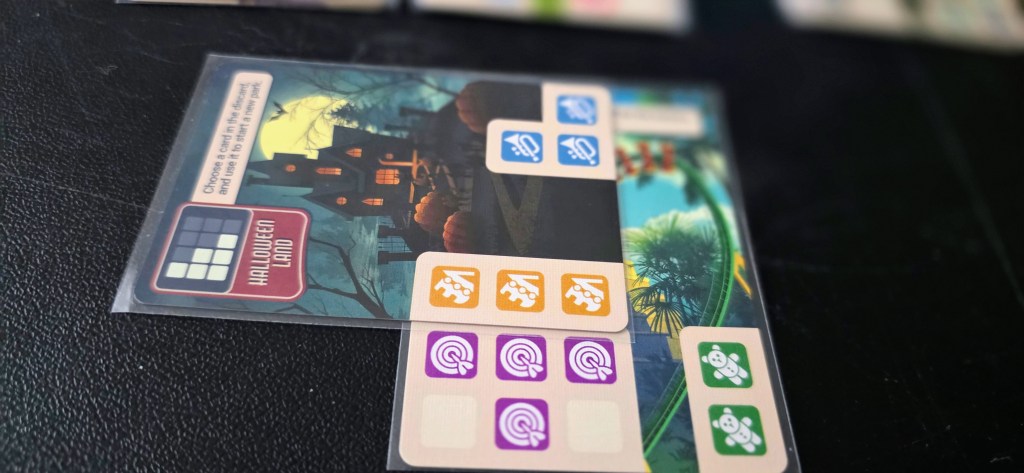
The latest of the line I actually have, this is truly an odd one. There are two phases on this game. On the first you have 4 turns where you’re trying to match the goal shape in the cards in the display with the cards in your deck. Then, after each turn, you can add to the reserve some cards as long as they match a symbol with the current round’s symbols. Finally, you take all the cards you reserved and try to assemble this big park, and you do have to use ALL of the cards.

The shape matching is quite funky as each card has two sets of shapes, and very often the cards themselves get in the way, and that is the whole challenge. It takes a very used mechanism and implements in a super fun and unique way, and that part of the game is absolutely a blast.

The final part is… well… intense. There is a lot to consider, and instead of assembling with two or three cards, you often have at least six, but often more. On one hand, it is a great culmination of the work you’ve been doing the whole game. However, I will be honest, I don’t find it always fun. Interesting? Yes. Thematic? Absolutely. But not necessarily fun.

Still, this is Almes going on a different direction and showing how that can be done without additional rules overhead, just a different structure, but it makes this game memorable and forces you to think outside the box

4 – The Royal Limited

Choo to the Fancy Choo

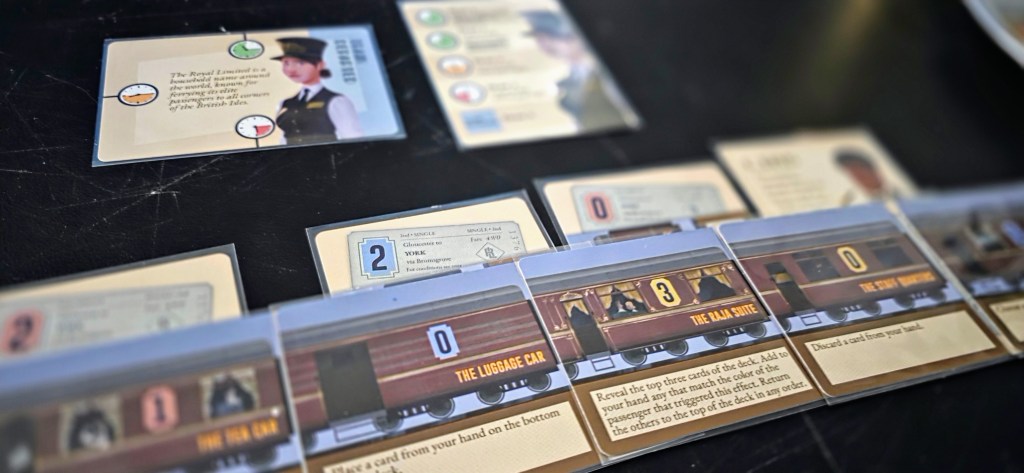
On The Royal Limited, you have 4 turns to play trains and passengers to your line. Trains cost cards in hand to play, the lowest valued ones have negative effects while the highest valued have beneficial ones. Train cars need to be played not adjacent to the same number or color. Passengers must be played in the correct colors and, in case of VIPs, also taking in consideration their specific requirements. As soon as you assign a passenger to a car, you activate their effect.

The goal of the game is to use as much of your resources as possible, including the cars, passengers and VIPs. Smaller scores are best, and 0 would be a perfect game. The Royal Limited is the definition of a tight game. The time is short, the actions are limited and you have to balance the usage and make sure you’re using everything to its most effectiveness. It’s one of the quickest in the line, but it is a dense experience full of great moments of interesting decision space.

3 – Food Chain Island

So! Many! Noms!

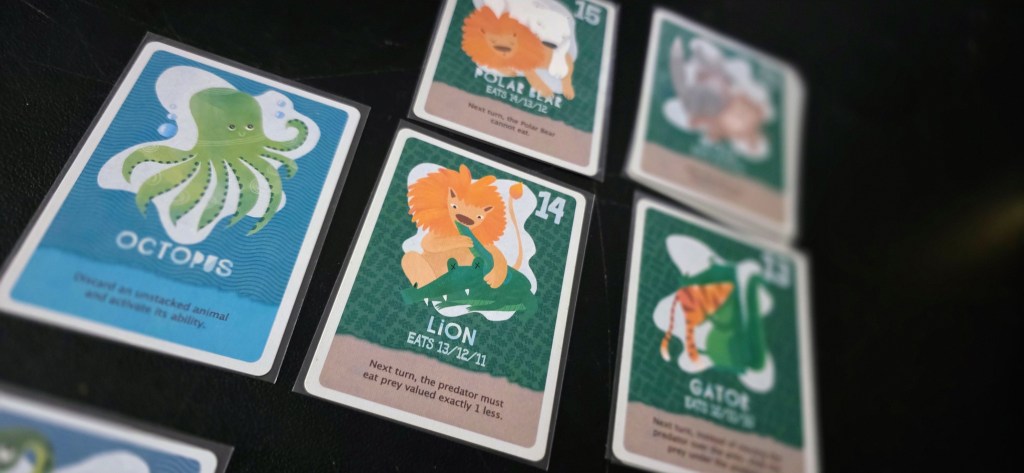
For reasons I will discuss later, this is not my favorite of the line, though it’s obviously one I love. But, if I’m being honest, this is the best most elegant design not only on Simply Solo, but possibly of everything Scott Almes put out. Food Chain Island has basically one event of randomization, which is the initial setup of the animal grid. After that, the player takes turns eating animals that are adjacent and have values up to 3 lower, and activate their powers. Some good, some bad. And your goal is to have 3 or fewer stacks of animals left. That’s pretty much it.

What a mind blowing design this is. Front the first instant, you have so many decisions and planning to do. The decision space is humongous, and it requires permutations of decisions that will make your brain hurt, in the best way possible. If you are AP prone, you can sit for a decade without moving a single card. But, once you see the pieces falling into place and your plan coming to fruition, wow, what a feeling.

Why is this number 3 though? Well, it’s not always exactly fun per se. The weight of all the decisions and combinations falls heavy on your shoulders. It’s a fantastically rewarding experience, but one that is part amusing and part vexing.

2 – Unsurmountable

The Cold Never Bothered Me Anyway

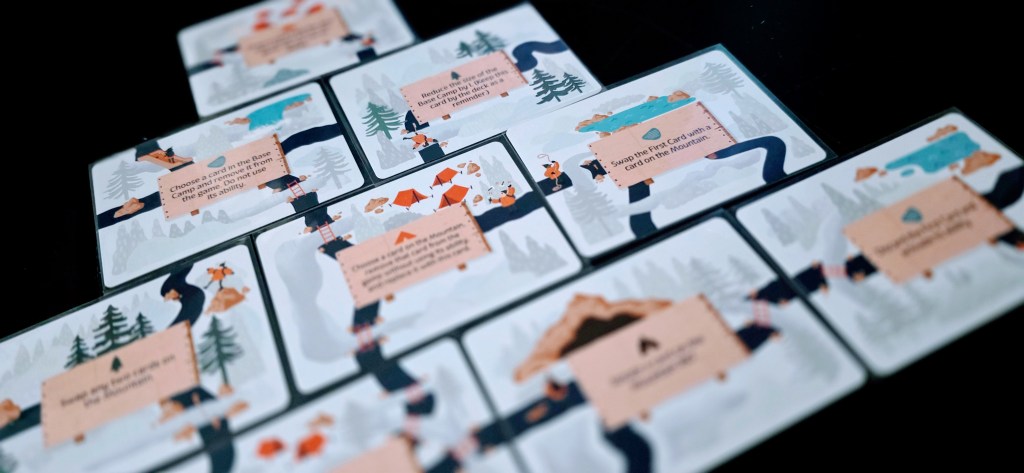
This, in some ways, is the opposite of Food Chain Island. While that was heavy and vexing, there are few games are chill (yes, pun intended, obviously) as Unsurmountable. You have a base of cards, and you can either play the first one in the mountain or discard the others for their effects. The goal is to create a pyramid of cards with a continuous path from under the mountain to the very top. It’s quite simple, and in its original form even a bit easy.

The brilliance of Unsurmountable is how it handles difficulty adjustments. At higher difficulties, not only you have to create the path, but also not repeat the same symbol on each level and on the slopes. Each increment in the difficulty is natural, challenging, and forces you to re-think your game plan. No other game has such a smooth and exciting slope (there I go again) of challenge that barely add any complications in terms of rules.

1 – A Nice Cuppa

If I take my coffee black, is the game easier?

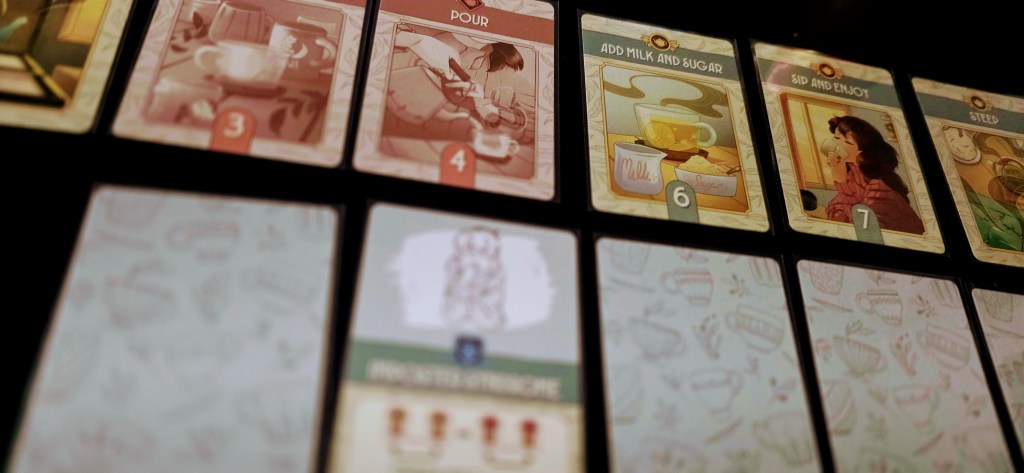
No other game embodies what Simply Solo line as perfectly as A Nice Cuppa. It’s a warm, cozy and fairly simple game where you’re trying to organize your line of cards (the steps to the perfect cuppa), by revealing and executing the worry cards underneath them. It’s sort of an action programing game, and quite an easy one to grasp and start playing.

But, what makes this special is that you never have a decision space too small that is obvious or too big that is harrowing. It’s always this perfect mix of challenge and accomplishment, a slow but steady experience that will blow you away, but slowly. Like sips in your favorite cup of hot and tasty beverage in a chilly winter’s morning.