
Review

Let’s Review More: Oliva

1-4 Players

Designer: Costa, Rôla

Artist: Marina Costa

Publisher: PYTHAGORAS

Pythagoras brings us the third game in the Cinco Quinas line, full of Portuguese themes, cubes and odd rules. But, as an official hater of olives, does this leave a bad taste or does it flow well like a good Portugese olive oil?

How to Play

Olive-ing La Vida Loca

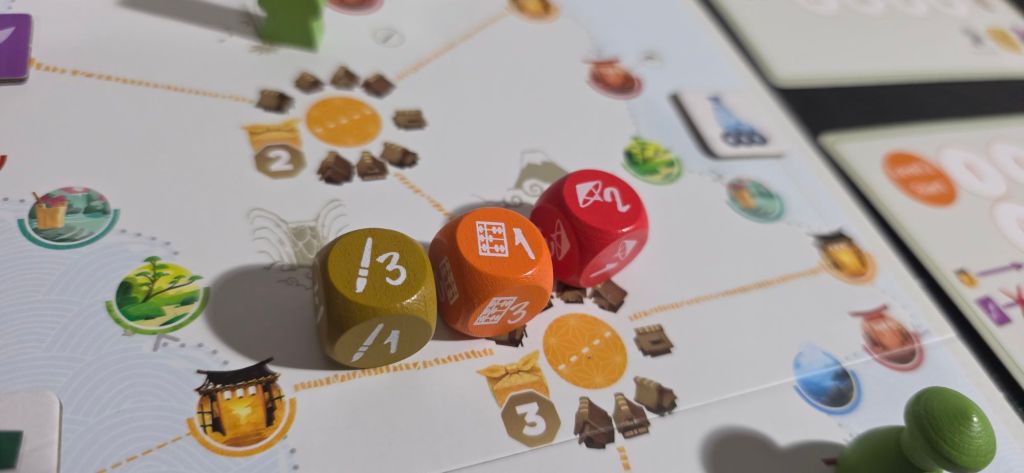
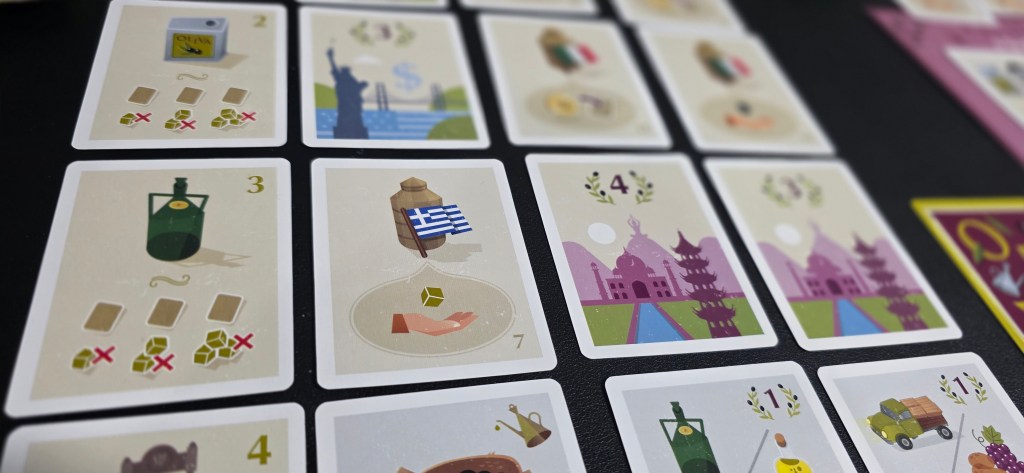
You play a number of turns depending on the player count, and each round starts with revealing a new nation card. Then players play cycles, once with each player leading.

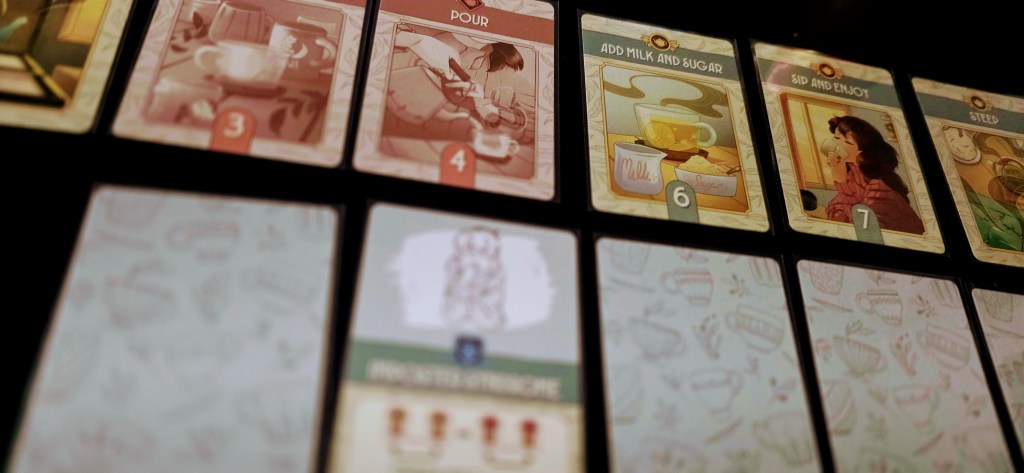
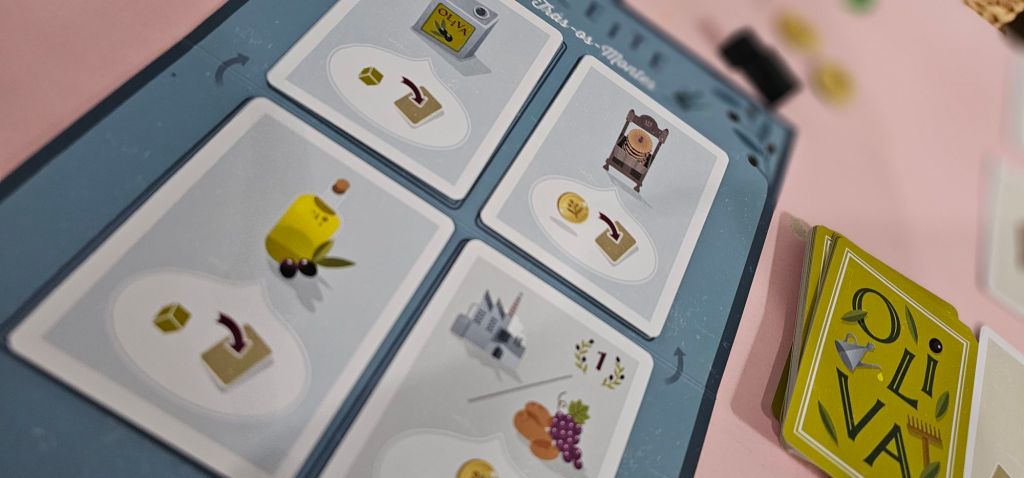
Each cycle starts with players drawing five cards from their deck and playing two face down on their board, discarding the rest. Then, they go around revealing a card and activating its action. But, here’s the fun part, you activate the card you revealed and every card that shares it’s symbol.

The actions are pretty standard production business. Get olives, convert them into olive oil, get money, or use those to get cards from the display, which can be advanced actions or scoring opportunities.
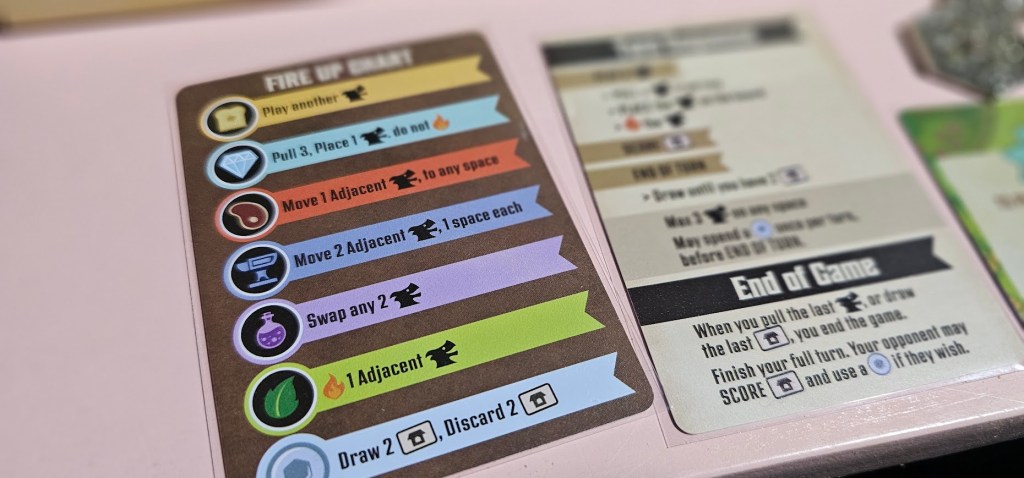
After each player revealed both cards, the two cards on the top are discarded, the ones on the bottom go up, and play continues.

With two players, some cards are removed and there is a third “ghost” player that players take turns adding cards so they always contribute two additional symbols.

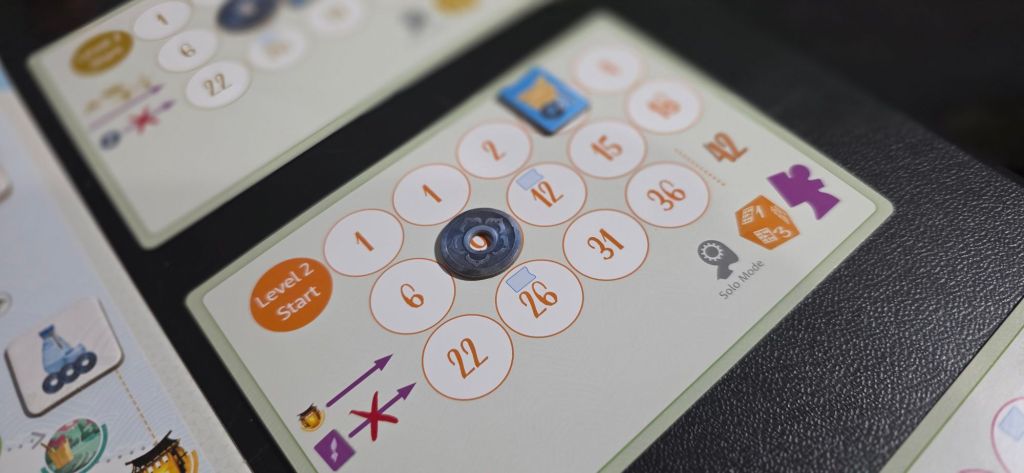
Solo has a dedicated automa deck that adds multiple symbols and takes cards from the display, but it’s not really an opponent, the game is a beat your own score deal.

Rules and Components

Spot the Difference

Here things get complicated on both ends. Let’s start with the rules. For the most part they are well laid out and complete, explaining well each card type and the flow of the game. I don’t think the wording is the best, but after a couple of reads I was able to play without major issues.

My biggest problem is with the alternative game modes, meaning 2 player and solo. The changes on the setup are clear, but the flow is often described with vague instructions and implied rulings. For example, for solo it explains that the automa plays the top card each turn, but it is not specified where they are played. Also, for solo, it’s said that it’s setup as a 2 player game, but there is no clear indication that the “ghost” extra player is not used.

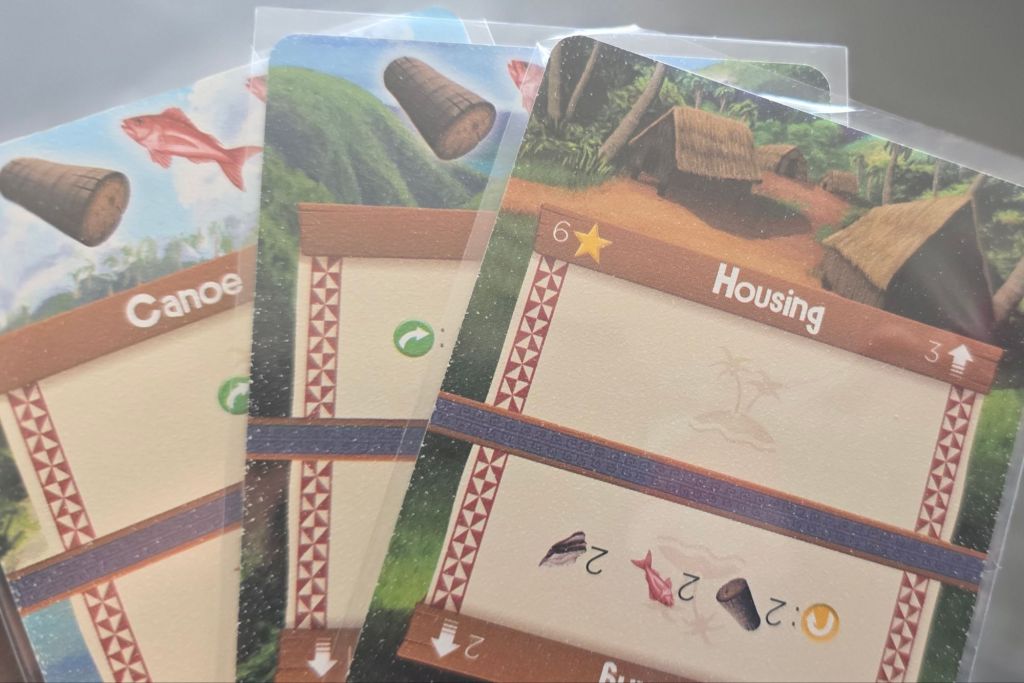
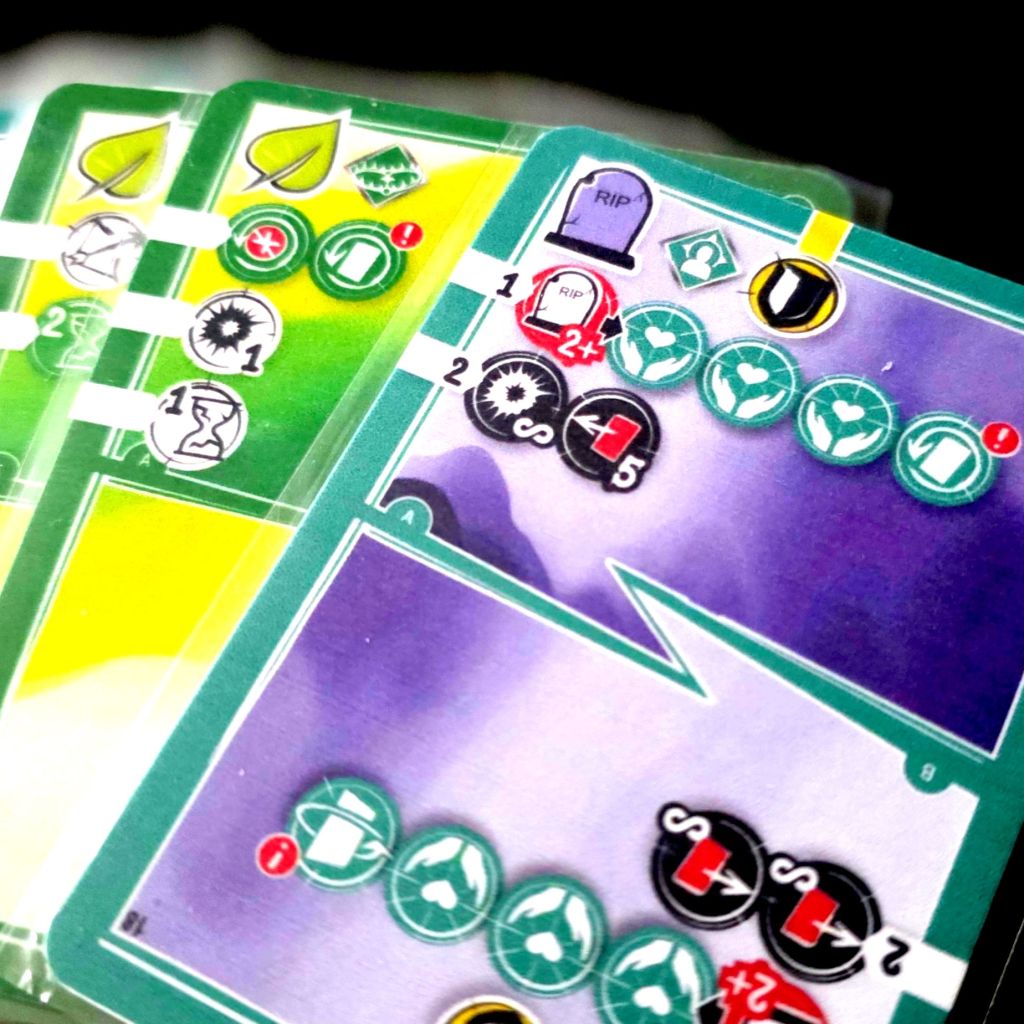
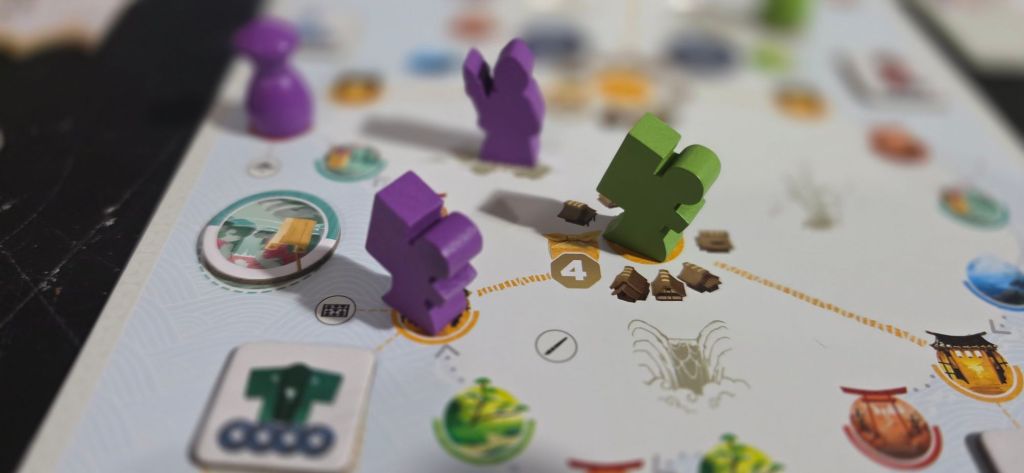
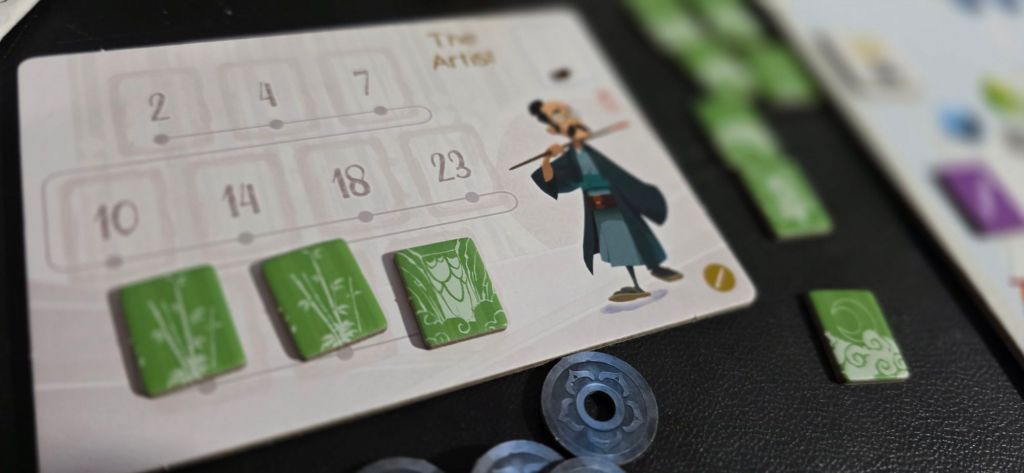
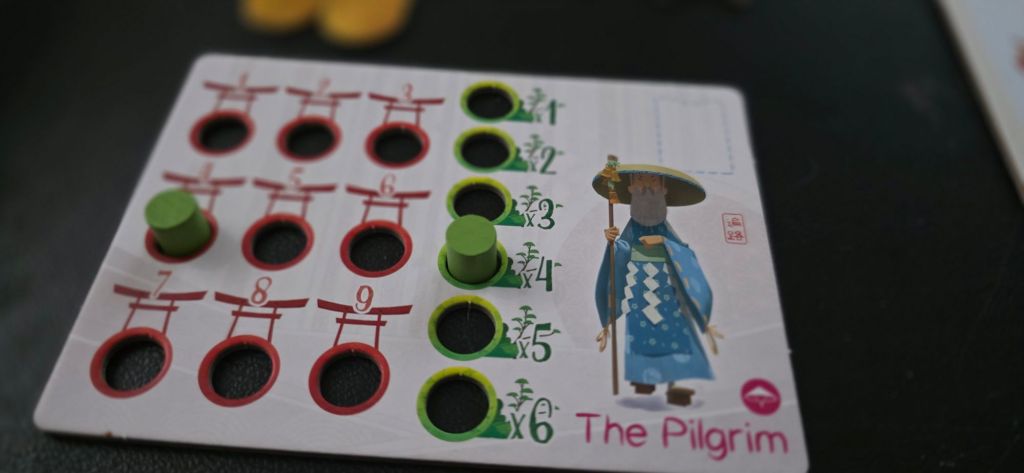
Components are for the most part pretty good. The cards are of great quality, the symbology is big and clear, and it has that specific artsy / minimalistic look that is characteristic of the series. Once setup, it is a big sprawling for the box size, but it does have a good table presence.

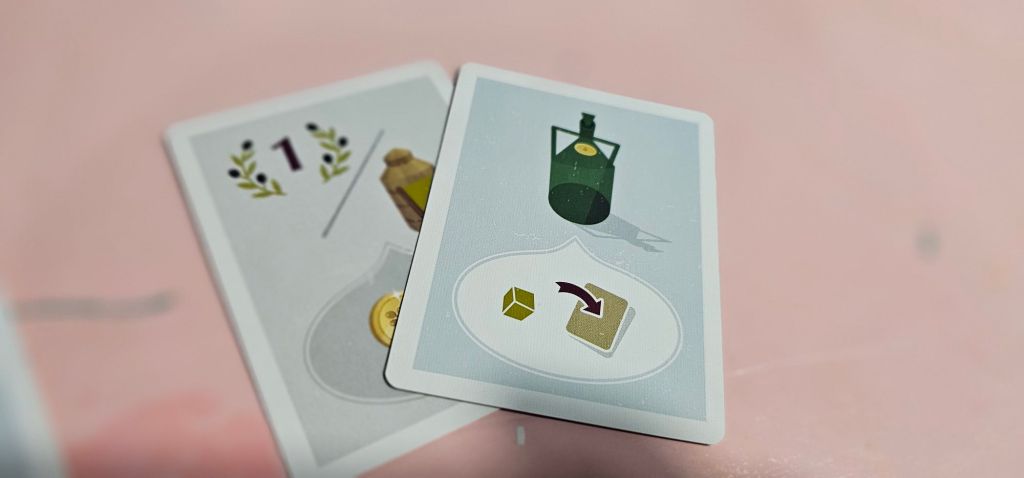
But there are a couple of usability issues. For example, there are a few types of cards with the same back, expected as it is a deck builder after all, but they are just differentiated by their backs, which already is not idea for color-blind people. But some, for example the blue player and the grey special action / scoring, are hard to tell apart depending on the light.

Score: 7/10

Gameplay

Does this olive oil feel Greece-y to you?

Half of this game is pretty standard production game: get cubes, transform into different cubes, cash in for cards or money, get points. It’s a streamlined and clean implementation of a familiar mechanism that will make a lot of people feel at home.

But where it shines is on the deckbuilding and card playing side of it. It’s a game where reading your opponents is not good, it’s crucial for wining. Timing well and paying attention to what everyone else is doing creates these huge turns where you can be super efficient, but no opportunities exists in a vacuum. It’s not just playing the most common symbols, it’s being ready with the right resources for when those opportunities arise. This is a wonderful style of table interaction, where you get out of your own situation and are required to notice everyone’s game, but nothing is taken, it’s all positive and adding.

Score: 9/10

Theme and Art

My Heart Oliv-On

Marina Costa has this particular clean, cartoon-y and very whimsical style that became the heart of the Cinco Quinas line, but here is where it’s displayed more and with more details. It’s very welcoming and warm, and makes you want to dive in this world.

And this ties together with the love that Pythagoras usually puts in with their Portuguese themes. It’s not just a game about olives and olive oil, but specific regions and traditions of that country. I may be biased as it is my heritage, but every small detail is evocative. It’s not a heavy handed theme, not in the slightest, but it’s seen and felt.

Score: 8/10

Conclusion

From Iberia, to the World!

Oliva packs a punch from its small box, threading a nice line between familiar mechanisms and unique implementations. It’s a game that requires table awareness and promotes an environment where players are present at all times, at all turns, always seeing what’s next, what card each one took, what moves they are making and setting up to make. But that is not overwhelming as turns come and go blazing fast. It’s simple, but very rich.

And that is allied with all the Portuguese love that is a big characteristic of Pythagoras and the Cinco Quinas line. As the game is fluid, it allows you to appreciate the theme and feel yourself at home and sink in all the cubic oily goodness. But not the olives, those black cubes are gross and everyone knows it. Or maybe it’s just me…

Score: 8/10

Let's Review More: Tend
Review

Let’s Review More: Tend

1-6 Players
Designer: Max Anderson, Zac Dixon, Austin Harrison, Toby Sarnelle
Artist: Kelly Nakamura
Publisher: IV Studio

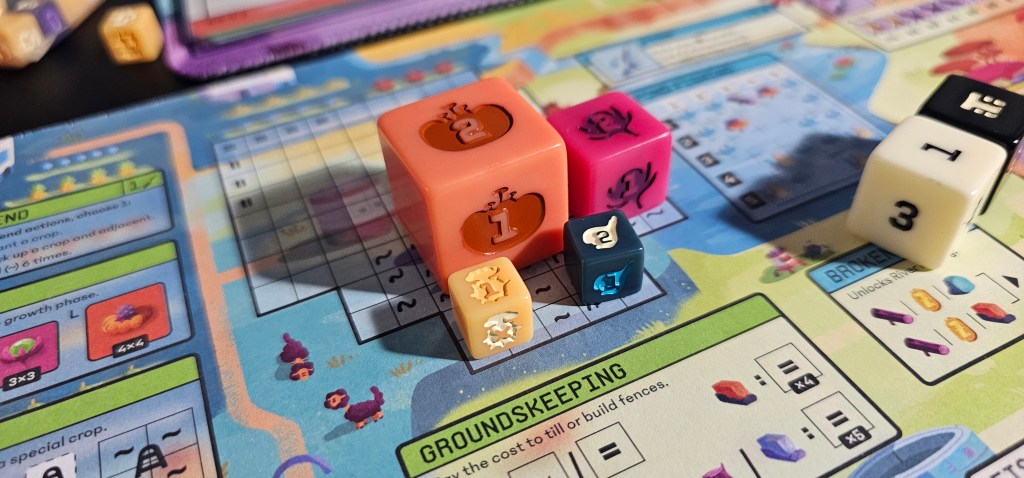
IV Studios comes to us with a “Roll and Write” which gets pretty much everything traditional about the style and goes a different route: the box is huge, there are dice but you never roll them, and there are even scratch-off cards. But do those all crazy ideas form a beautiful garden or is it just a pile of mulch?

How To Play

Let’s Tend More

Don’t be fooled by the huge box, the game is quite straight-forward in terms of rules. You will play for 12 rounds, each round will start with basically some upkeep, like replacing friend bonus cards, refreshing the action row and ticking up your crops and animals.

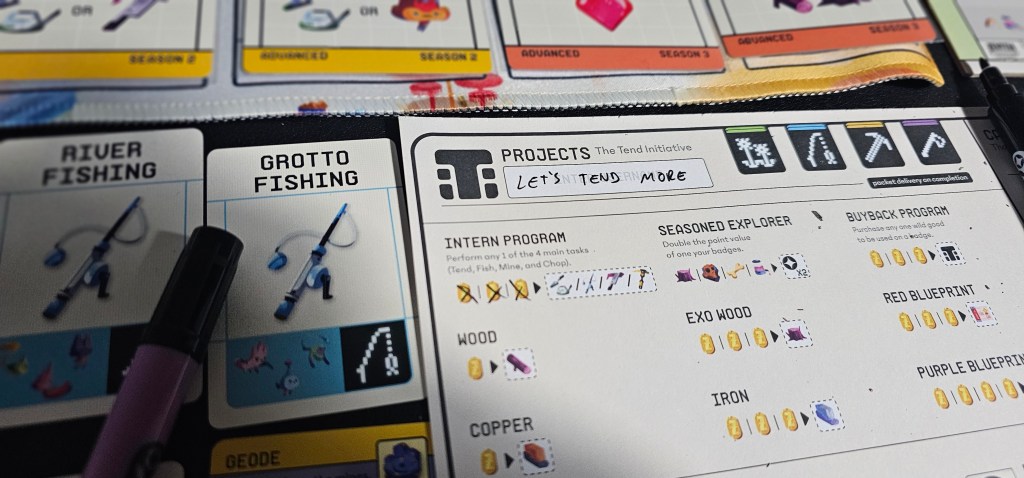
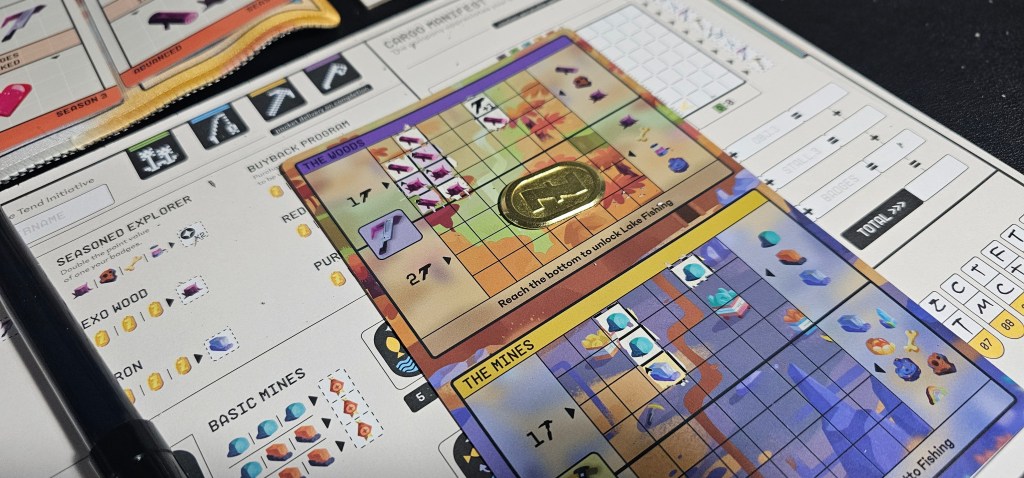
But the main focus on the game is in the action phase, where from the 5 available action cards, each player chooses two and executes them in any order. There are four main actions in the game. Tending allows a player to till soil and also plant and water crops in your garden. Fishing allows you to roll dice and fish in the coordinates rolled in any available fish spot. Cutting and mining takes you to the scratch-off card and just scratching an available spot, which will give you resources, but sometimes also additional actions and level ups.

In Tend, any resource gained must be immediately spent, either on various upgrades and awards, sold to the commissary, or stored in your bins with cute and super handy stamps included in the game. Items in storage, awards gained and three end of game scoring opportunities will give you points.

Rules and Components

I’m Jack, the Pumpkin King

Starting easy, rules are really clear, well laid out and structured with plenty of illustrations to make sure that all areas of gameplay are clear. The only downside is that the rules present all components in details before explaining what they do, so starting off can feel a bit daunting, but once rules start going it’s easy to parse what everything is and how it works.

Components are, well, excessive, in a good way. I mentioned the huge box, and its goal is to house every component comfortably. It’s not that there are too many components, but the game does include an obscene amount of pads and scratch-offs so you can play and play and play. There is SOME overkill, like the stamps in the pens, but absolutely nothing feels extra or unnecessary, and everything comes together to create a beautiful play experience.

Also, the components feel super premium. The pens are nice, the dice are nice, the pads are nice, the cards are of amazing quality. Every upgrade feels like a quality of life upgrade, they have a purpose and do make the overall feel better.

Score: 9.5/10

Here fishy fishy!

Tend is the type of game I greatly appreciate in terms of how they handle the rules. The rules themselves are actually simple, nothing too fancy or out of place. From the first gameplay and every single experience since, I felt like every single turns goes like a breeze, everything just clicks in place, the actions feel fluid and you can see the many lines of play the four actions will allow you.

Gameplay

But, let’s be clear: this is a thinky game. There is a lot to keep your eyes on, lots to plan and everything feels interconnected in an interesting way. The game heavyness lies completely on how you handle your opportunities, how to get the most out of them, and just keep track of everything you want to do. The path for each of the 3 scoring goals is multi-stepped and requires you to hinge your opportunities and have a clear plan ahead.

Score: 10

Theme and Art

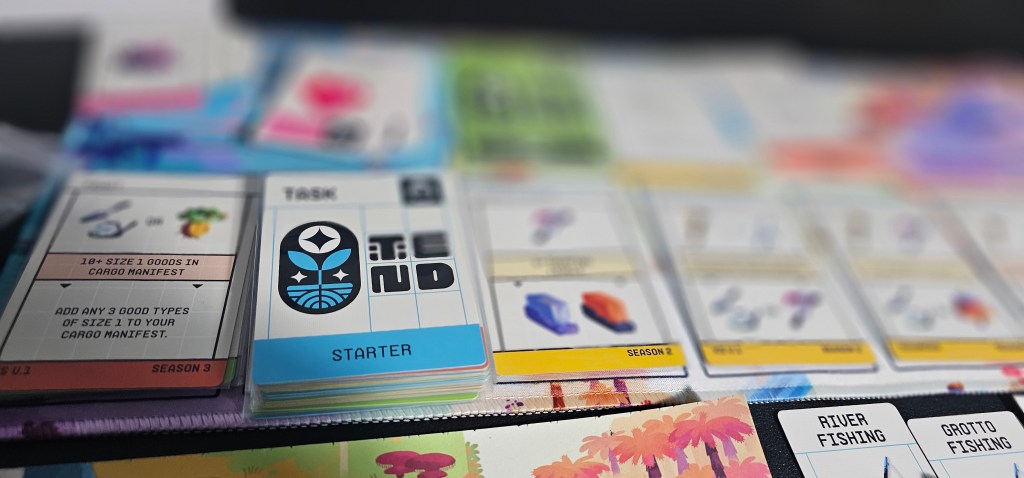
IV Studios chose a very video-gamey feel to Tend. The icons are simple, there is plenty of pixelated icons and fonts, and everything is super bright, but somewhat minimalistic. Each individual component seems to be created to maximize usability and simplicity. That being said, everything comes together in an incredibly cohesive package that just looks good and thought out.

This also ties in really well with the theme and feel the game puts out. It’s a light theme, a futuristic farming simulator. That’s pretty much it. But it’s not about depth, it’s about how it makes you feel. It’s a friendly game, with friendly challenges and friendly looks. It’s, overall, a feel good package. For me, it did make me feel good playing, even when my brain was going into overdrive.

Score: 9/10

Conclusion

I was not sure of what to expect from Tend, and I purposefully went in blind. It’s a game of contradictions: it’s a game that is both excessive and minimalistic, easygoing and brain burning, easy to play but hard to play well.

But very rarely a game is so consistent in making me smile. Even in all contradictions, every aspect of Tend clicks and ticks like every single element in this game is on the right place, in the right amount, and it’s all up to the player to make the most out of it.

Every aspect of the game is super friendly, from the visuals, themes, mechanisms, components. It’s a heavy game in terms of tactics and strategies, but it feels way lighter. It will make you work and sweat your neurons to do well, but it never feels oppressive or unachievable. It’s a 60-90 minutes game that feels like a 15-30 minute game. And every single game so far I looked at the completed session and I wanted to just go one more time, try something else, something different, discover more.

Score: 9.5/10

Review

Let’s Review More: Flamecraft Duals

1-2 Players

Designer: Manny Vega

Artist: Sandara Tang

Publisher: Carboard Alchemy

Following the footsteps of its already classic older sibling, the adorable little dragons of Flamecraft now come in Duals form. But is this head to head iteration hold the flame or does it just burns out quickly?

How to Play

Bag of (Dragon) Holding

Turns in the game are comprised of 3 steps. First, the player draws a token from the bad and places it any open spot or on top of any dragon as long as there is never a stack higher than 3.

Then, the player can fire off the dragon’s ability, and those can be to add more dragons, move other dragons or fire their abilities, which can cause a whole lot of chain effects. Finally, the player can score if they have a pattern in the board that equals the card in their hands. Most points from the scored cards win.

There are a couple of additional modules. Fancy dragons will add player powers, while fountains adds shared scoring opportunities while also adding a fountain to the board, which will get in the way.

Solo is quite simple, every turn the player needs to score a card, from their hand or a fountain card, or spend a coin. If they can’t, they lose. If they are able to score all 6 fountain cards, it’s a victory.

Rules and Components

Board with Fountains

The rules are fine. It’s a fairly simple and straightforward game, and the rules do a good job in presenting the game in a well structured way explaining briefly each phase and how each dragon works. It does leave some specifics a bit too much to interpretation, which is unfortunate.

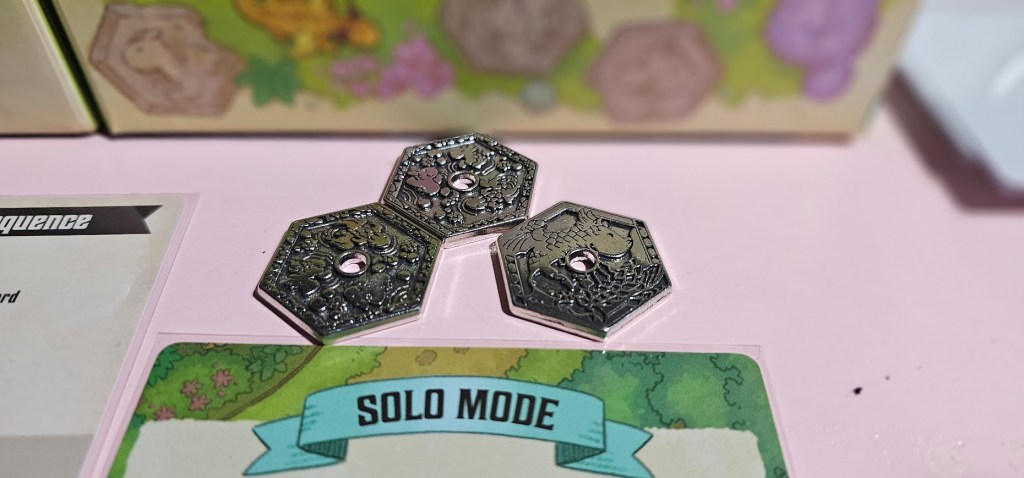
I will start the component part with a caveat: I do have the the Deluxe version, so that’s the one I’m reviewing. But, as expected from Cardboard Alchemy, the art is stellar. It’s the gorgeously adorable art of Sandara Tang displayed in all tokens and cards, and they look as good as ever. The dragon tokens are nice and chunky, so satisfying to handle, and the metal coins are pretty and big. I did find the cards a bit on the thin side and quite slippery to handle.

Score: 8/10

Gameplay

Reference and Dragon Powers

This is at its surface quite light and simple, draw a dragon, place it, fire its ability, score. But, in all honesty, this is way more combo-y than expected. There is a lot of chain reaction, specially when 2 types of dragon (breads and leaves) and fire another power, which can in turn fire more and so on.

It’s strikes a great balance of light and gamery, and the results are quite satisfying. On 1v1, your scoring cards are hidden so there is not a lot of hate drafting or spoiling the other movements, it’s more setting up yours and seeing the opportunities immediately. It’s pretty much a tactical game, not a lot of long term strategy, it’s who can be the most efficient in terms of opportunities.

Solo is a bit more strategic, since you do know you have to setup and score all 6 fountains, and each is comprised of a 4 in a row of a single type. But, since you don’t know which order they will appear, there is a lot in making sure you have open opportunities each turn.

Score: 8.5/10

Theme and Art

Heart Melting Art

On one end, the game is for the most part quite abstract. The scoring cards have no names, the dragons are all the same and there is no lore described. It’s a game solidly based on its mechanisms, and in fact you could replace the theme and it could work just as well.

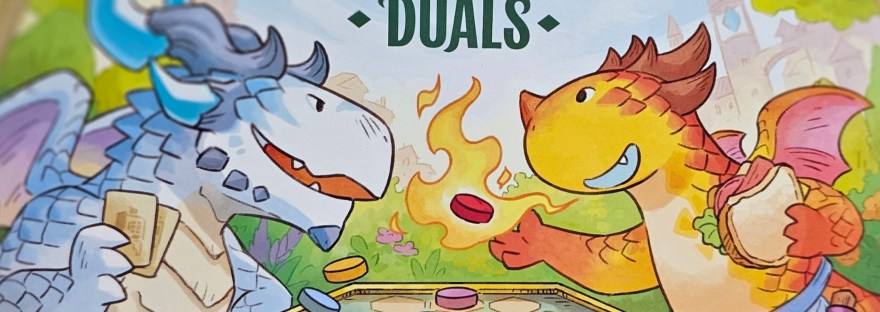
But why would you though? The art is disconnected, yes, but as I mentioned it’s beautiful and evoking, and there is so much cuteness your heart my just explode. It has a small size but great table presence, and the art does vibe well with the relaxed theme of the gameplay.

Score: 7.5/10

Conclusion

Ca-ching

First of all, the obvious question: if I like Flamecraft, will I like the Duals version? Sincerely, there is absolutely no answering that. Aside from art, the game are mostly disconnected, though there is a sense of familiarity on a surface level with the dragon powers.

On its own, Flamecraft Duals is a chill but engaging abstract game, quick to play but has enough to keep you coming back. There isn’t a lot to discover, it’s all pretty much at your face, but it’s a game that will reward multiple gameplays in terms of acquired skill and board understanding.

I think Duals fits right into my collection for when I want a quick investment of time and brainpower, but still will come out satisfied with a gaming experience. And, adding to that, manipulating those chonky pieces is so fun!

Score: 8/10