1 Player
Designer: Radosław Ignatów
Artist: Michał Teliga
Call the Doctor brings you to the surgery table, managing your patient’s vitals, using medicine, procedures and tools to solve your case. But is this a healthy game or does it just flatline?
How to Play

Each turn, you roll your dice and get a new situation card. Then you use the dice for various aspects. You can apply medication, which will change stats, activate and use tools for the needed procedures, or use other procedures to prevent or fix critical conditions.
This is quite a complex game to explain simply, but each case you take on has the needed steps to save the patient, involving usually different parts of surgery. But every step you take has implications on other stats.
One of the most interesting aspects in this game is that most stat changes are not applied directly. There is a prognostic card where you make the changes, and all are applied at end of turn. That gives you time to counteract. But let the changes be too radical and there will be consequences.
Gameplay
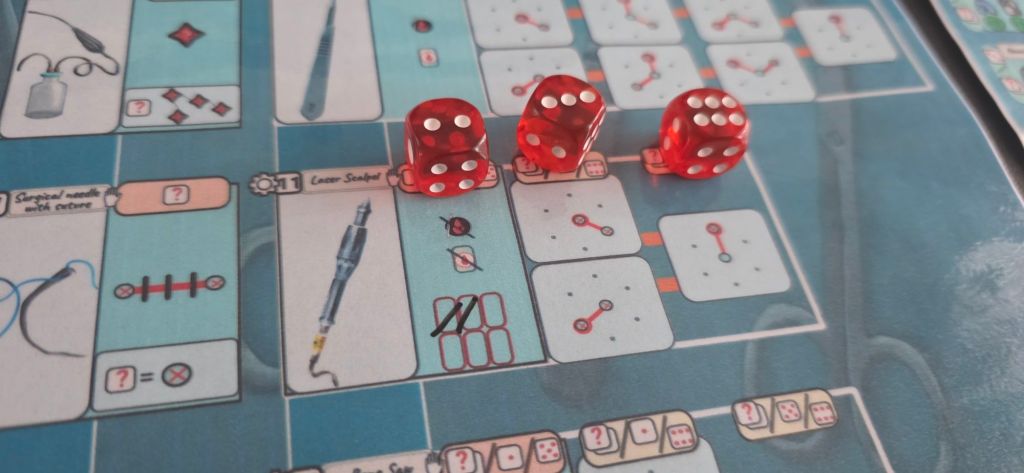
If you’re familiar with Radosław’s previous designs, you’ll be half familiar here. It has his traditional mix of lots of tracks and things that affect things that affect things sort of chains.
But this time instead of exploring and maximizing combos and interactions, you’re managing them. It’s a slow paced game, where some turns are active and advance you towards your goal, others are just avoiding harsher consequences.
I’m going to talk about theme later, but from a purely gameplay perspective, it’s a fascinating take on his style. It still feels just as rewarding and intricate, but shows a new aspect of analysis.
Score: 9/10
Rules and Components
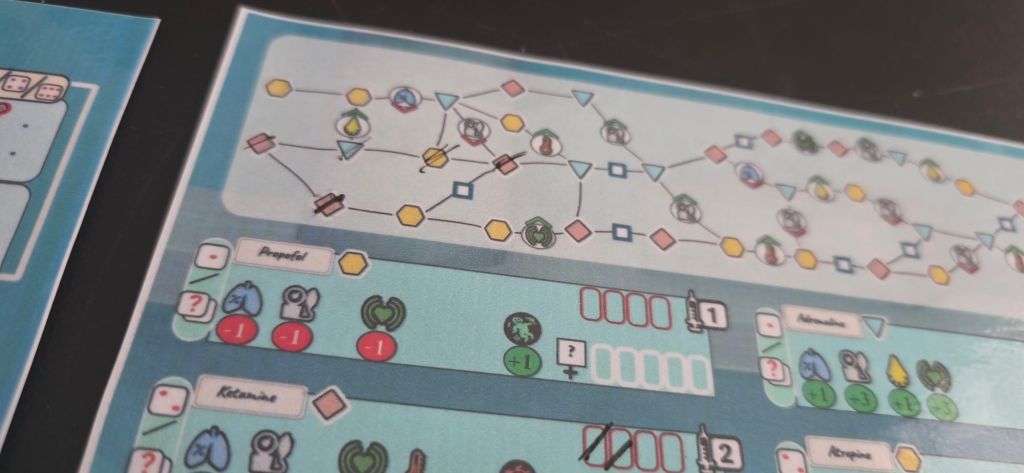
One constant issue with Radosław’s previous games has been the rule books. And, honestly, I can appreciate the challenge. Often Aspect A depends on Aspect B, Aspect B depends on A. So things are mentioned before they are fully explained.
There is significant improvements here. There are lots of references to where something is detailed as other rules are explained. And the usage of examples helps a lot. But there are still some areas that are initially counter intuitive or need to be derived. One simple example is that initial values are never really mentioned, but need to be consulted from the component diagram.
Components are good and functional though. The symbols can get a bit small and cramped, specially in the procedures, but nothing that affects gameplay too much.
Score: 7/10
Theme and Art
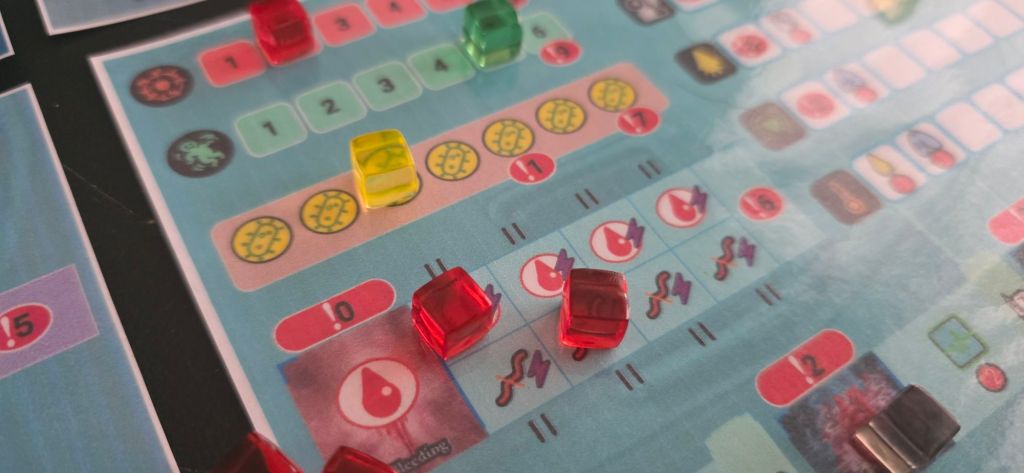
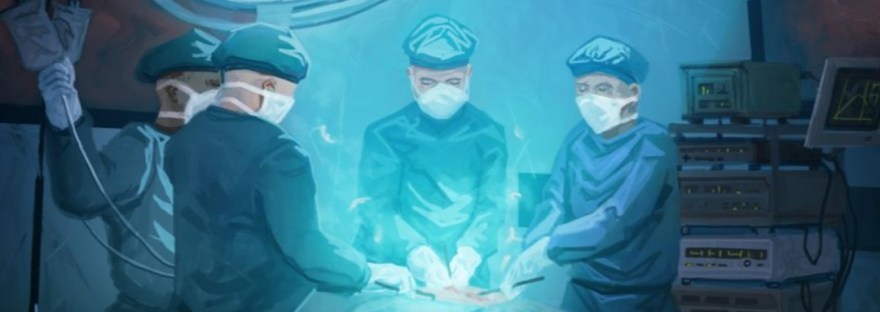
The main sheets are, while function, a bit lacking in terms of theme. There are illustrations, but these are either quite small or background. The case cards, on the other hand, are super well illustrated and thematic, giving you a real feel of the operations you’re performing.
But while the visuals are only partially evoking, what you’re actually doing feels incredibly thematic and immersive. Cuts bleed, medications have side effects, procedures take time and preparation. Even the pace of the game feels appropriate. Patient care strikes that balance between race against the clock and methodical and deliberate approach.
Score: 9/10
Conclusion
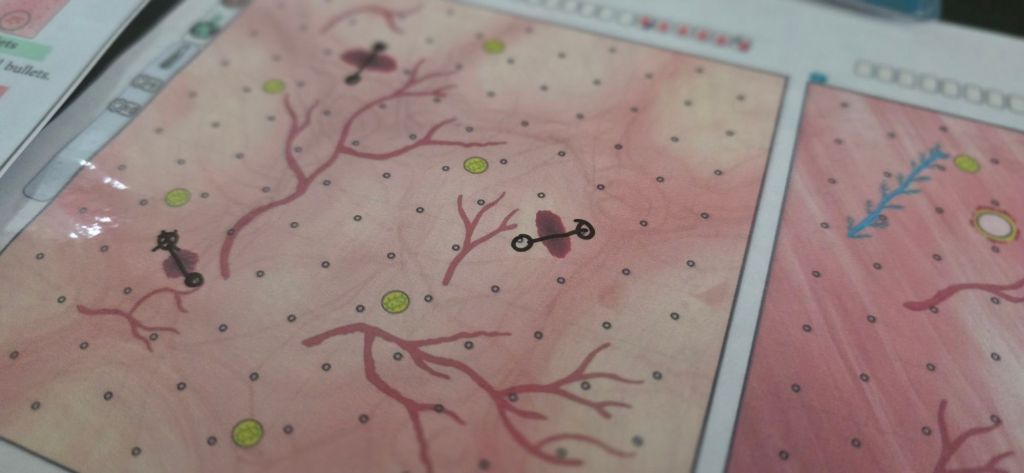
Call the Doctor is more than a thematic game, it’s a tribute to health workers. A lot of effort was put into the details, the correct effects and side effects, the complexity of the human body. Every rule is tied to a real life aspect of medicine, clearly laid out in the rules.
If you are interested in the theme, you will appreciate everything Call the Doctor brings to the (operating) table. But all of that is backed by a complex, yes, but elegant implementation of the rules that elevates the experience.
It’s an immersive and intense game that takes its time to allow, and in a way force, the player to see the big picture and navigate each case in an unique manner.
Score: 8/10
 Let's Game More