
Ever since I discovered these, I’ve been in love with games that you can play on the go, completely (or almost) without any surface at all. So, if any of you want to jump into this crazy and highly creative world, here are my favorites.
But before, a few caveats regarding this list:
1 – I’m only considering games that are made to be played in hand. There are some amazing games that have in-hand game variants, but I’m not considering those.
2 – No works in progress games. There are some absolutely amazing games in BGG design competitions, but I’m only considering those that have an official page.
3 – To add variety, only one game per designer or publisher. If not, this list would be pretty lopsided.
Without further ado, here we go!
5 – Palm Island
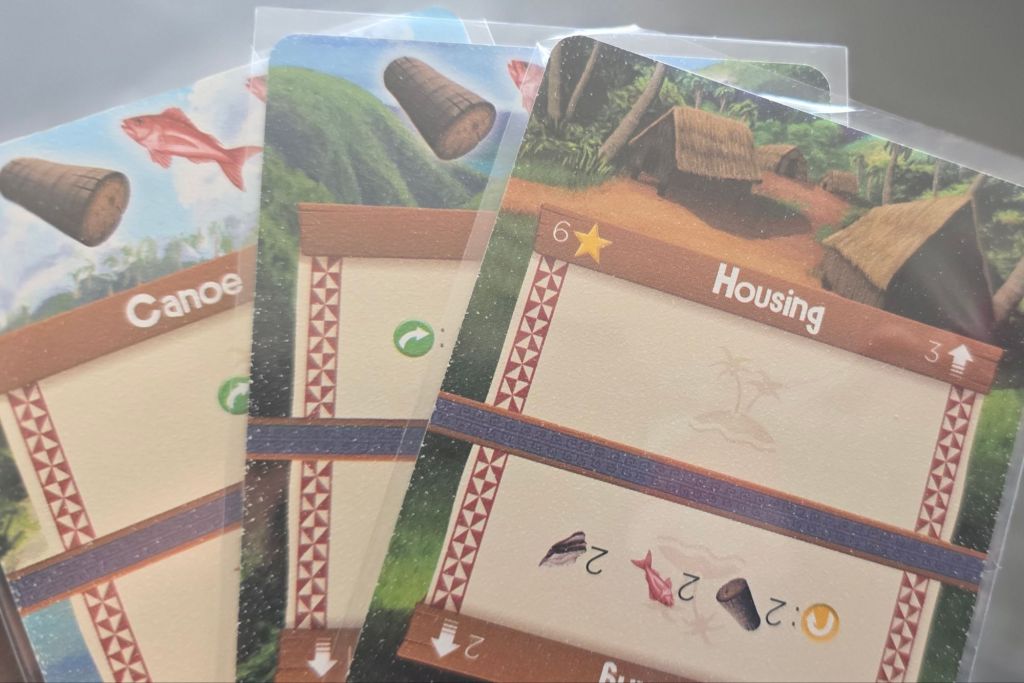
By Jon Mietling / Portal Dragon Games
My first forage into this world, and still holds up incredibly well. On Palm Island, you have 8 runs through your deck to get resources and use those resources to upgrade cards for points or to produce even more resources.
Chowing between this and its sibling, Palm Laboratory was tough. I love that Palm Lab has different scenarios and clear win/lose conditions, but the unlock card system in Palm Island was just enough to take the cake.
This is a compact, highly thinky euro experience where you need to have long term planing and create an efficient machine, all in a quick play time that never fails to feel challenging and satisfactory.
4 – Handy Brawl
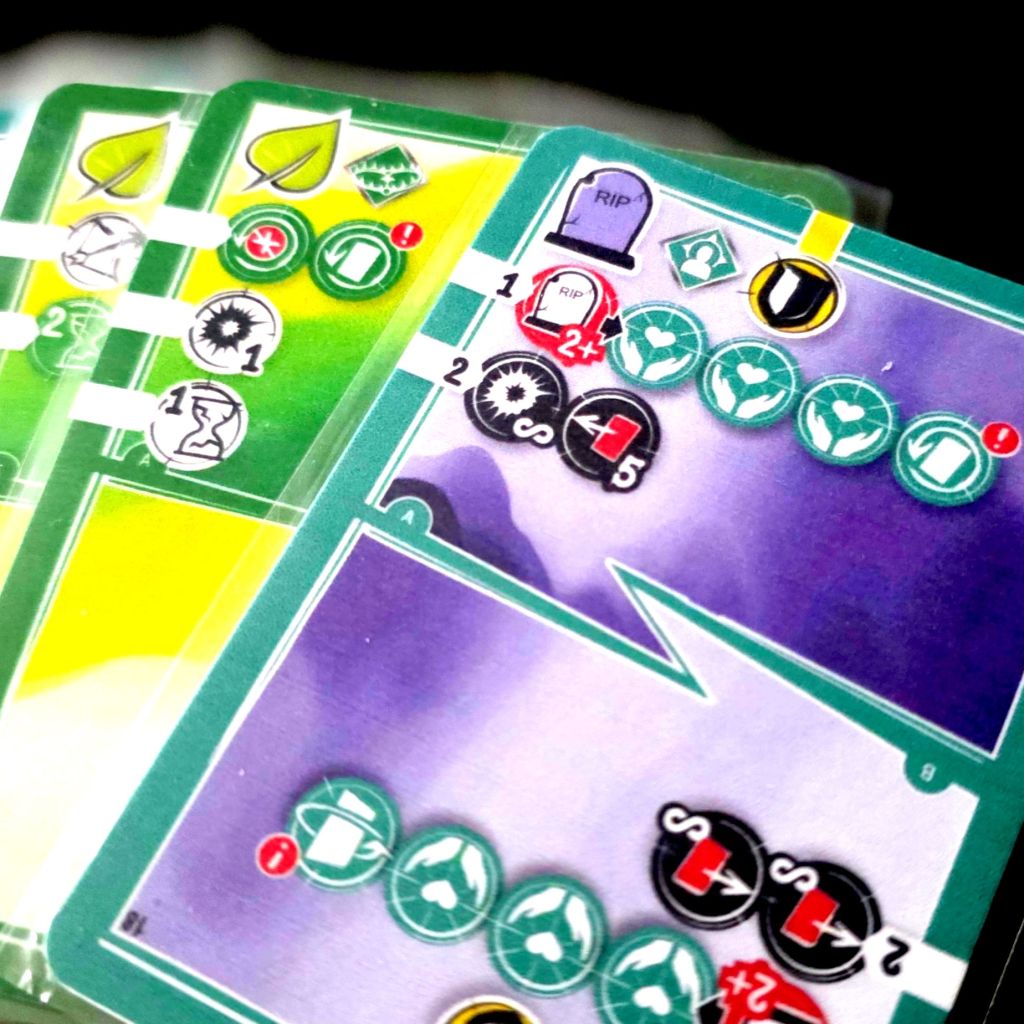
By Igor Zuber / Self Published
If any game symbolizes “having and idea and running with it” is this one. The basis is that you get 5 hero cards, 4 enemy cards, shuffle them and have a fight. Every turn you activate the top card. You make your choices, the enemy just activates the first thing that will actually do something. First to reduce the other side to all damaged cards wins.
If you get the first pair, Warrior and Ogre, it’s already a highly fun and tense back and forward. But Zuber created so many characters on both sides that expand and innovate, all based on this simple system. Honestly, the only two things that hold this game back is the lack of art and a need for a bit clearer symbology.
Handy Brawl is not just a game, it’s a whole system with so many possibilities and variety. Every combination so far feels well thought, exciting and unique. Get in some art and we have a bona fide classic in our hands.
3 – Loot the Loop
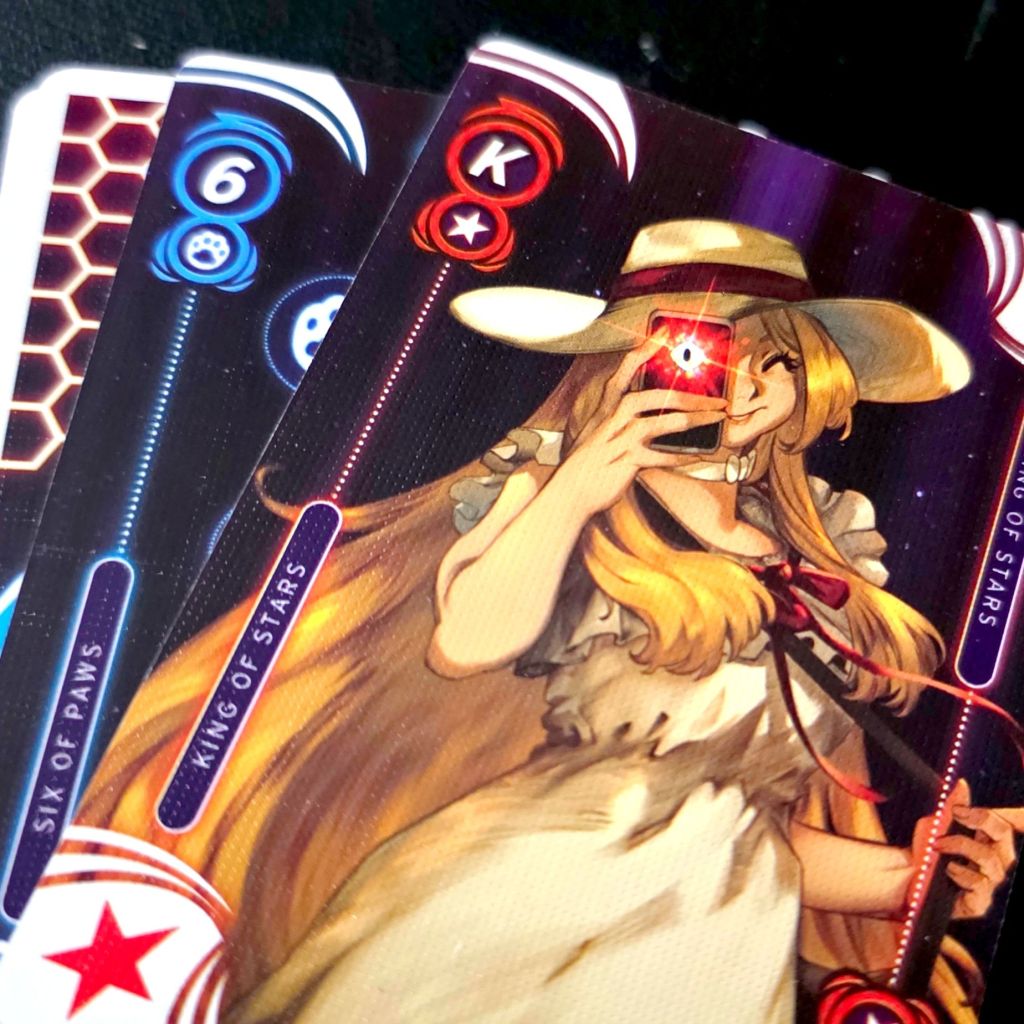
By Wil Su / Self Published
If you want to start in this universe, start here. No investment needed, as Loot the Loop is simply played with a regular 52 card deck (and a joker).
The idea is simple, if the top 2 cards are face down, turn them face up, then chowing one number value of the two you move that many cards down, the famous travel mechanism, and then check. Find aces or numbers, you collect them, find the joker and you may exit, find any face card and you lose. Can’t travel? Lose as well. But if the top card is a number, you can save it for later and that one mechanism adds so much strategy and forward thinking.
Loot the Loop is simply addictive. It’s lightning fast, a bit random yes, but the flow is so fun that you just want to play again. Such an elegant and well thought out design, so much that inspired many other games in the genre.
2 – Galdor’s Grip
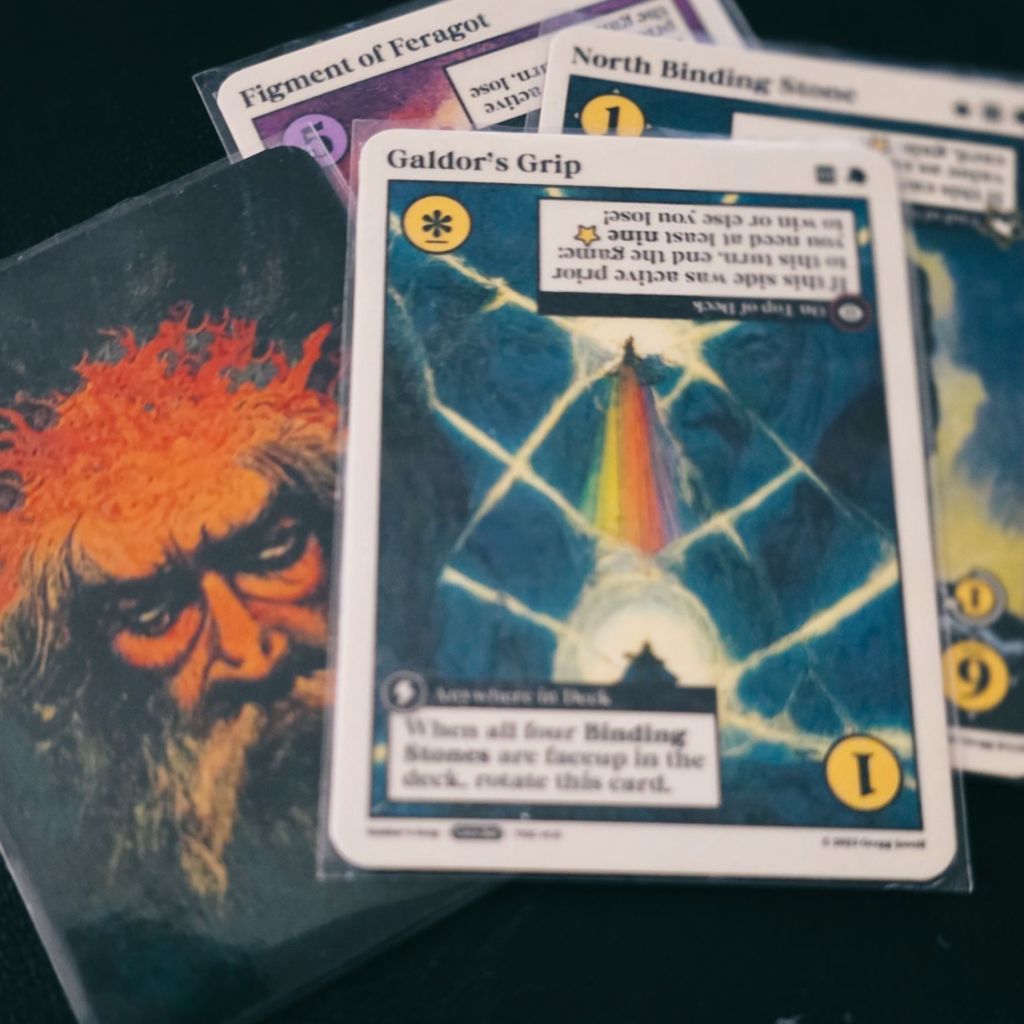
By Gregg Jewell / Self Published
Galdor’s Grip takes the travel mechanism described above and elevates it to its max. On Galdor’s Grip, instead of collecting cards you need to find four binding stones and then the game’s namesake Galdor’s Grip while also manipulating other cards to reach 9 points. But some cards that give you points can also cause you to lose.
In its base, its an insanely addictive game that rewards repeated plays and knowing the deck. But there are 3 expansions so far. You take 12 base cards that always need to be there and ANY combination of 6 cards, and you have now an unique scenario where it’s up you to figure out how to manipulate them for a win. That is so much variety and replay value.
Galdor’s Grip is brilliant. It has everything you want an in-hand game. It’s lightning fast, portable and super easy to pick up or put away. But, allied with that, it’s a thinky puzzle where every game plays uniquely and require its own solution.
1 – Dragons of Etchinstone
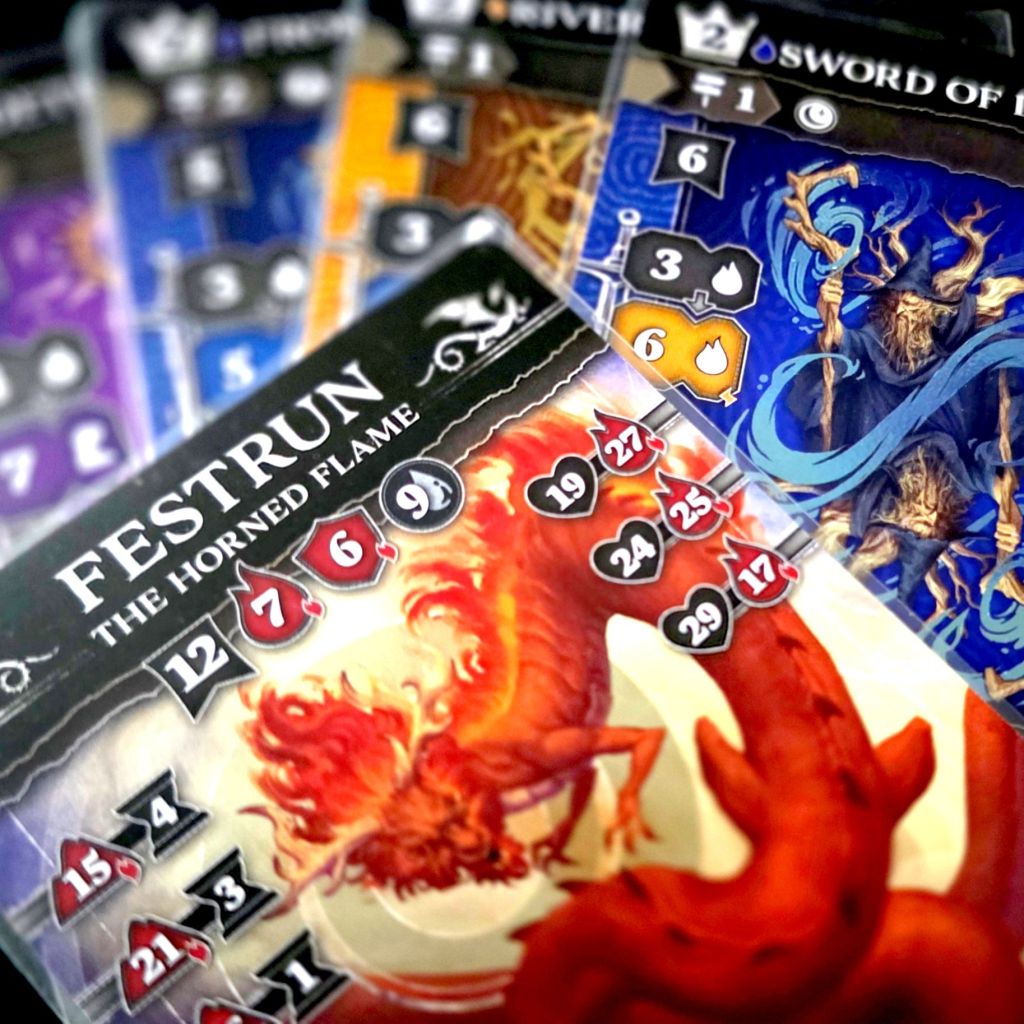
By Joe Klipfel / Chip Theory Games
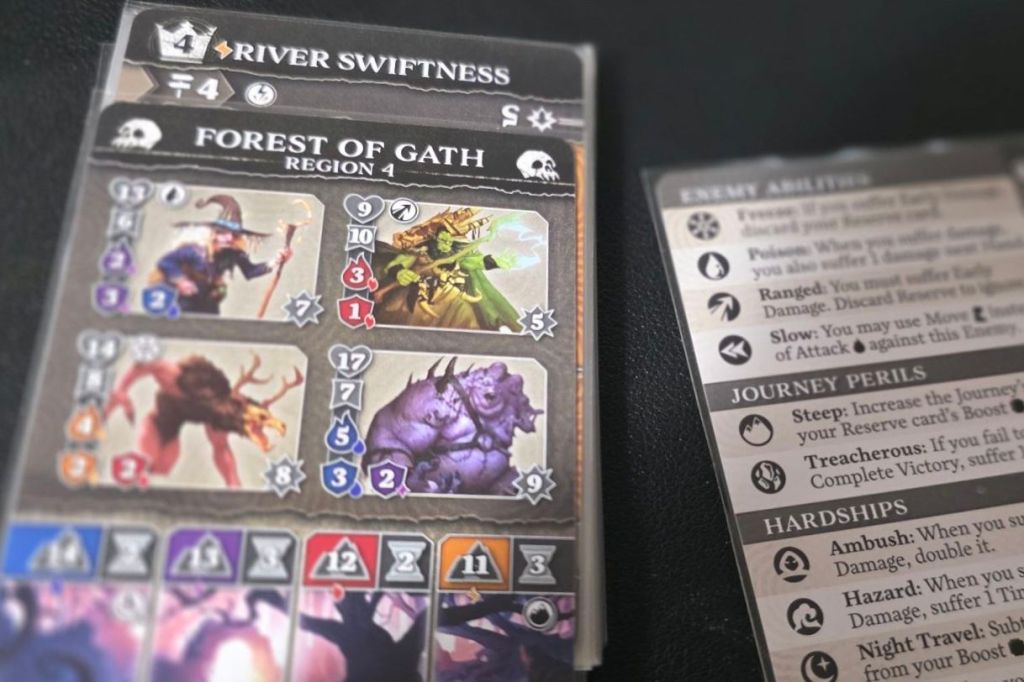
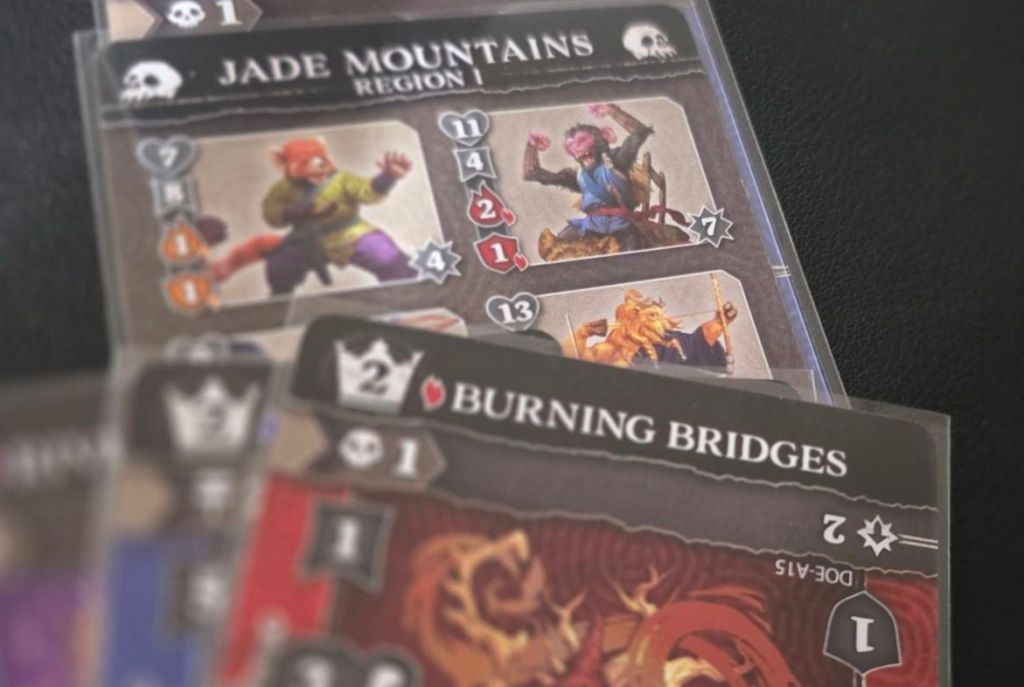
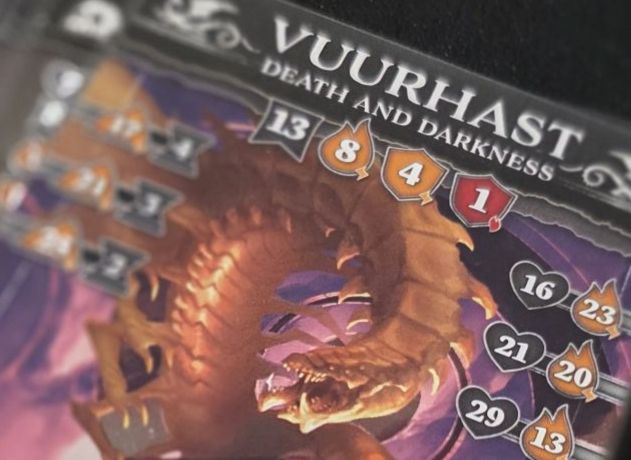
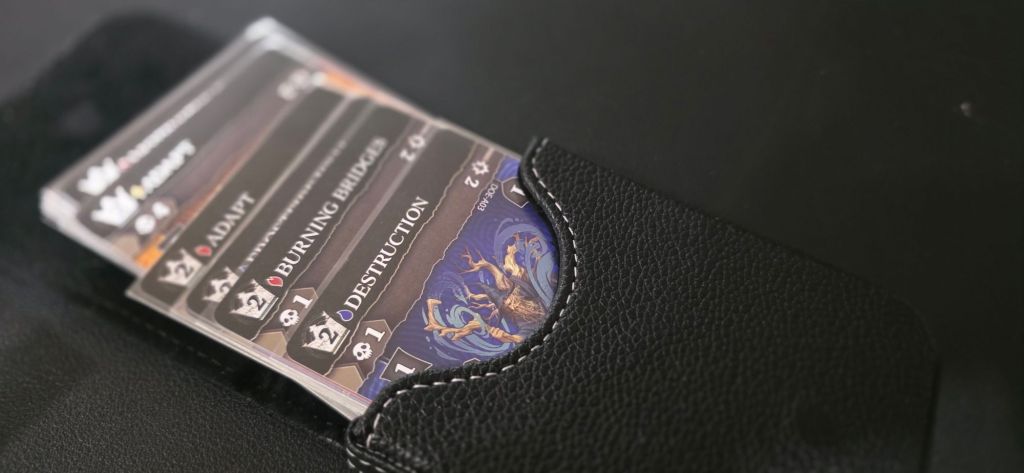
Coming from the master of compact and in-hand games Joe Klipfel, comes a game that combines all characteristics of the other games in this list. It’s thinky, compact, quick, easy to put away and pick back up and has great replay value.
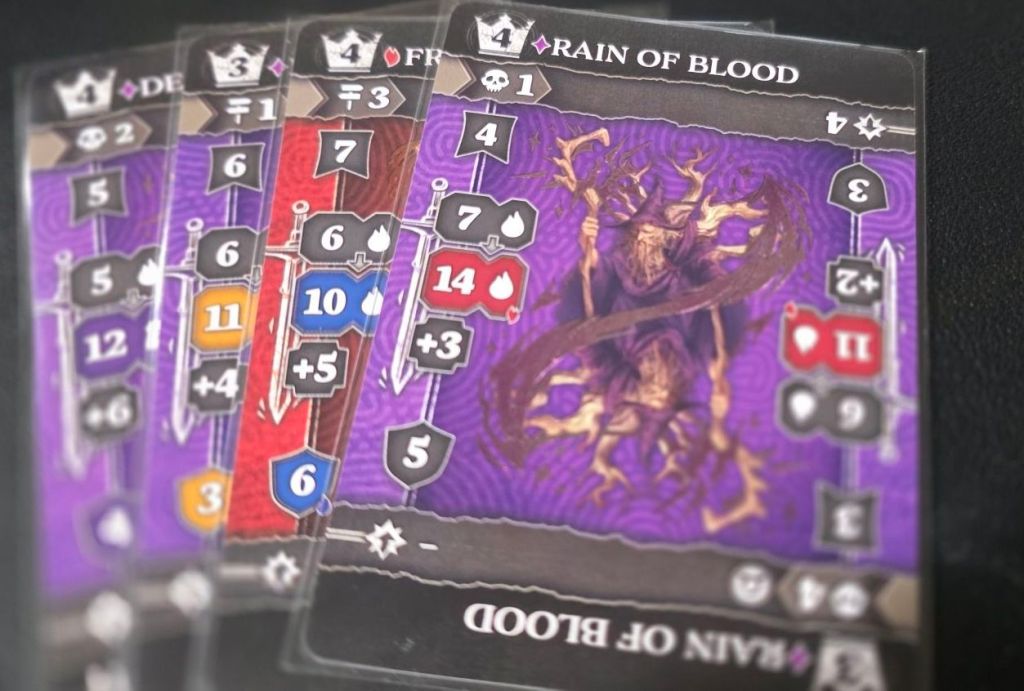
The most interesting though, is that lots of in-hand games either use the travel mechanism or the store resources sideways one. Dragons goes a different route. Each the, you draw a hand of four, and try to overcome your challenge by having the right combination of element, spell and bonus, with one card being kept. It’s a simple system to understand, but there are so many variations and special abilities that makes this deep.
Dragons of Etchinstone is almost impossible put down. The design is inspiringly refined and offers so many great decisions and moments, while being perfectly portable and comfortable. And the base alone would be enough for the top spot, add in the unique characters and you have a classic for ages.
 Let's Game More