
1-4 Players
Designers: Rola & Costa
Artist: Marina Costa
Publisher: Pythagoras
With the second edition of Cafe, Pythagoras started its small box collection called Quinas. The second of this collection is last year’s Lata, about the production of can sardines and mackarels. Can this be a good game or is this collection just fishy?
Gameplay
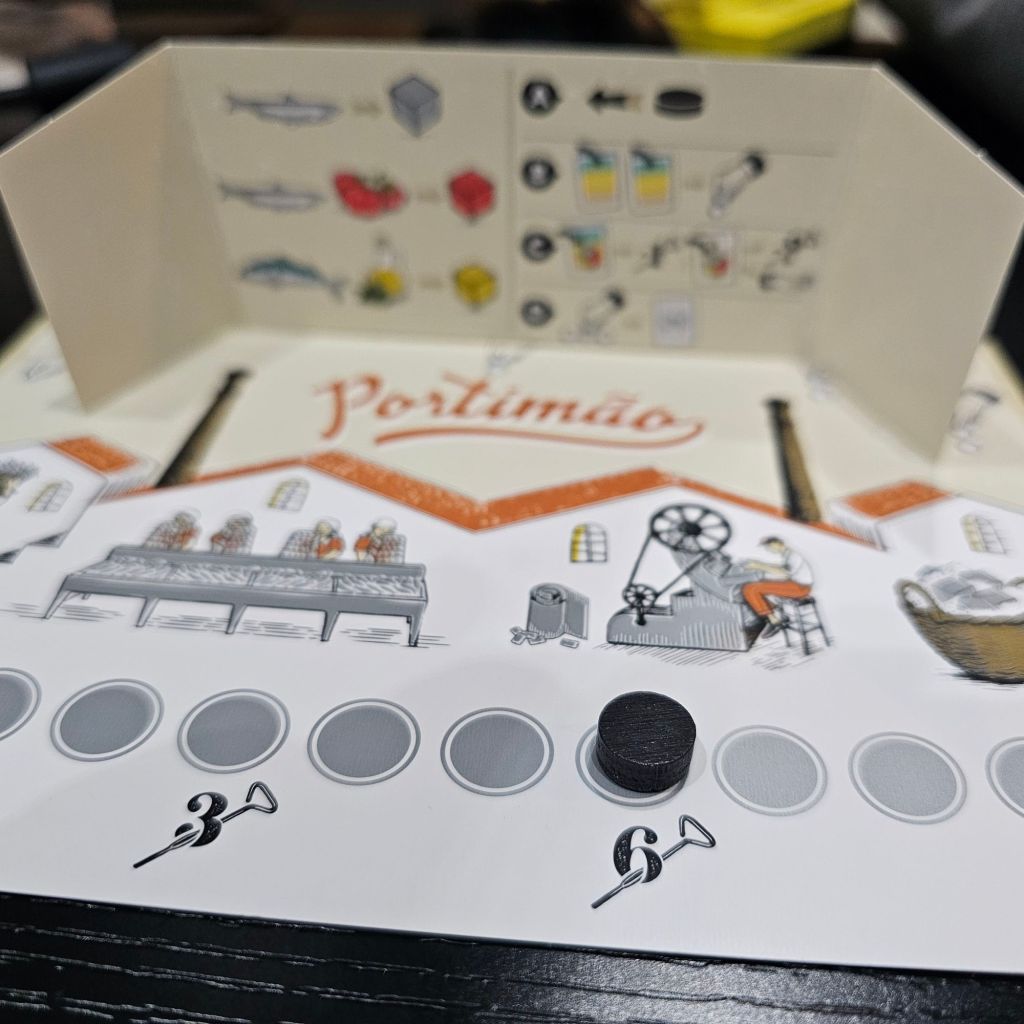
At the beginning of each of six rounds, players bid with their action points for turn order. Then, following that order, they get more cards for their factory, then spend actions to activate their production cards, spend that production to fulfill contracts for money, and to get end of game scoring.
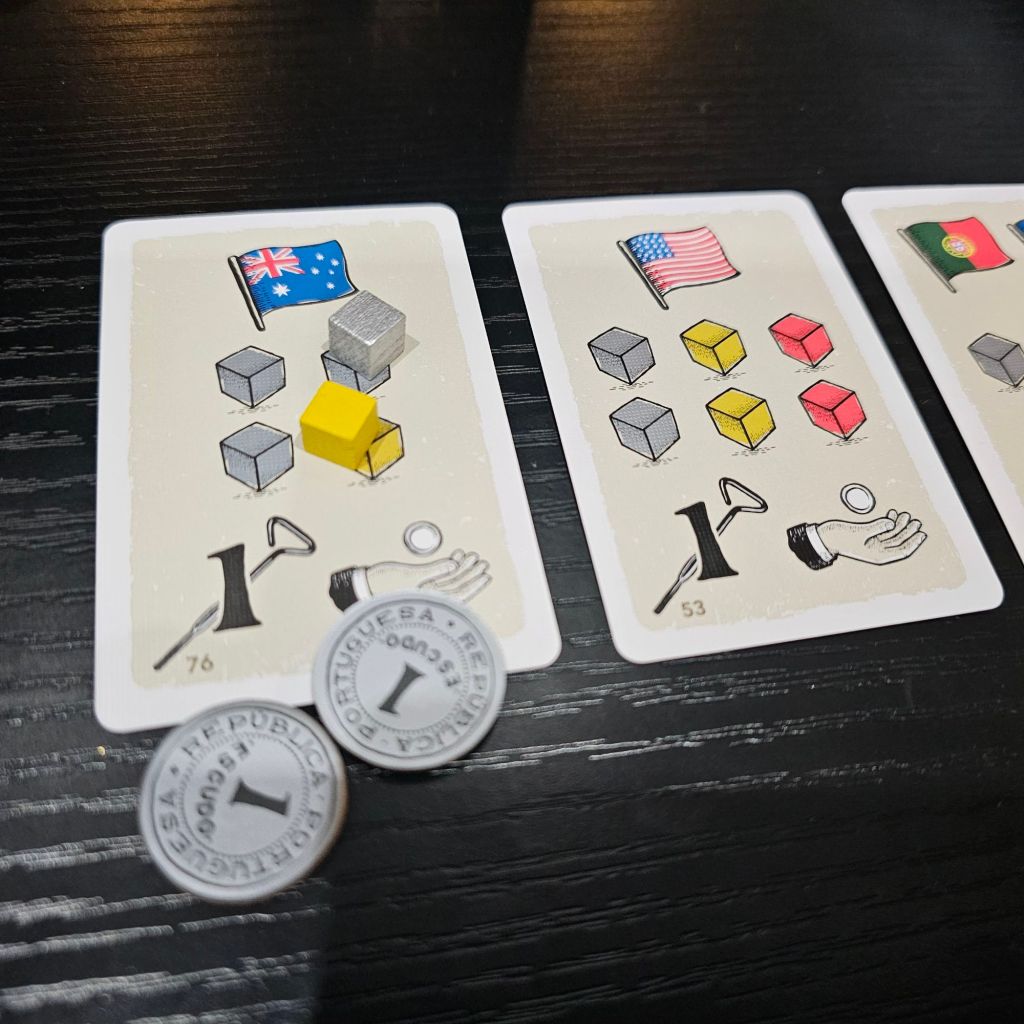
At the end of each round, the contract and end of game scoring are refilled and every production is discarded except for regular sardines.
Solo Gameplay
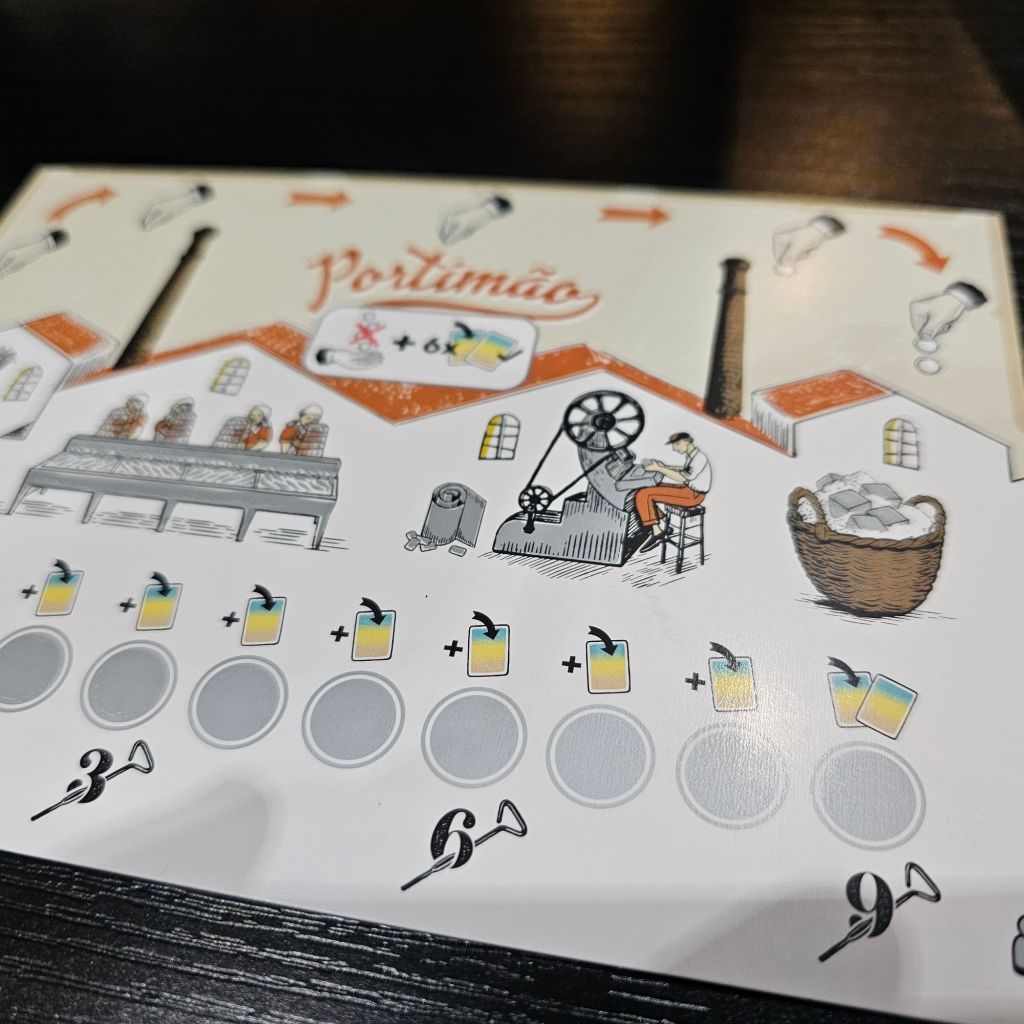
The game flow is the same for solo, except or instead or the initial bid, the player spend their actions to see more production cards. Since they have to add two, and some spots cost money, the player can be forced to place unwanted cards and disrupt their engine. There is no win or lose, it’s a beat your own score type of deal.
Each of the player boards have a solo specific side with its own twists, like one starts with no money and another only have options of pairs.
Components
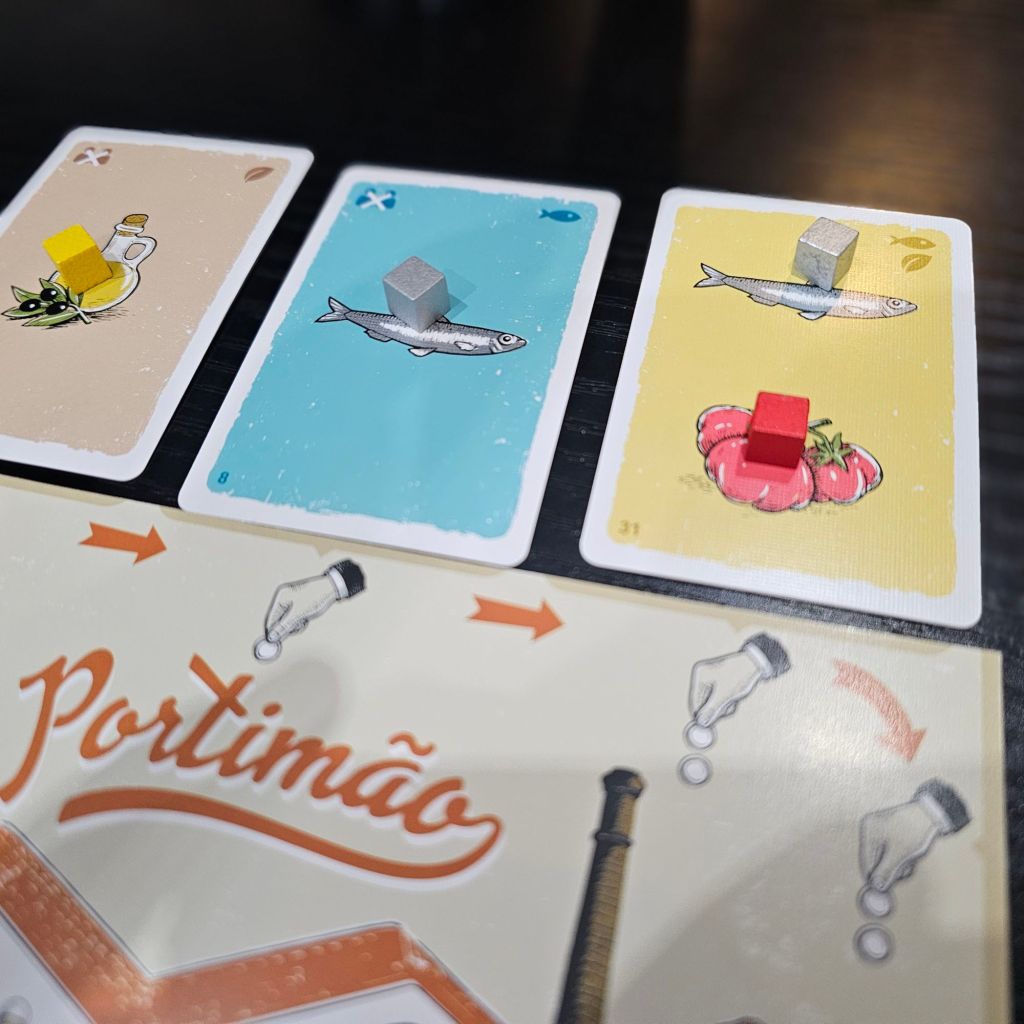
As usual for Pythagoras, the components are somewhat minimalistic and very theme driven. That means that it’s not the most obvious for gameplay, but they do look good. The cards have a nice quality, and the artwork is well done. Symbology is fine, not the best, but the rulebook is clear enough that I didn’t find a lot of issues playing, even on the first time.
Conclusion
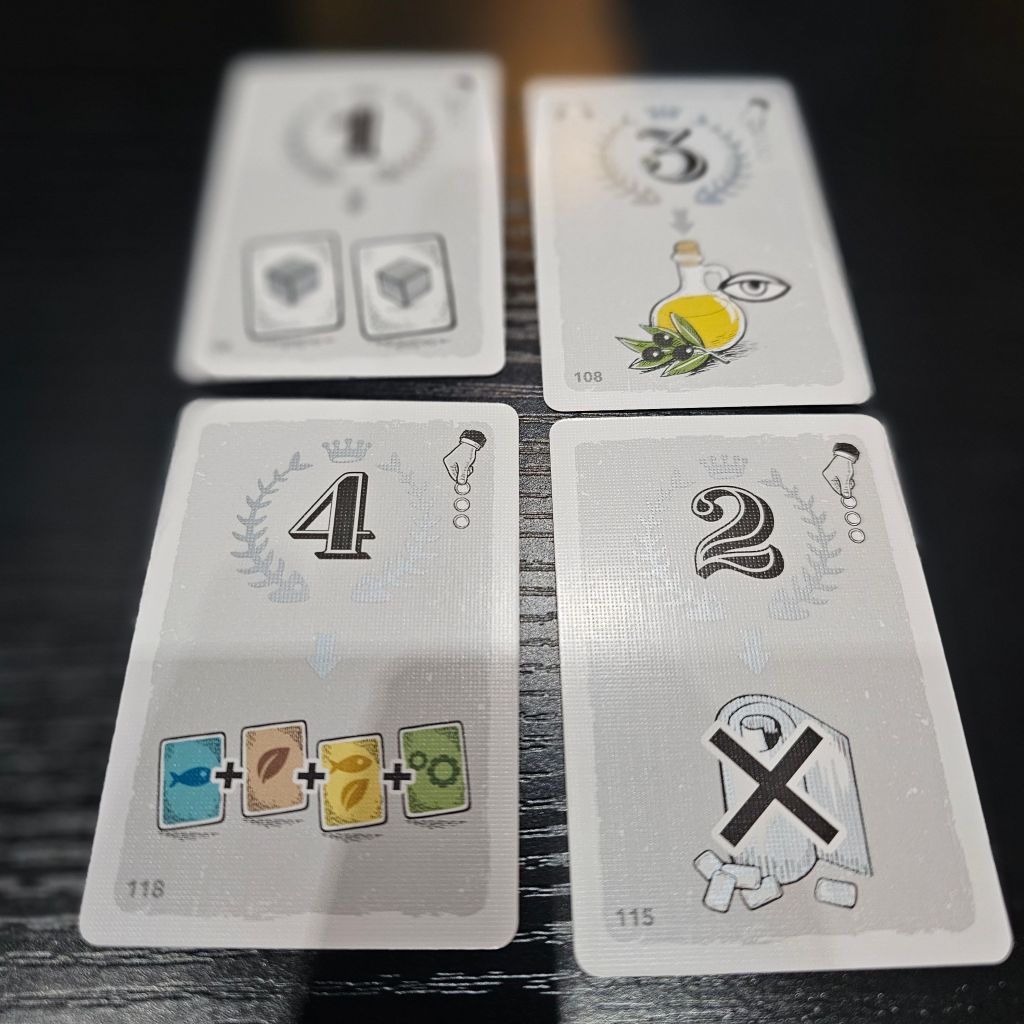
I really enjoyed Cafe, their first on the collection, but I like Lata even better. It feels like a tighter and more cohesive game, while still having the high efficiency gameplay elements.
Specifically for solo, this feels more well tested and developed, which I appreciate. And the fact we have four different boards add to the variation.
Score: 8/10
 Let's Game More