On this expansion, Warriors and Writings add in the magic duelist Bladecaster and we venture in the River. But does it add to the flow of the game or is it just a bit fishy?
Disclaimer
I have received an advanced copy of the expansion from the publisher to review, but the opinions expressed here are my own.
This is an advanced copy, so every presented here is subject to change. Also, no stretch goals will be reviewed.
The Bladecaster
The Bladecaster
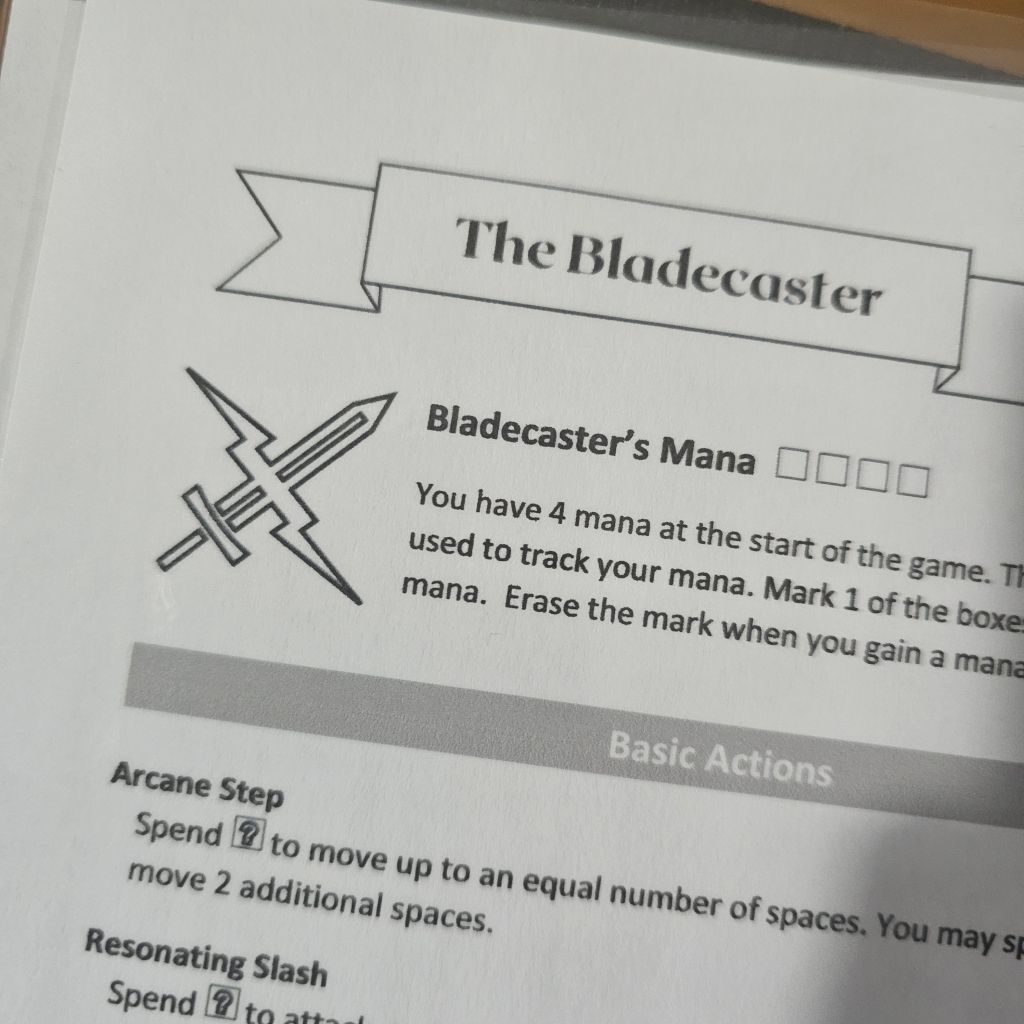
This character is an agile one, focusing on movement and quick melee hits. It is inspired by one of my favorite specializations from D&D and I do feel like it does it justice.
Comparing to the heroes before, it’s just slightly more complex than the two initial ones, and definitely more straightforward than the ones from the first stand-alone expansion. However, it has very interesting gameplay. To be honest, I think it’s my favorite of them all so far.
The River Rush
The River Map
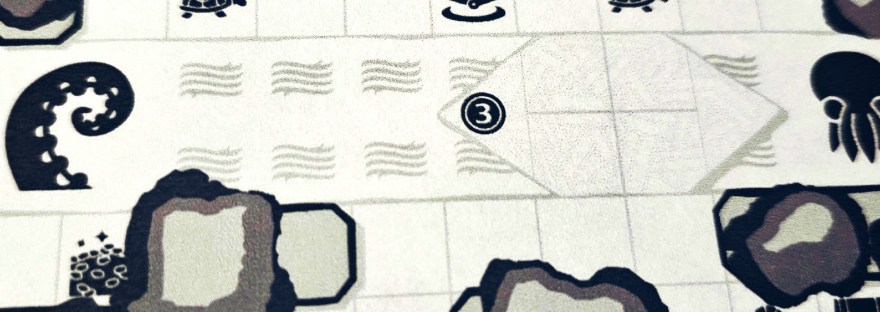
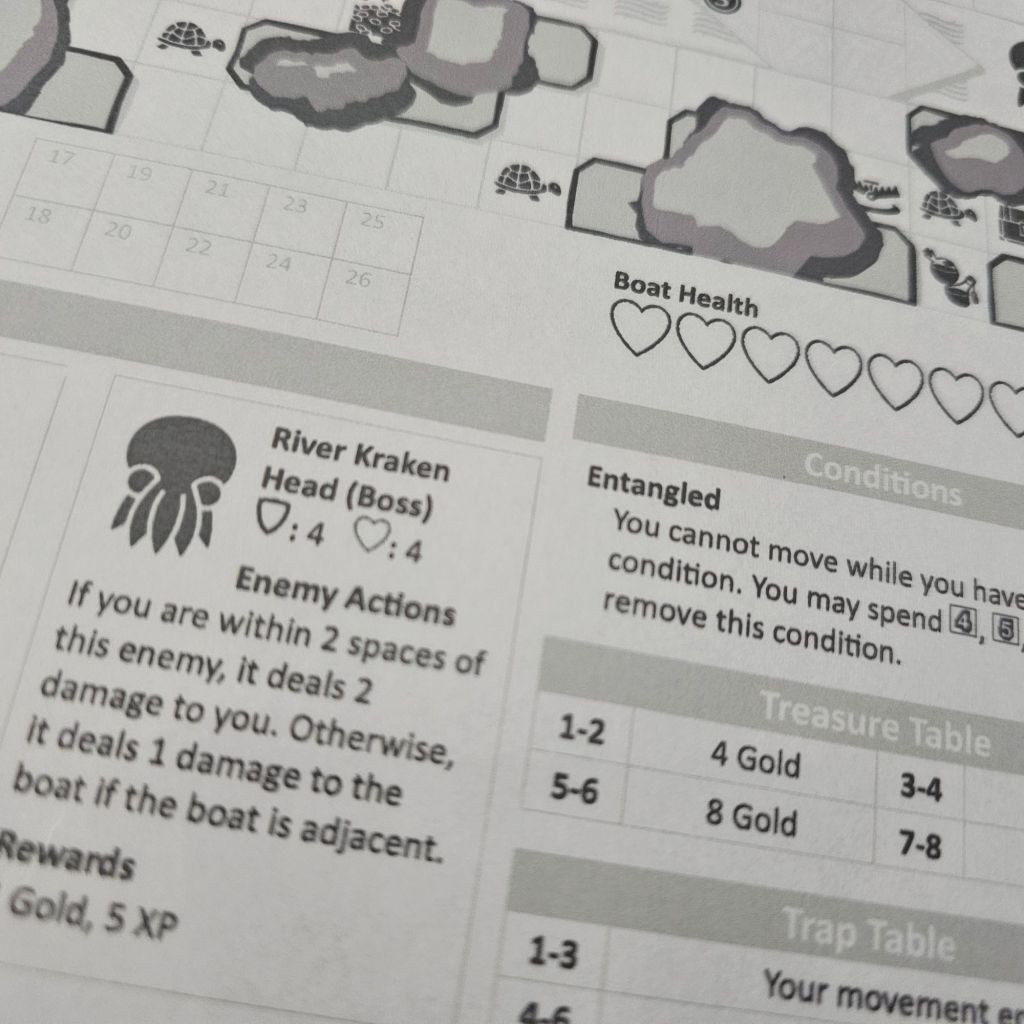
It’s a long map with a river going through where you’re fighting a huge kraken. The main change is that there is a boat that is only available during certain rounds, and if you don’t move it in time you get stuck.
I like how it forces you into decisions of what to go after, and it adds an element of urgency from the very start.
That being said, I do have one big issue: why are we killing tortoises? Couldn’t it have been anything else?
Conclusion
Kraken Head
If you read my review of Warriors and Writings you will have an idea if the game is for you or not. There is nothing in this expansion that will change your perception on that.
Personally, I love it. The two additions do not add a unnecessary complexity, but they do add a ton in terms of interesting decision space and thematic flair.
We go to a world full of adventures, monsters and hexes in this fantasy roll and write. But is this a world where dangers bring epic adventures, or is it hexed from the curses of the dark minions?
How to Play
Character on map
To setup, each player needs a map, an encounter table and a character. Game will go until a certain number of boss monsters are defeated, depending on the number of players.
Each turn 3 dice will be rolled. Each player will chose one for movement and two for encounters or battles. The movement die will determinate how much the player will move, if they go into special terrain, like mountains or water, and how many provisions they need to spend. Players can never move into the same terrain twice, and if they can’t move they are out.
The other two dice are used for either encounters, where players get or trade for resources and/or levels of weapons, or fighting monsters. To fight a monster a player needs to either have the necessary weapon levels or pay in life the difference. Both the encounters and the monsters available depend on the terrain type the player is in. If they are in villages or castles they can chose that or the terrain its on.
Bosses can only be fought in each of the six castles, and they require not only weapon levels, but also a special item (or additional life). Once a certain number of them are defeated, depending on the game type, the game is over.
Rules and Components
Character sheet
Beginning with the rules you’ll start to see a trend with this game: high quality, if not a bit of excess. The rules are well laid out, detailed and with plenty of illustrations and examples. It also has quite a bit of thematic flare to it. It also details every enemy, character and scenario. With all that, it is a huge 100+ page beast.
Initially this game was released with a full page with one map and encounter table for each character. The problem is that there are 300 maps over 3 scenarios, and 16 different characters. Luckily, one stretch goal was hit that broke that down into 3 parts, so you just need to print the 16 characters, 8 encounter table for each of the 3 campaigns, and the maps. Again, there are 300 of them. Honestly, print a sample that and you’ll be fine.
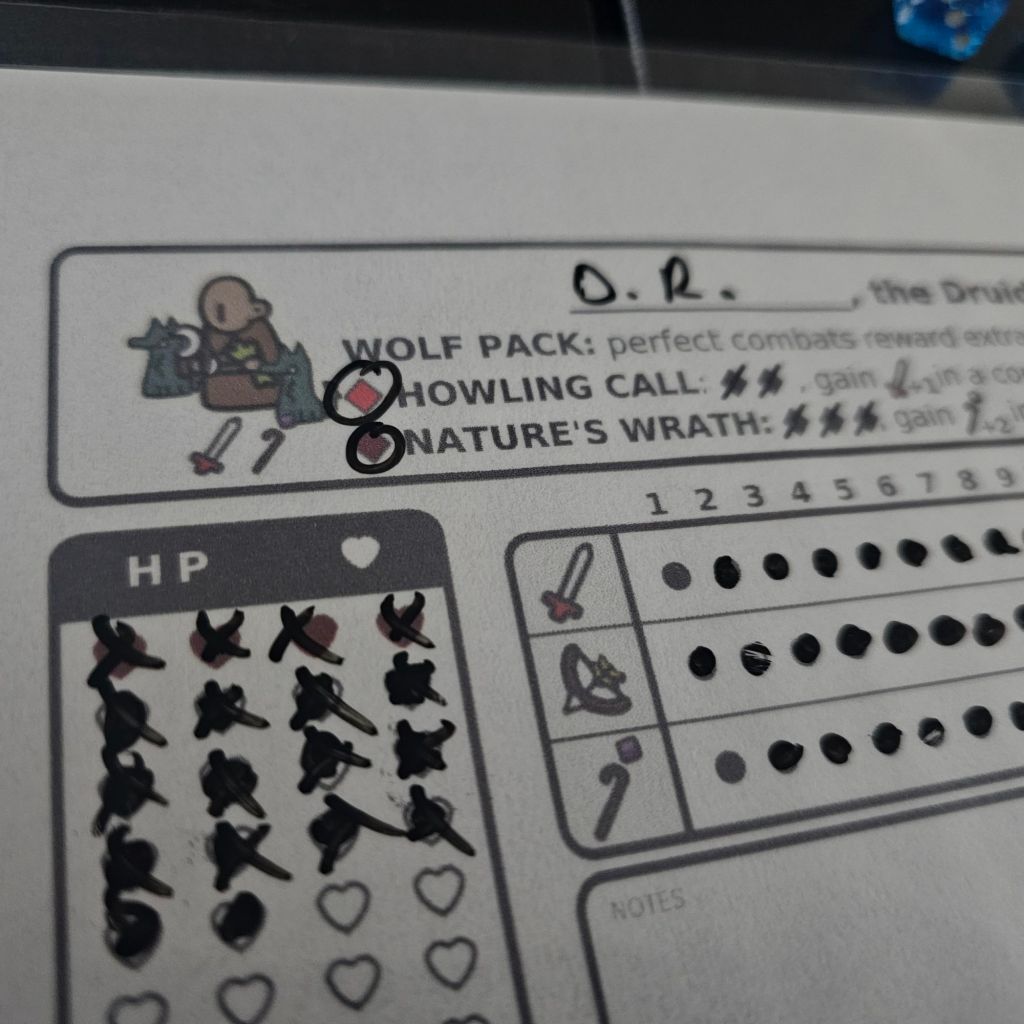
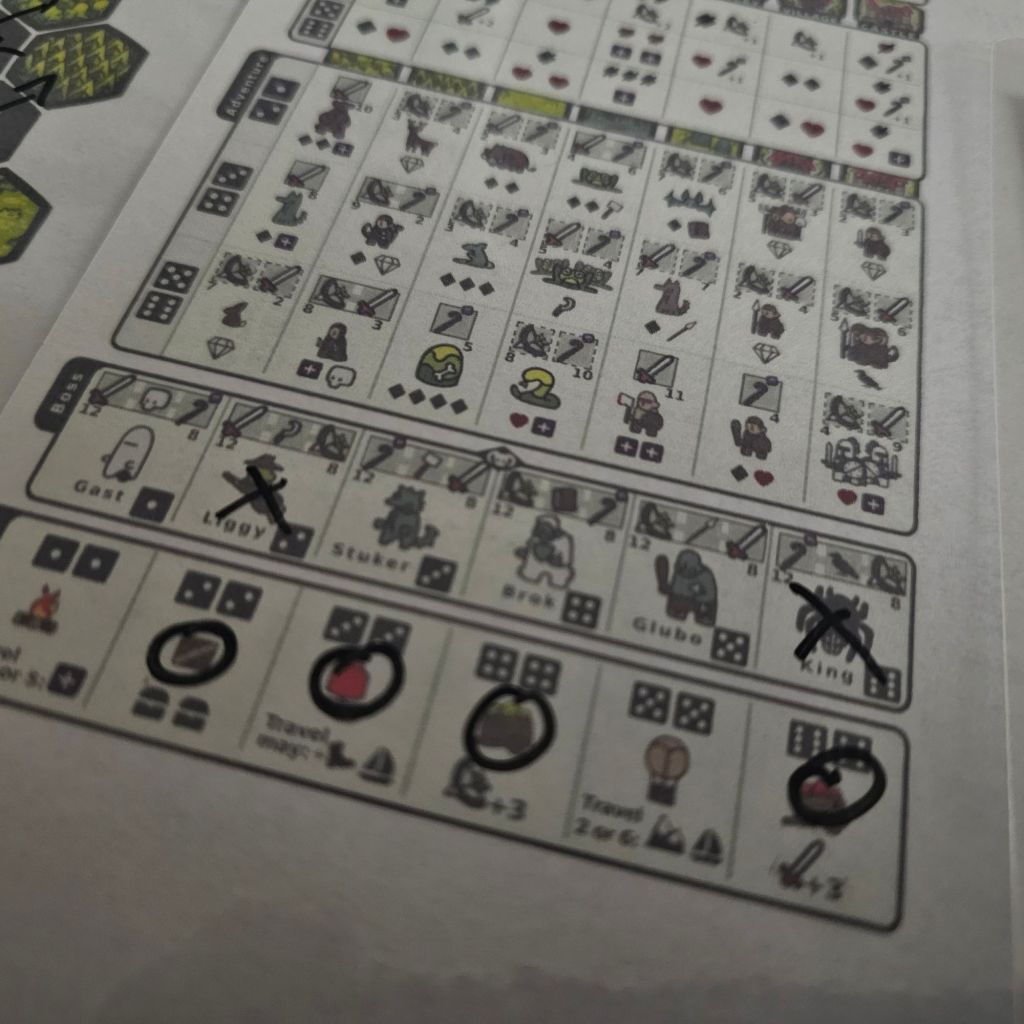
But let’s analyze those parts. The character and encounter tables are clear and easy to understand and use. I wish the spaces to mark your stuff, specially food and life, were bigger. It can get a bit messy. But it’s mostly fine.
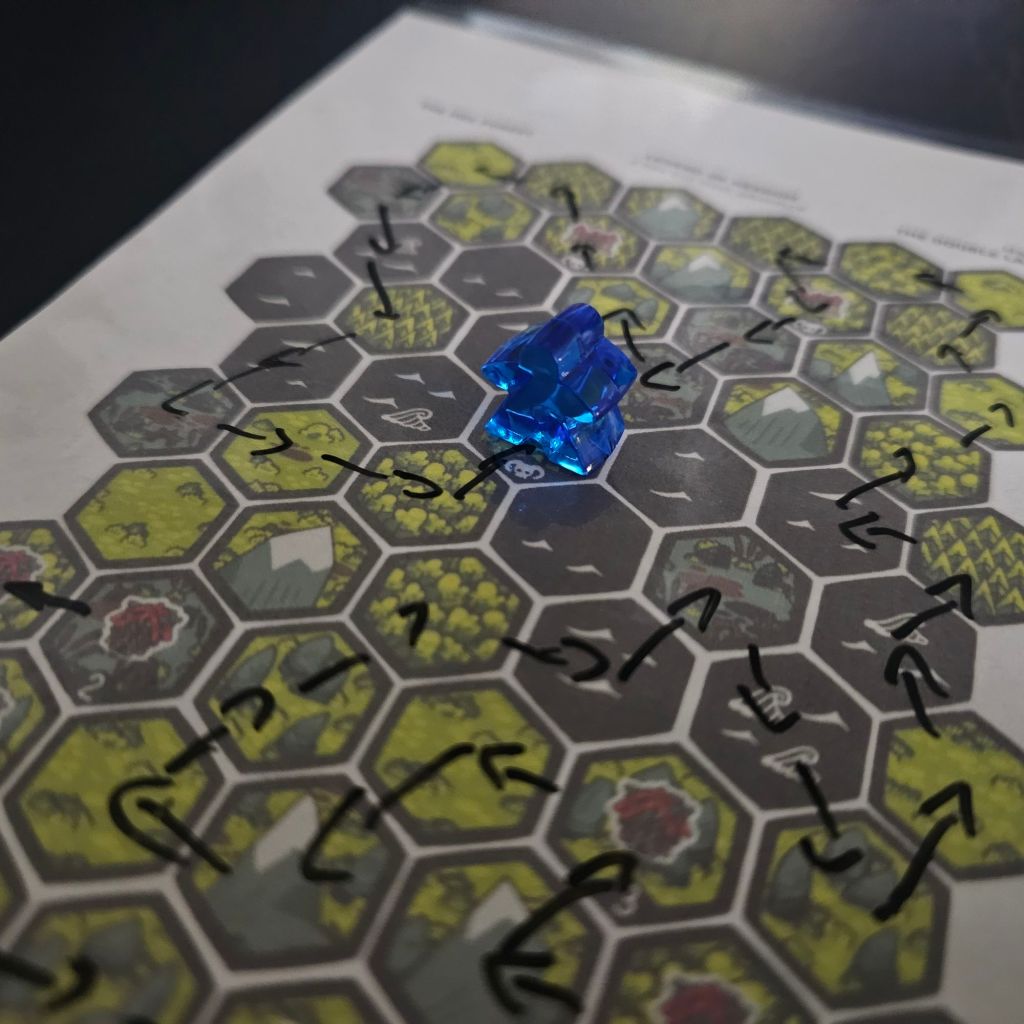
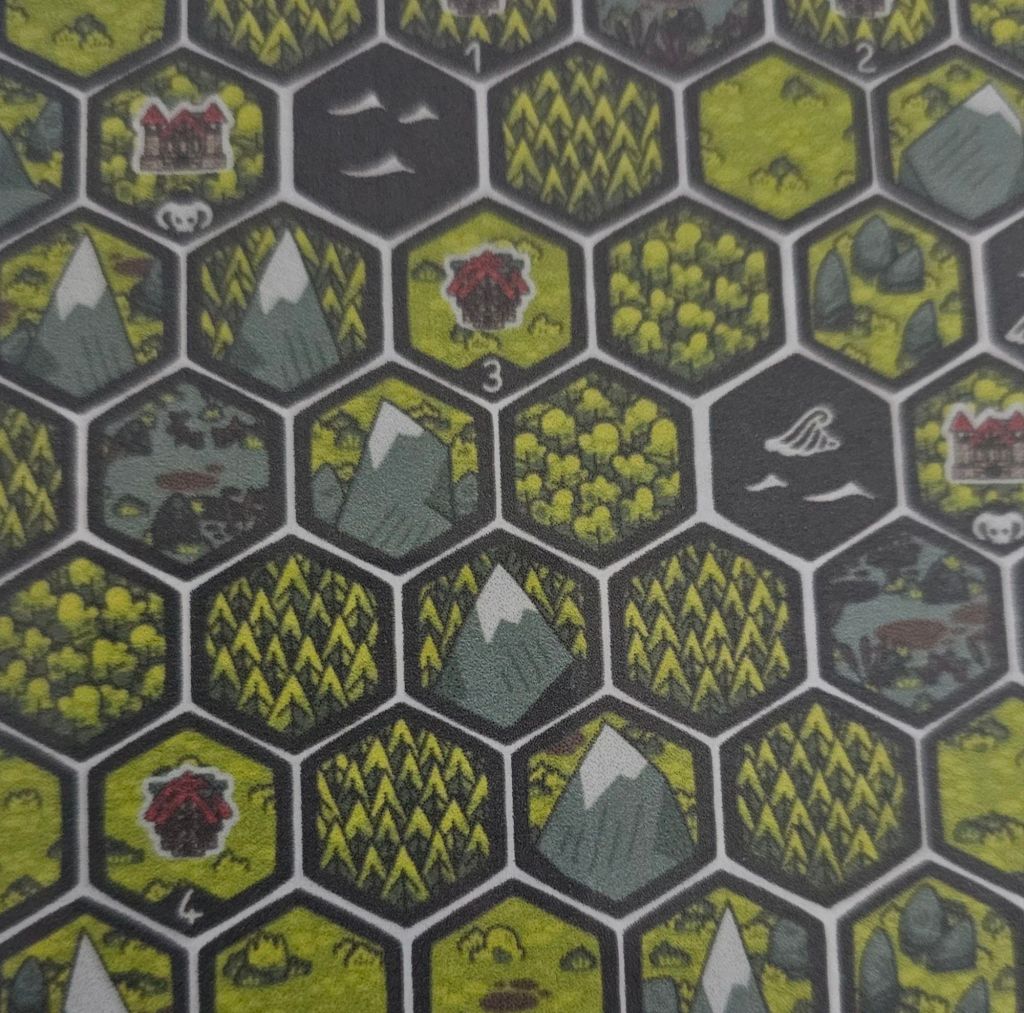
The map is clear and feels big, but it’s also a bit busy. Since you have to mark all of your travel, halfway through the game it can get chaotic. I highly suggest having a meeple to. mark your current location.
Score: 8.5 / 10
Gameplay
Encounters and treasures
This game plays a bit like trying to fix a leaking boat on the water. You need to get food, get more life, improve your weapons, and not get stuck, and usually you have to spend or forego one for the other. You will be in constant fear of defeat, but with careful planing you can turn around and get powerful.
There is never a dull moment in Legend of Hexdom. Every turn is tense and exciting, and filled with grueling decisions. But making your plans work and getting the bosses make you feel that much better.
Score: 8.5/10
Theme and Art
Forest Map
The theme is classic adventures in a dangerous Kingdom deal, and it’s heavily inspired by old school JRPGs like Final Fantasy and Dragon Quest. But what’s cool is that Papermage took its time to give every character, enemy and boss its own personality and a little backstory. This is going above and beyond for theme, and I appreciate that.
Art style is very distinctive, and it will either trigger your nostalgia or it will fall flat. It is well done, but simplistic. But it fits well with the package and it integrates with the theme.
Score: 8/10
Conclusion
Legend of Hexdom is an excessive game. Almost everything is almost too much, and that usually comes at the cost of good design.
Luckily, that’s not the case here. This is a cohesive, well rounded and well balanced game. Games are exciting and have a great arc, ending just when they should. It’s a well. designed game that just happens to have an absurd amount of extra stuff.
Pulling out from the old days of TTRPGs, Warriors & Writings throw you in a dungeon to find treasures, fight monsters and confront the big boss. But is this a treasure to be hoarded or does it deserve its place in the darkest of pits?
Disclosure
A copy of the base game was very generously donated by the designer for this review. However, I will do my best to give my full honest opinion.
How to Play
Goblin’s Den Map
To setup the game, each player needs their own character sheet (that can be different) and a map sheet (that should be the same), as well as one map reference and one action reference to be shared.
The game goes for 40 turns, and during each turn two dice are rolled, and players use them to take actions. There are no basic actions in the game, all actions available are in the character sheets, and they are mostly about moving or attacking. Players go around the map fighting monsters, getting treasure and exploring. The goal is to defeat the map boss, and then have the most gold.
Solo gameplay is the same, you’re just aiming to beat your own score in gold while still defeating the boss under 40 turns.
Rules and Components
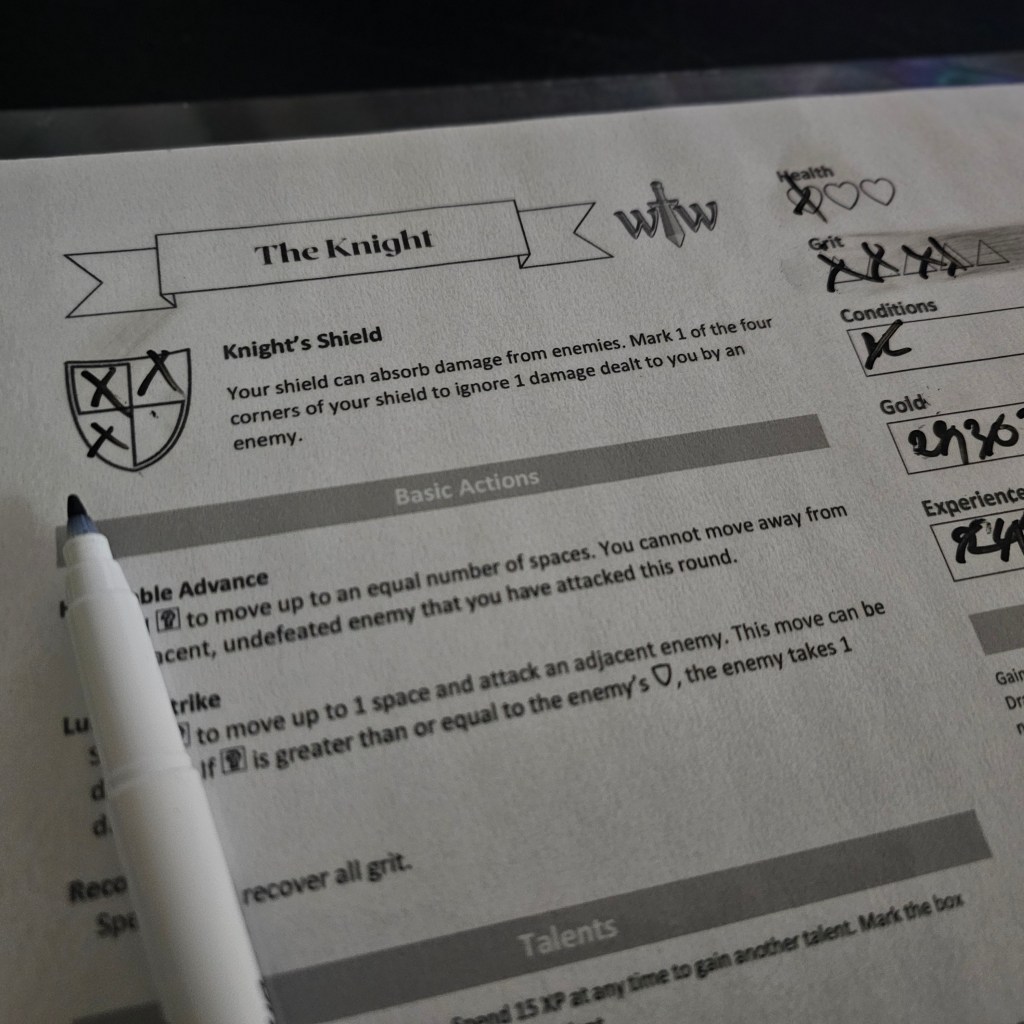
Knight Character Sheet
Rules are well written and clear, leaving little room for doubts even on initial plays. They also have plenty of examples of gameplay, which is always appreciated.
Components are easy to use, with simple symbology and plenty of references to simply consultation during play. Unlike most print and play games that you could just print and use as a one time use, W&W is a game that requires laminating, specially the character sheet. There is a lot of writing and erasing resources, and can get quite messy at times.
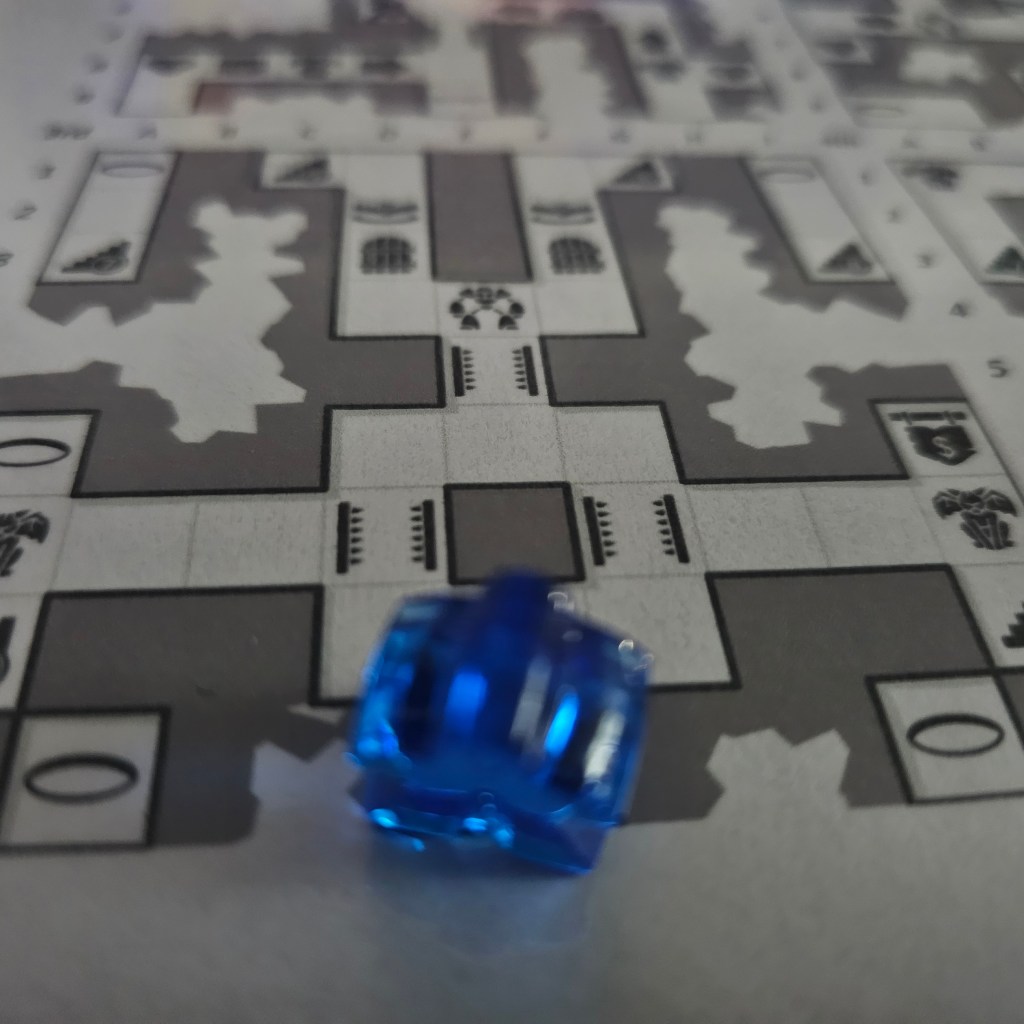
For the map, the way it’s intended to be used is to write your path as you go, but I found that this too can get messy and confusing, specially if you are returning a lot to the same places. There is one particular map, the Wizard’s Tower, where this becomes particularly bad as it requires you to walk the same paths multiple times. I found that using a meeple or token makes it considerably better.
SCORE: 8/10
Gameplay
Character on map
It can seem that 40 turns is a lot, but this game is snappy. Turns are lightning fast, and those 40 turns go quickly. It is a thinky one though, as on one hand you’re trying to bolt to the boss, but you also need to get treasure along the way. Time is your main enemy here, and often you need to leave stuff behind or just tank the hits.
Also, each character and map require its own strategy, and it does change a lot. One thing, more noticeable on solo than on multiplayer, is that the rolls can really make or break a run. Yes, there is mitigation in the form of grit, but if you’re rolling a lot of lows you’re going to move slower and have a harder time.
Still, it’s a game where you rarely feel out of options or just going through the motions. It’s engaging and a ton of fun.
SCORE: 8.5/10
Theme and Art
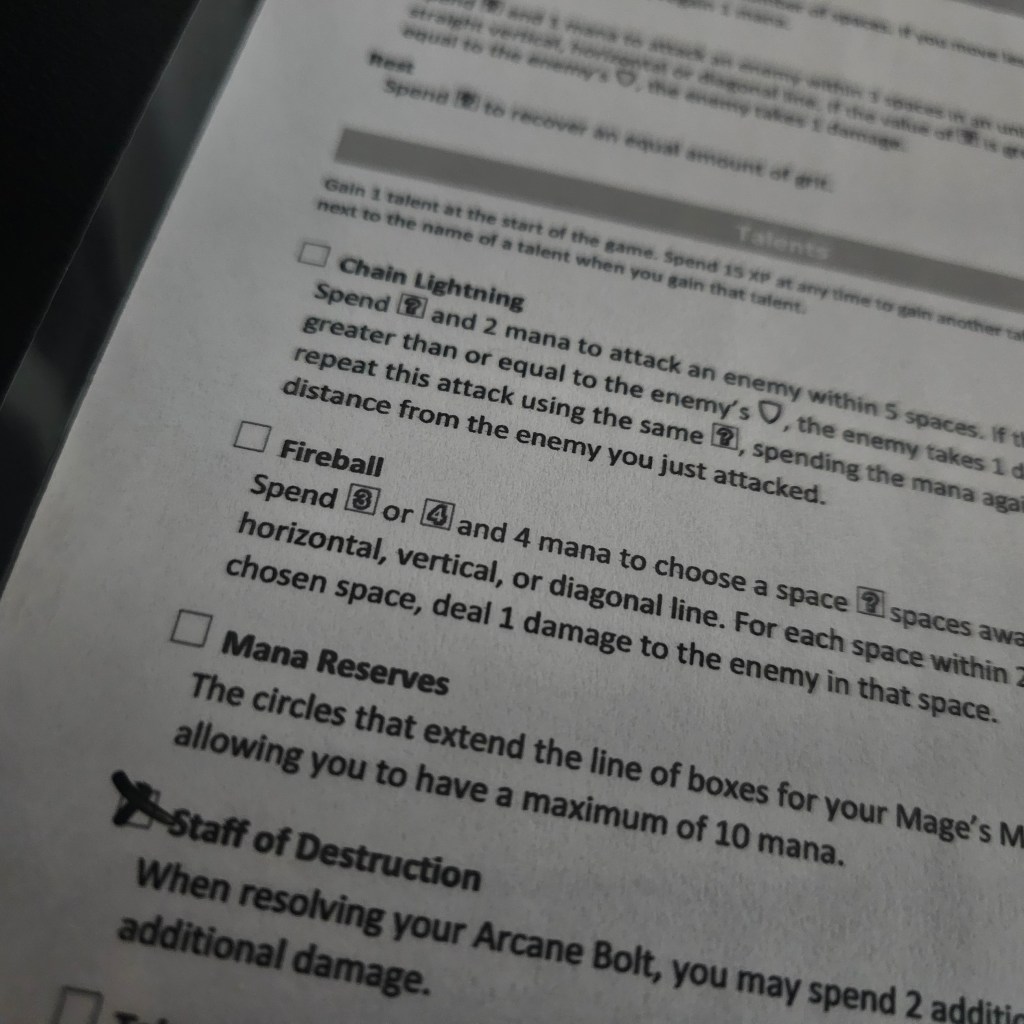
Mage Talents
I’ll preface this section saying that will be a huge caveat on my analysis. Bear with me.
Theme is clear, it unapologetically evokes the old TTRPGs in every aspect, and it does so very successfully. It is a distilled down version of a dungeon run on those games, but every aspect feels thematic. The two characters are very distinctive, with the knight lunging forward while the mage needs to move slower and manage their mana. The three maps on the base game are also filled with unique and interesting twists that make them come alive.
This game art is pretty bare bones. Aside from the illustration on the cover of the rules, everything is just black and white writing, boxes and icons. There is no illustration of the characters, no backdrops or details on the map or on the characters.
But, as for the caveat, this look is exactly what you would get on the TSR age of Dungeons and Dragons. A cool artwork for the cover, and just black and white inside. If you lived that, like I did, it feels right at home. It was a bold, but I feel like a deliberate one. But it’s one that needs that nostalgia from the player to work.
SCORE: 7.5/10
Conclusion
I tried my best to keep my review as neutral as possible, analyzing the game on a modern lens, and on that we find a simple looking but intensely engaging and highly thematic dungeon crawler.
But I feel like I am the exact niche this game appeals to. I didn’t just play TTRPGs, that was my childhood and teenage years. So I felt at home, every aspect clicking in a special way that triggers my nostalgia bad.
In either case, I would give this one a go. The decision space alone is enough to make interesting games.
I love roll and writes, and Dungeon Pages is my most played of them this year. In this project by Jason Greeno, every week there is a new hero and dungeon to explore, but every single hero is compatible with every single dungeon. So I had to make it work.
Laminating
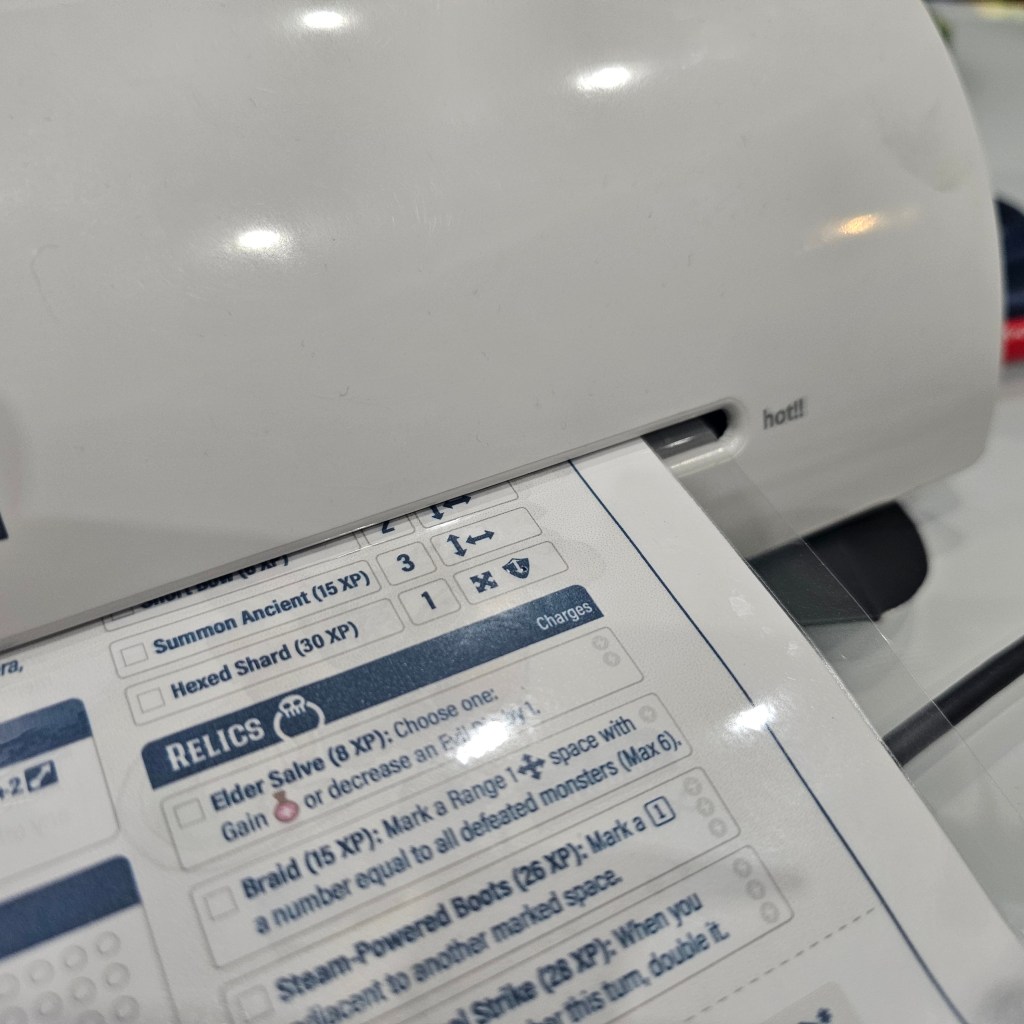
First, my trusty laminator gets to work. This thing was the best gift my wife given me, it works like crazy!!
Guillotine
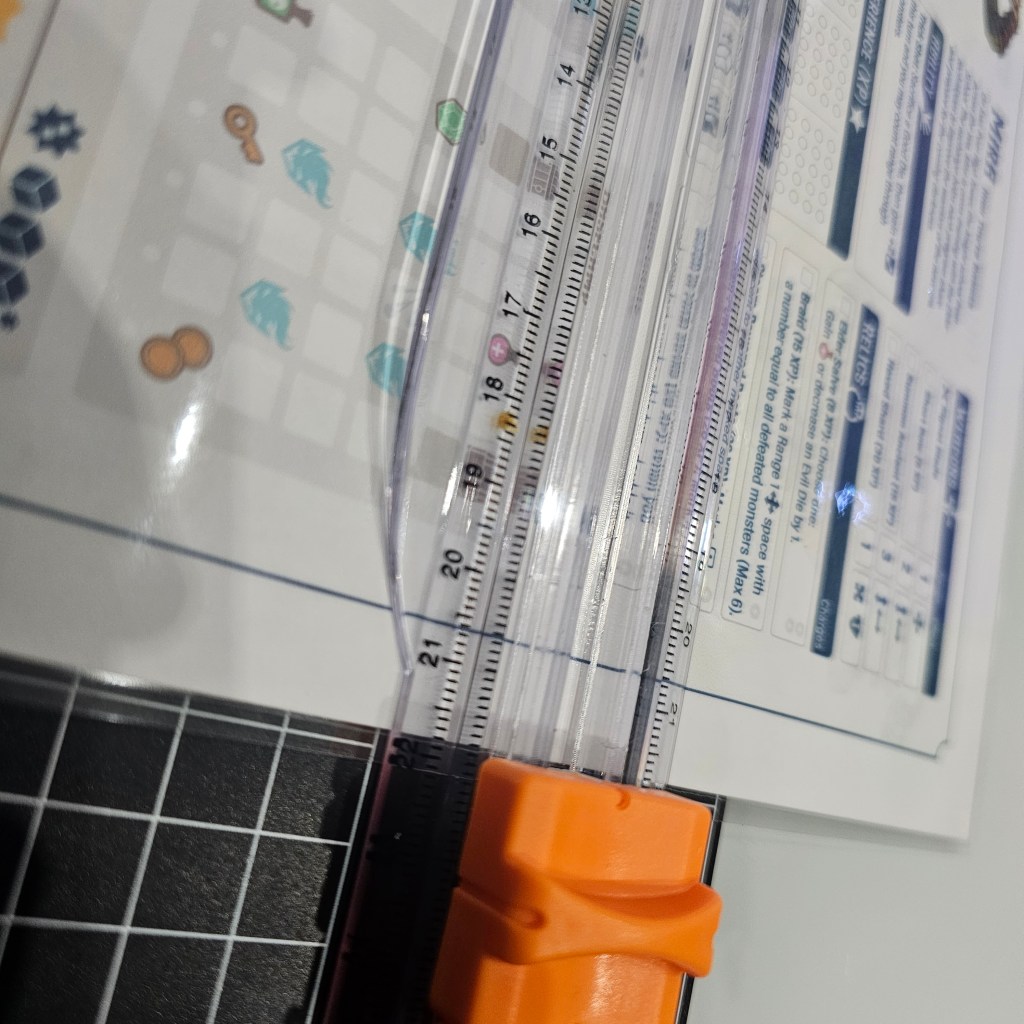
Now, I wait for every second week so I print two pairs of hero/dungeons back to back. Then, with the guillotine, I split them so I can make them independent.
To the folder
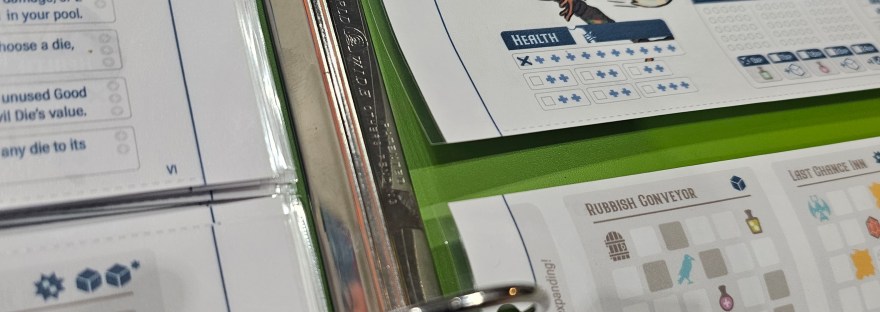
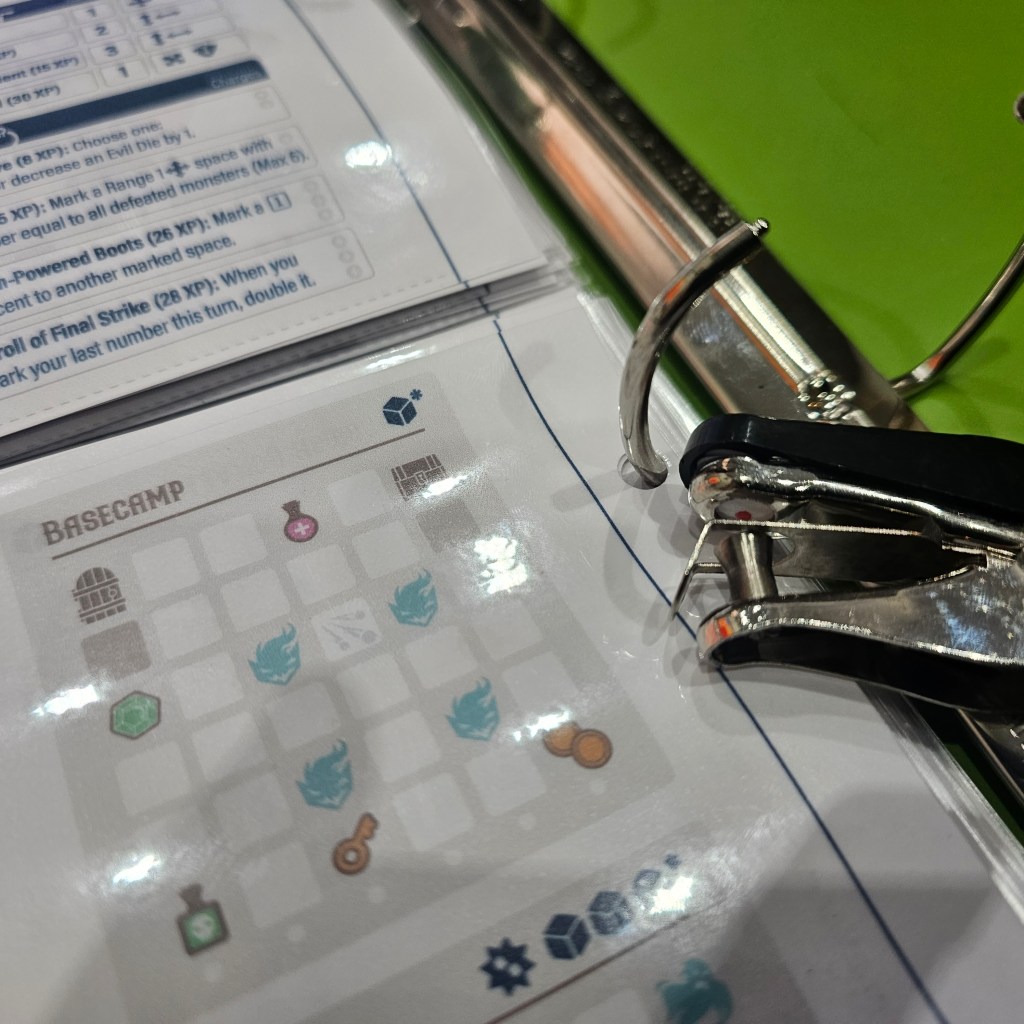
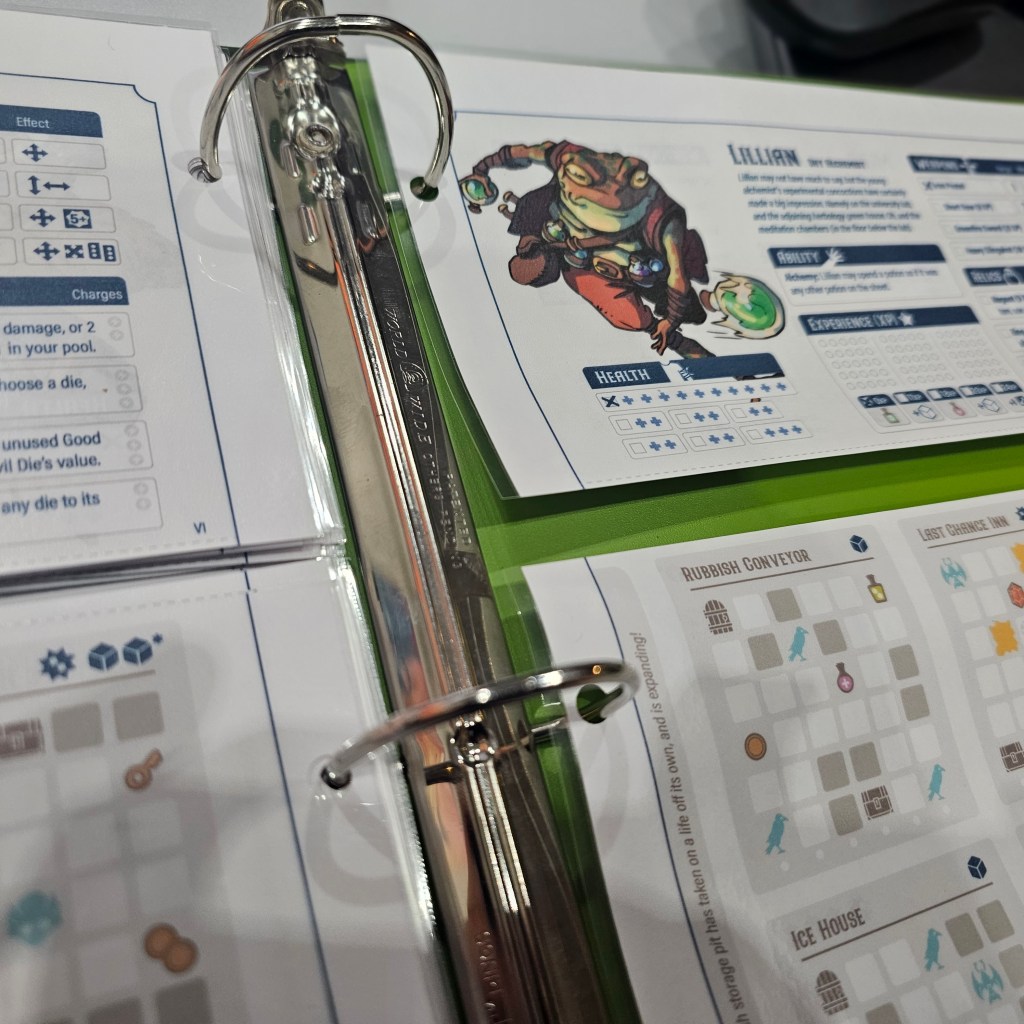
Next, I add the holes and put it on a 3 ring binder I had laying around. Even though they are in order, at any point I can flip the top or bottom portions to have any combination and just play it out.
Dungeon Pages
Yes, sometimes the hero and the dungeon will be in opposite ends of the binder, but I decided that this was worth it to save in pages and laminating. And, honestly, it’s not a big deal.



 Let's Game More