Review

Quick Review: Horrified American Monsters

1-5 Players

Designer: Michael Mulvhill

Artists: George Doutsiopoulos, Kory Lynn Hubbel, Victor Maristane, Tom Moore, Joshua Newton, Studio HIVE

Publisher: Ravensburger

About the Game

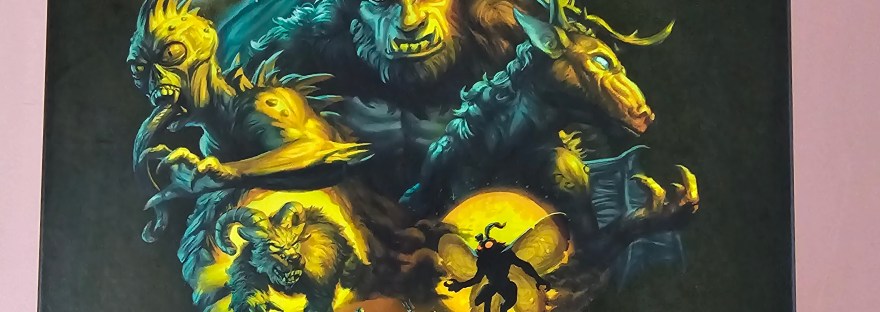
The team at Prospero Hall bring the terror from the successful and super fun Horrified out of the studios and into the American lore, something I could see Winchester Brothers dealing with.

Gameplay
American Monsters

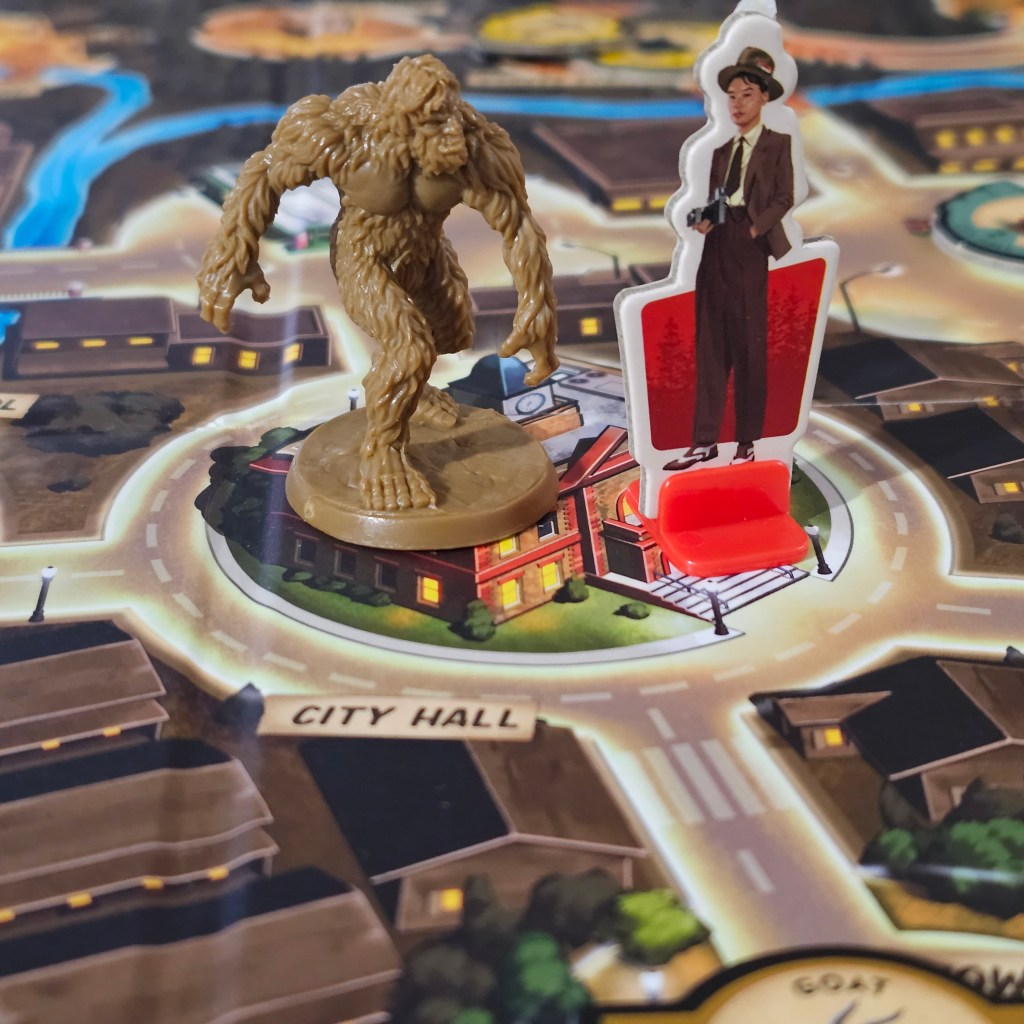
Everything but the details of each monsters is the same as the original, but let’s recap. On your turn, you have a number of actions depending on your character to move, collect items, and use those items in creative ways to defeat the monsters. Each monster have their unique mechanisms. Then the monsters activate, do some effects and try to attack the heroes or the people in the village. You win if you take care of all monsters, and lose if the terror gets high enough or if the event deck runs out.

Solo Gameplay

Exactly the same as the regular game, except the terror begins at 3. However, unlike the first one, the balance seems a little off. Some monster seem not work as well solo, Bigfoot being the most proheminent example.

Components
Horrified Dice

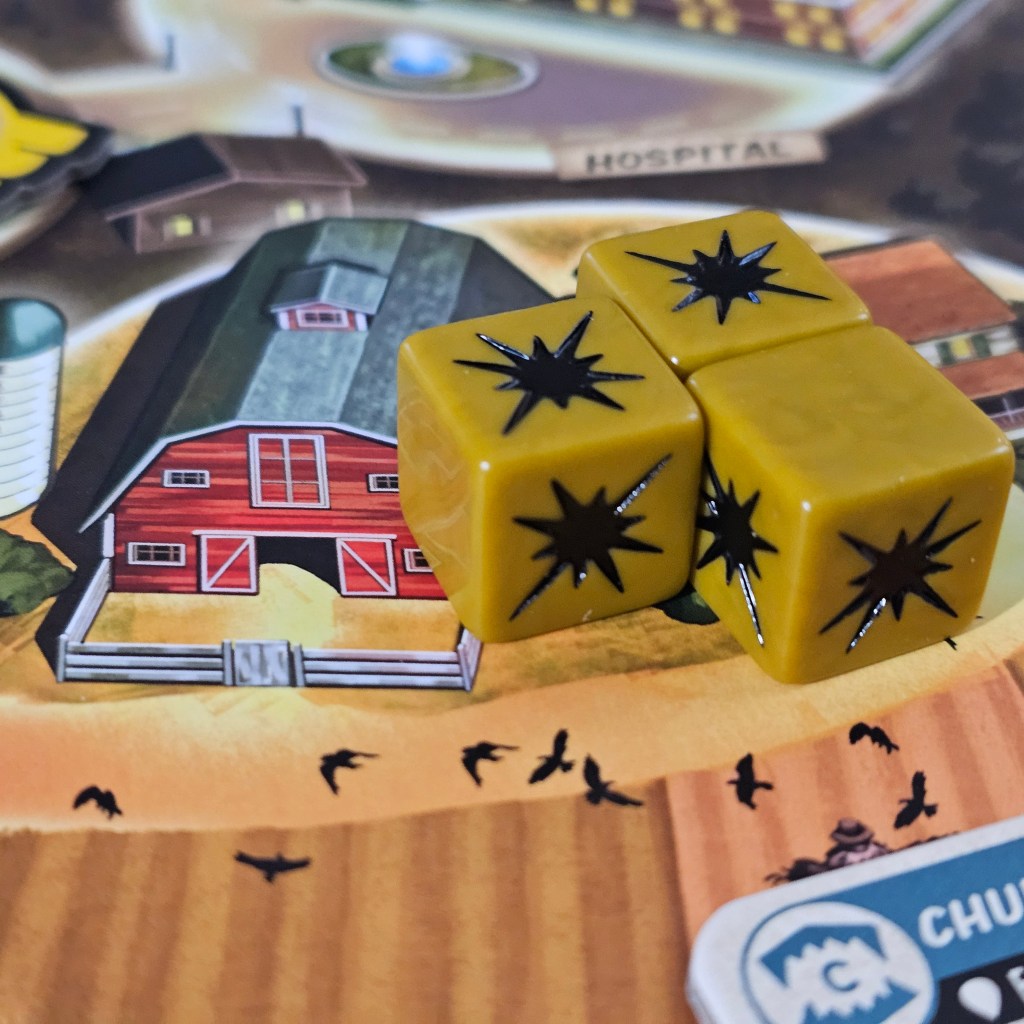
I don’t know what happens with the Prospero Hall / Ravensburger partnership, but all of their games I’ve played share the combination of great component quality and decent price. This is, for the most part, true.

Everything was revamped for the theme. Instead of the cook oldies feel, now you have files and notes and stuff. It’s also quite a bit more colorful and bigger. That second part is a bit of an issue as there can be some warping in the long run. Each creature also have their unique tokens and overlays, but, unlike the first one, the overlays are not really overlays, but little placards.

The bad part is the rules, though. The increase in the complexity of the monsters was not followed by a more thorough description. There are points that are quite vague and require you to take a decision or make a ruling. Also, there is one specific case that the game is actually broken, as there is a deduction where one combination has no answer.

Conclusion

I love the new lore, the new visuals and the new challenges. And, I can really hope they continue the line with new takes on the theme, which can be other folklores, other works of art, or so many more.

However, this feels unpolished. Although I did enjoy all my plays, I also feel like the original beats it in almost every aspect. I also feel like it’s a common issue when Prospero Hall takes on more complexity, so it might just be a need for someone to take a closer second view. With the third one coming up, fingers crossed they will have learned their lesson.

Score: 7/10
Review

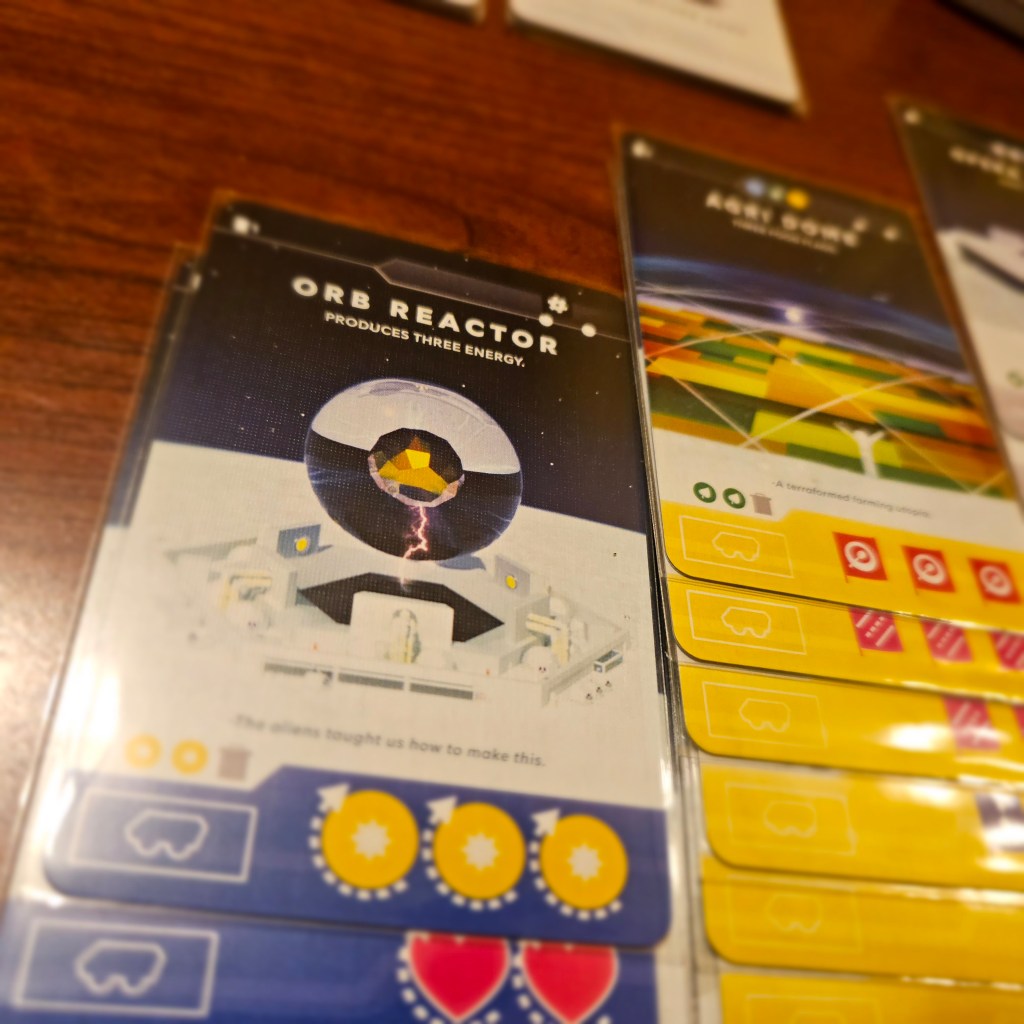
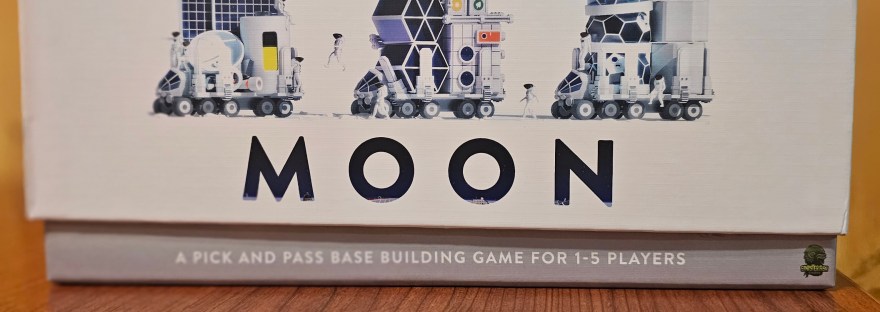
Quick Review: Moon

1-5 Players

Designer: Haakon Hoel Gaarder

Artist: Haakon Hoel Gaarder

Publisher: Sinister Fish Games

About The Game

Third in a series of games designed and illustrated by Haakon Hoel Gaarder, Moon is maybe the simplest of all three, with very simple drafting and card play. But simple does not mean easy, as it’s a tight race game.

Gameplay

Moon Card Play

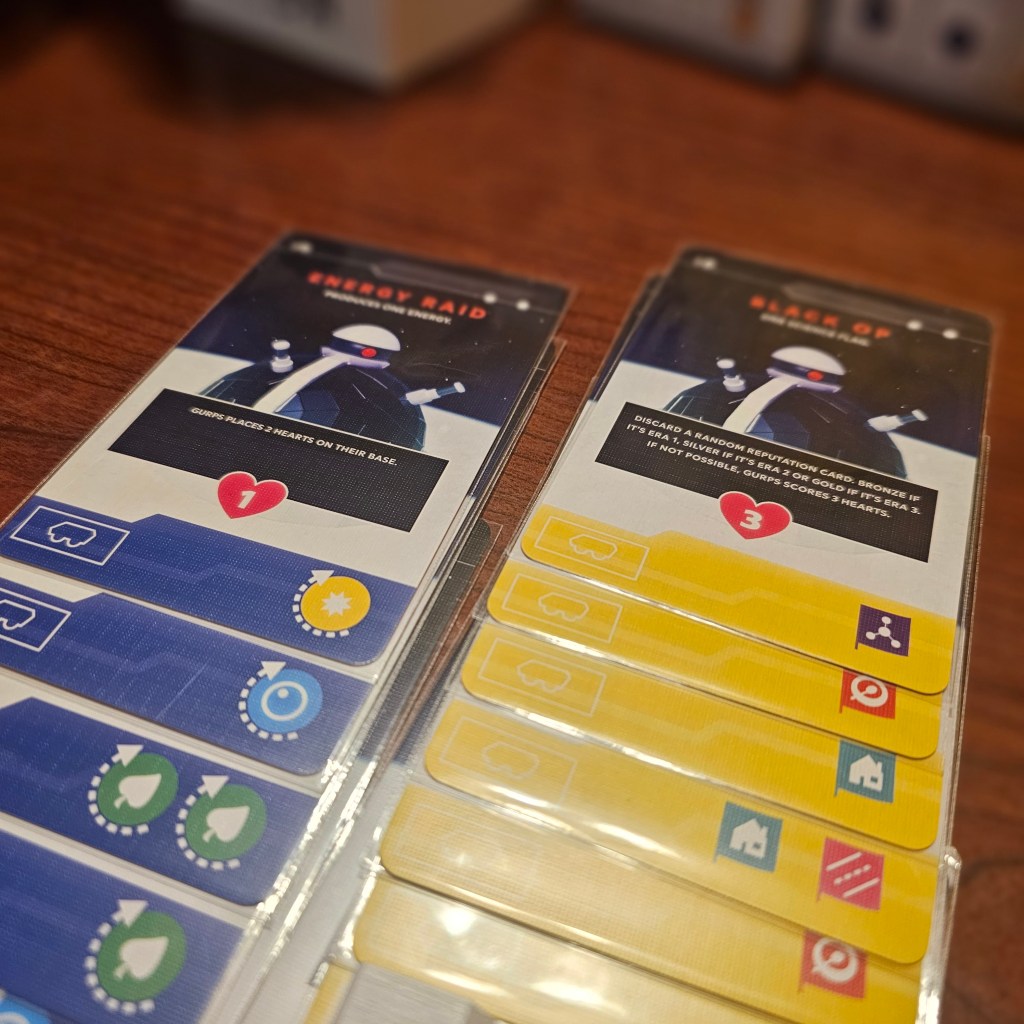
Each turn, you will draft and either build a card or discard it for resources, and also possibly use your lunar modules to access other people’s resources, or claim awards. Cards come in 4 types : resources production, flags, once per era abilities and end of game scoring. At the end of each era, each flag is scored for majority, as well as ongoing point earning opportunities.

One thing that I felt it differ from other drafting games is that the costs do not scale too much. So the crux of game is not if you will be able to score, but it’s how tight you can win so you can branch out and win on other areas as well.

Solo Gameplay

Moon AI

Instead of having a way for the AI to draft, it simply plays a card from the top, do some action, and score some points. Meanwhile, you draft once from each of 4 hands. Then the AI takes one away, and you draft a second time from the remaining 3. It’s simple, elegant, and feels like a natural player. On my first games, the scores were usually 10-15 points apart, in a game that scores 100+.

Conclusion

I was surprised on how elegant this how package is. The components, as usual, are top notch. Great art, great tokens, good storage. But Moon takes elements from Villagers with the drafting, and Streets with the color dispute, and ties it into a game that is easy to learn hard to master. Moon presents you with lots of options, and it’s very rare to be stuck. But the almost Feldian way that everything can contribute to scores means that you have to juggle a lot. Also, I really enjoy the tight dispute that forces you to predict your opponents moves so you are not too far ahead, just a bit. Because, here, winning by a little in 2 areas is worth way more than winning by a lot in one.

Score: 9/10

BG Bling Up

BG Bling Up: Pulp Invasion

The Pulp series by Todd Sanders is, so far, a duo of 1-2 player game that is pretty tough, uses unique dice and very cool pulp era illustrations.

The second one, Pulp Invasion, brings that to space in a very brutal bag builder where you are trying to survive all sorts of space adventures whole trying to find and understand marvelous weapons.

I’ll leave the actual game review for now, as today I’m talking about little things I did to help the game’s components.

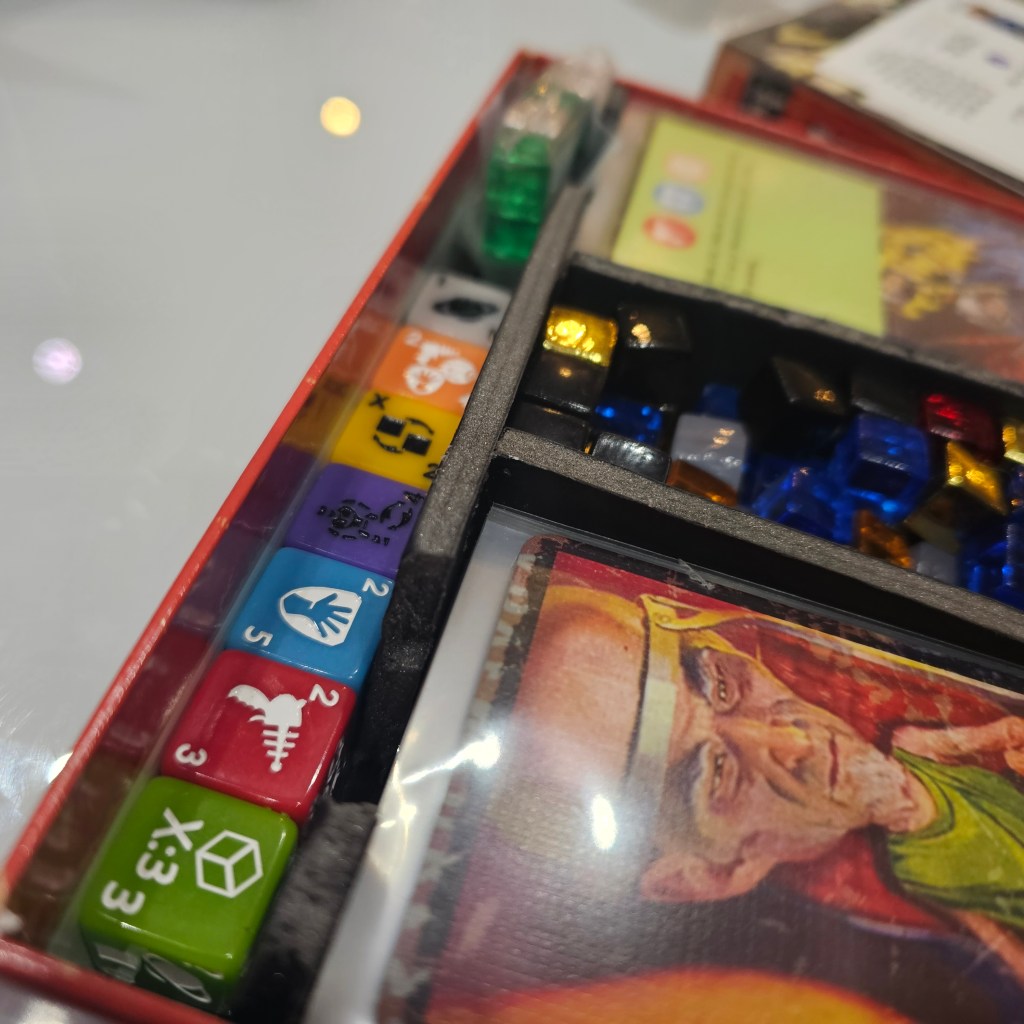
Pulp Invasion Organizer

First, I created a little foam core organizer. It’s not that it needed terribly, but it was an easy one to try my hand on DIY stuff. Hence, the shoddy craftsmanship. But it does the trick, and fits everything sleeved. Hopefully it’ll fit X3 (the last expansion) as well.

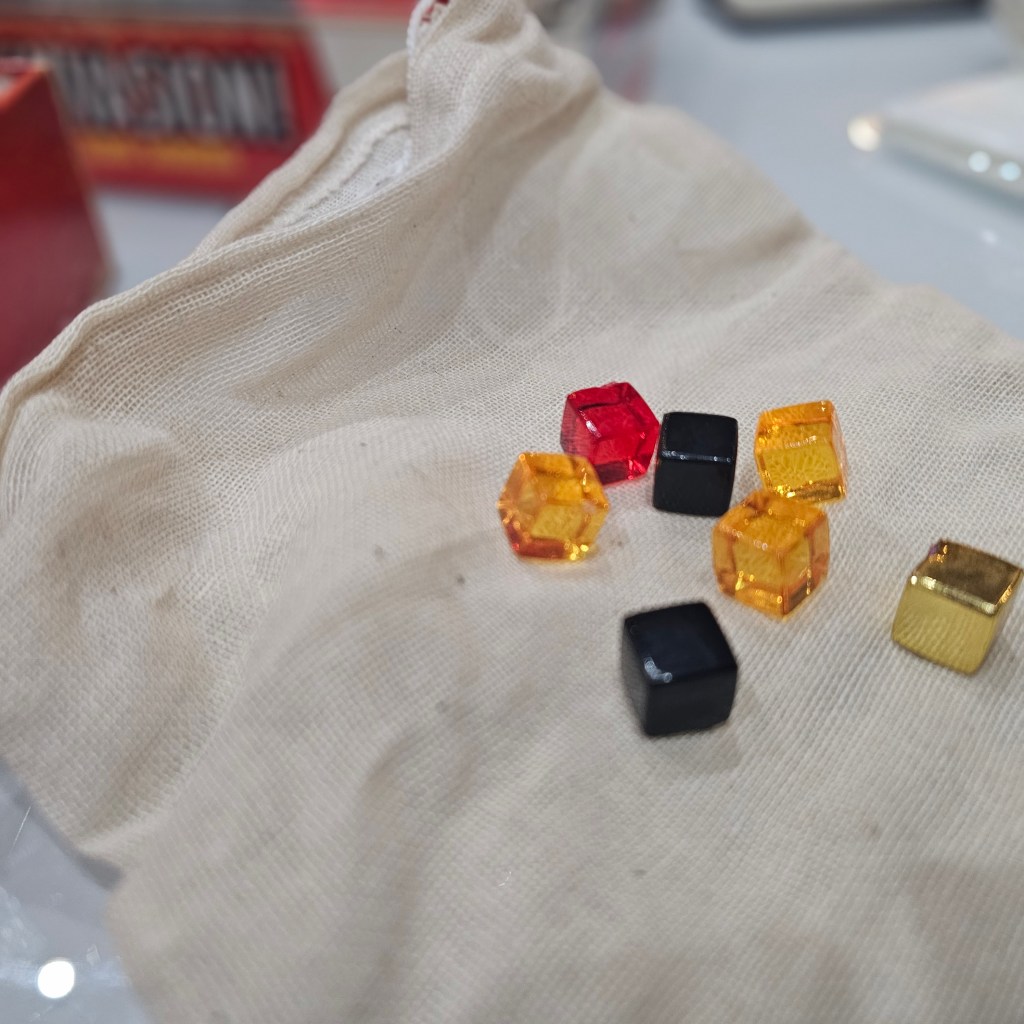
Pulp Invasion Bag

Second was replacing the bag. It is a known problem that the first edition bag is faulty, and mine had a hole quite early. Luckily, I did not have to do anything immediately as I had this bag from Tapestry lying around. X3 will come with its own cool and personalized bag, so I’ll replace it then.

Pulp Invasion Cubes

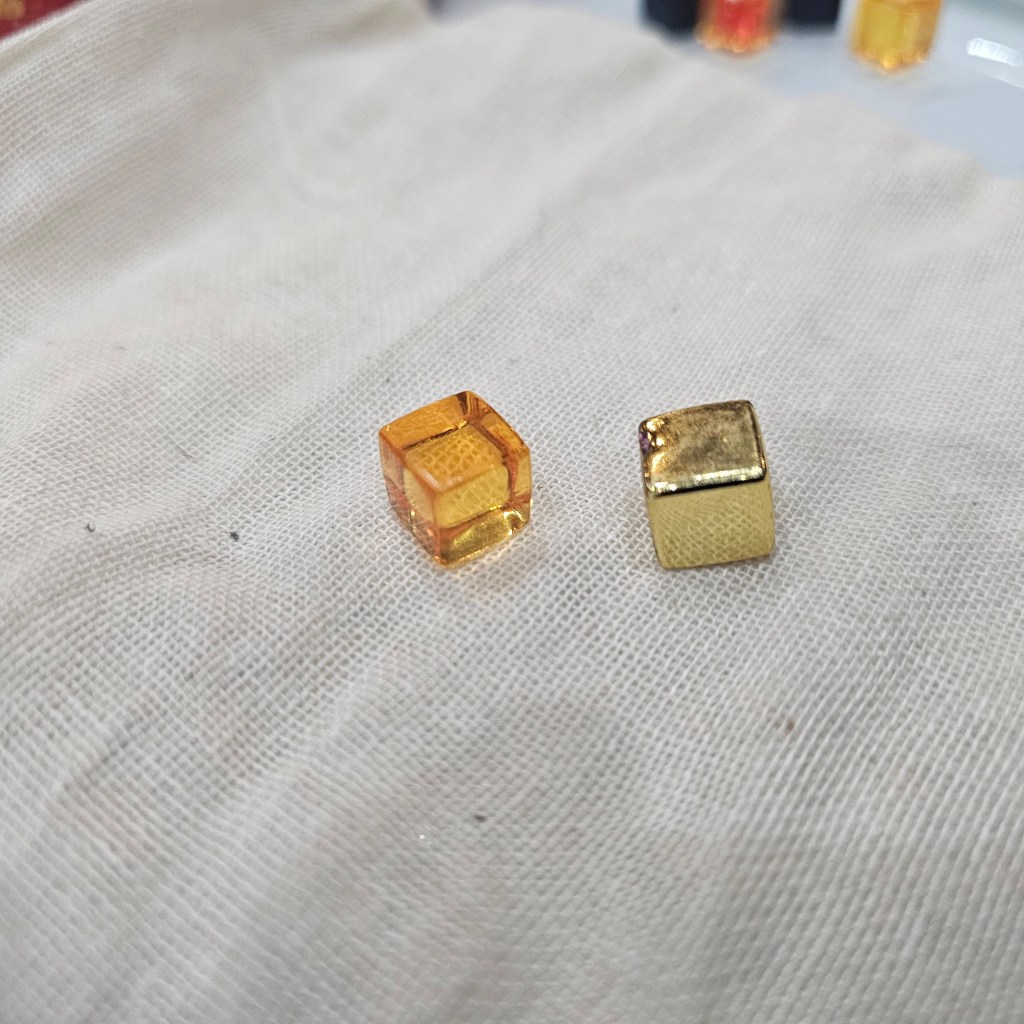
Finally, I replaced the cubes. The original cubes perfectly functional except for one flaw : the orange and yellow cubes. Orange is one of your attributes, and yellow is for the weapons to win the game. The problem is that they are too similar, and I’m not even color blind.

My solution was getting plastic cubes, with the yellow ones replaced by gold. Fits the aesthetic, the golden ones look even more special, and no more confusion. I got them cheap at Game Crafter.

However, there was a snag. I by mistake got the 10mm instead of the 8mm ones. They are much nicer to manipulate, yes, but the space on the insert got TIGHT.

Overall, I’m happy with the improvements. So it all fits, I did remove the 2 player specific one like the traitor on X2, but it should fit everything from X3 when it arrives.

Review

Quick Review: River Wild

1 player
Designer: Steve Aramini
Artist: Milan Zivkovic
Publisher: Button Shy Games

About The Game

Steven Aramini has made a name for himself with the ‘Opolis trilogy for Button Shy games, and now he is presenting another tile laying game, this time about a river with inhabited by mystical creatures. Is it unique enough to stand out?

Gameplay

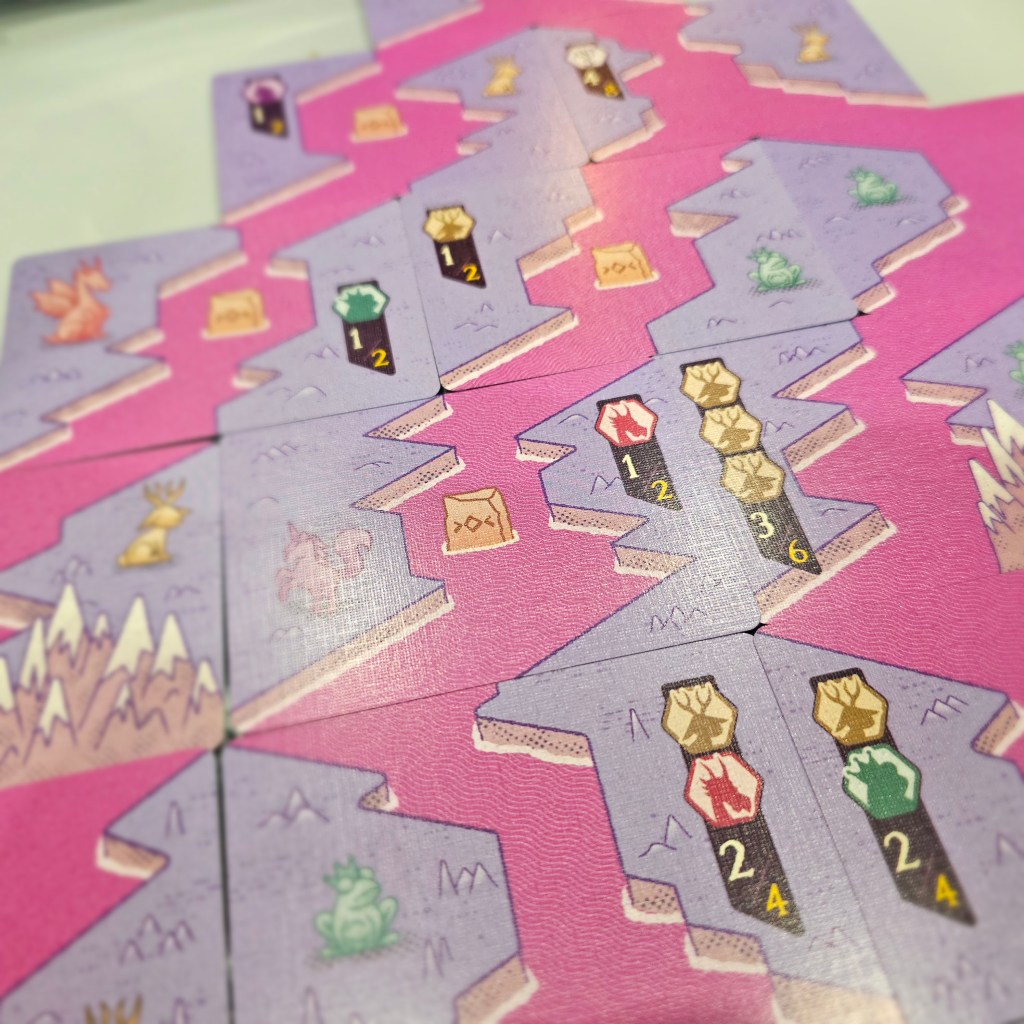
The basis will sound very familiar. You start with a card, which is the top of the river, and you have a hand of 3 cards to chose and place. I promise I will stop making ‘Opolis references, because the similarities end there. Each card has rivers, lands and mountains, and you need to match them (mountains can be matched to and by either). Each card can be placed directly below or half shifted from the card above, and the goal is to created completely enclosed islands along the way.

On each land section, there will be either one of 4 animals, or one scoring condition. When you created an enclosed island, called a protected land, you score that at the end of the game. The lowest amount for the biggest protected land, and the higher for all others.

Components

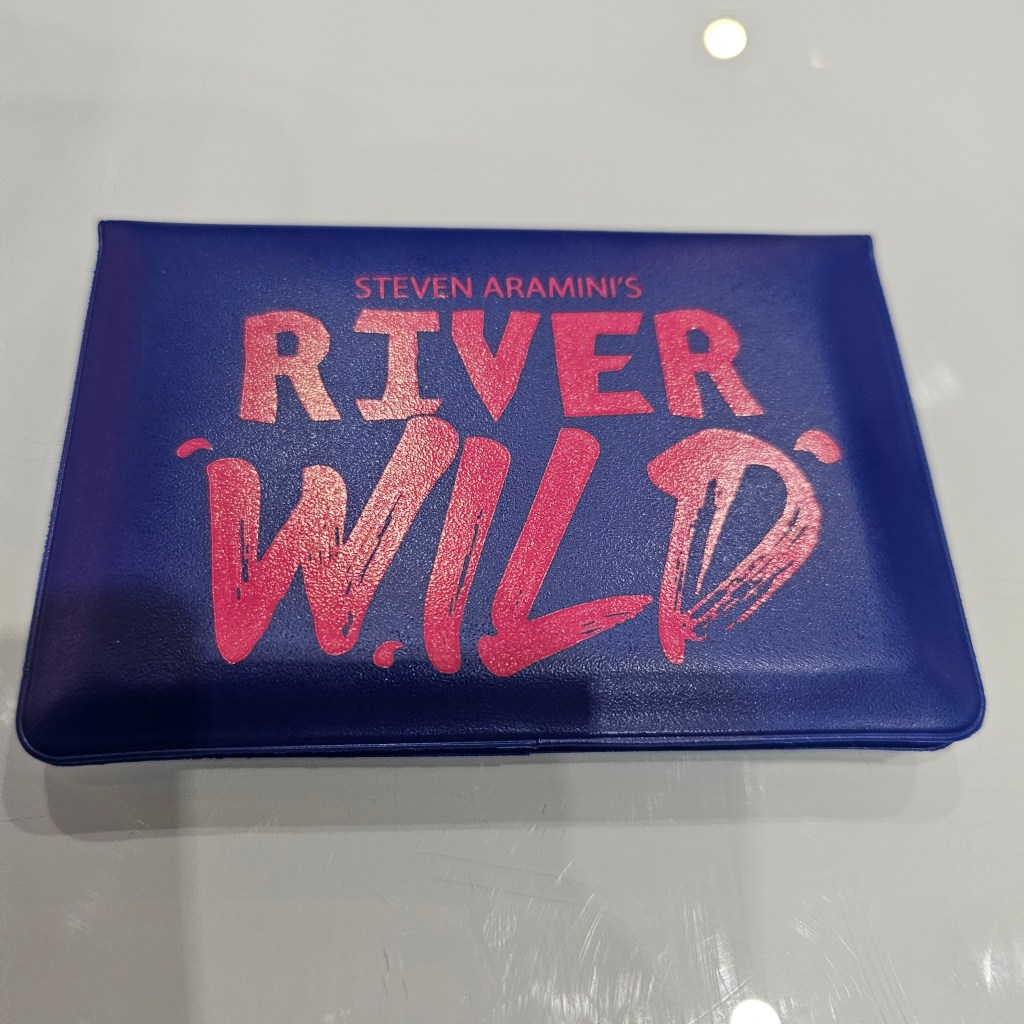
As usual, Button Shy has great card quality and the snazzy little wallet it comes in. Iconography is pretty clear, and the rules, that are sometimes an issue with the company, are clear enough and I think it leaves little room for questions this time around.

The artwork is something else though. While the theme is not super unique, the decision to go with striking funky palette was absolutely a win here. Milan Zivkovic was able to transform a fairly mundane setting into this cool little world that you look and know it’s River Wild.

Conclusion

It’s hard to review River Wild in isolation, as it carries a lot of DNA from other games from the same publisher and it’s against a line of very good solo games. But, on its own, it’s a super fun and light game. It is a completely tactical one, as you need to be quick to evaluate the opportunities you will be able to actually accomplish. Placement is not trivial, as the positioning and be awkward at times, forcing you into less than optimal plays.

But, inserting it into the line, it does have some issues with replayability. Yes, there is and there will be expansions for it to increase longevity. But, on its own, even though each game will be unique, the overall arc is mostly the same. Luckily, I think this is pretty much the only criticism of the game. It’s cool, beautiful, quick and fun.

Score: 7.5 / 10