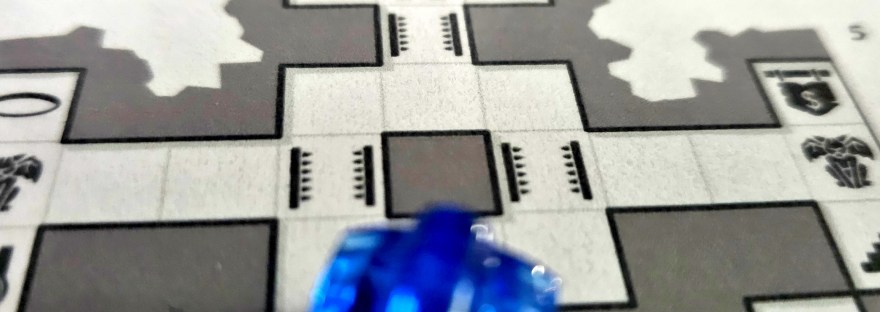
PnP Review

PnP Review: Warriors & Writings

1-4 Players

Designer: Nathan Wells

Artist: Murzabaev Roman

Publisher: Nice @ Dice Games

Pulling out from the old days of TTRPGs, Warriors & Writings throw you in a dungeon to find treasures, fight monsters and confront the big boss. But is this a treasure to be hoarded or does it deserve its place in the darkest of pits?

Disclosure

A copy of the base game was very generously donated by the designer for this review. However, I will do my best to give my full honest opinion.

How to Play

Goblin’s Den Map

To setup the game, each player needs their own character sheet (that can be different) and a map sheet (that should be the same), as well as one map reference and one action reference to be shared.

The game goes for 40 turns, and during each turn two dice are rolled, and players use them to take actions. There are no basic actions in the game, all actions available are in the character sheets, and they are mostly about moving or attacking. Players go around the map fighting monsters, getting treasure and exploring. The goal is to defeat the map boss, and then have the most gold.

Solo gameplay is the same, you’re just aiming to beat your own score in gold while still defeating the boss under 40 turns.

Rules and Components
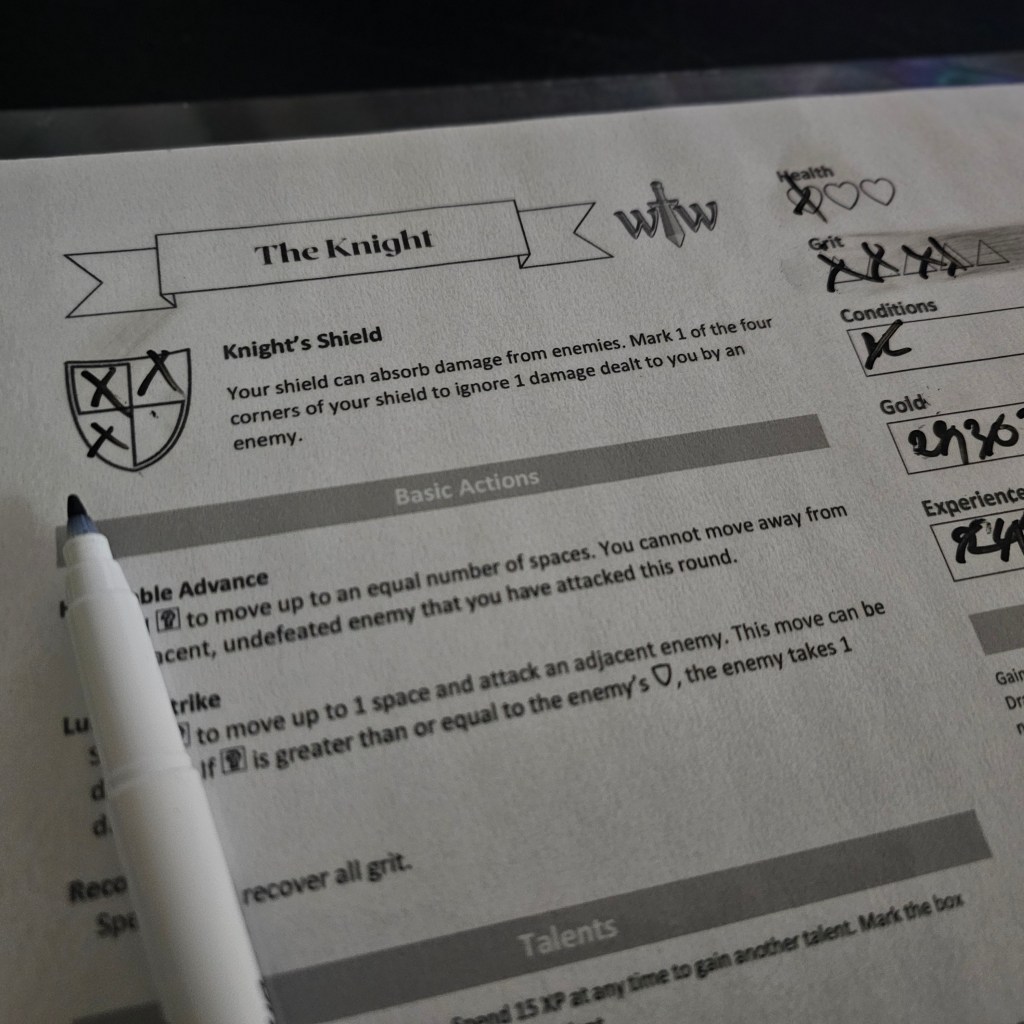
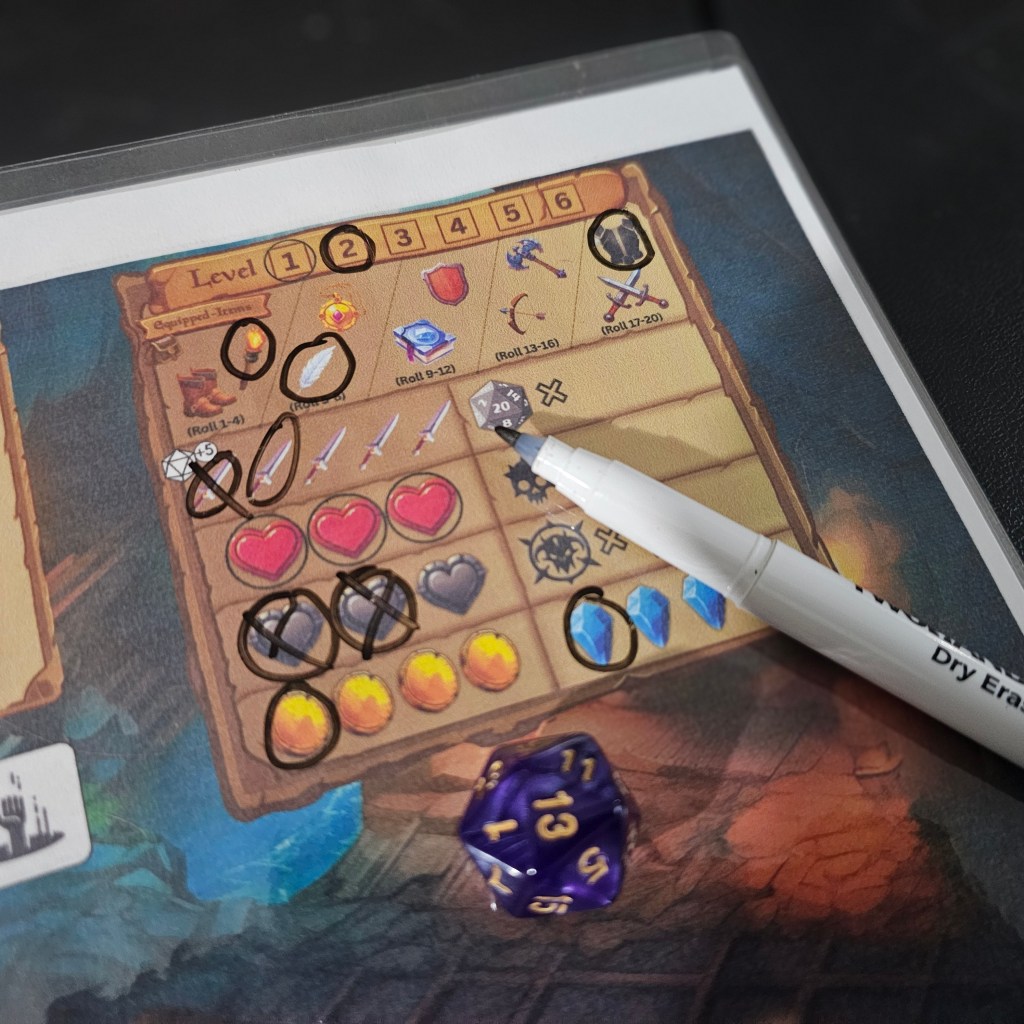
Knight Character Sheet

Rules are well written and clear, leaving little room for doubts even on initial plays. They also have plenty of examples of gameplay, which is always appreciated.

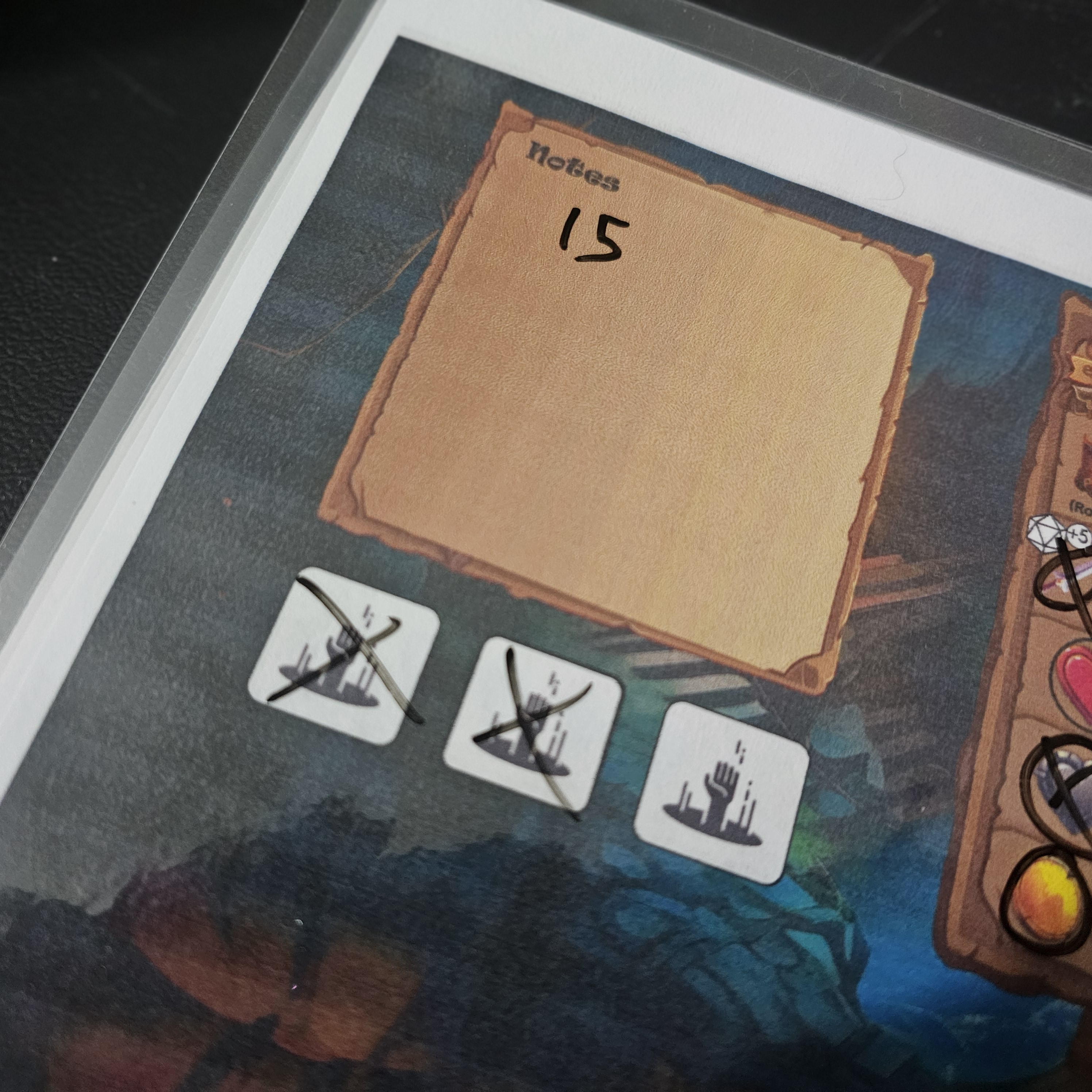
Components are easy to use, with simple symbology and plenty of references to simply consultation during play. Unlike most print and play games that you could just print and use as a one time use, W&W is a game that requires laminating, specially the character sheet. There is a lot of writing and erasing resources, and can get quite messy at times.

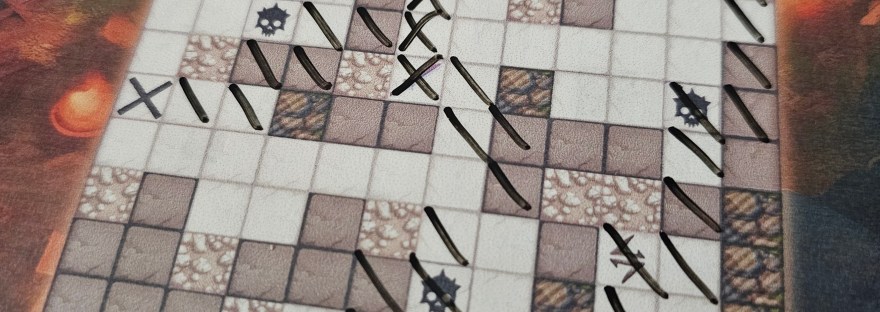
For the map, the way it’s intended to be used is to write your path as you go, but I found that this too can get messy and confusing, specially if you are returning a lot to the same places. There is one particular map, the Wizard’s Tower, where this becomes particularly bad as it requires you to walk the same paths multiple times. I found that using a meeple or token makes it considerably better.

SCORE: 8/10

Gameplay
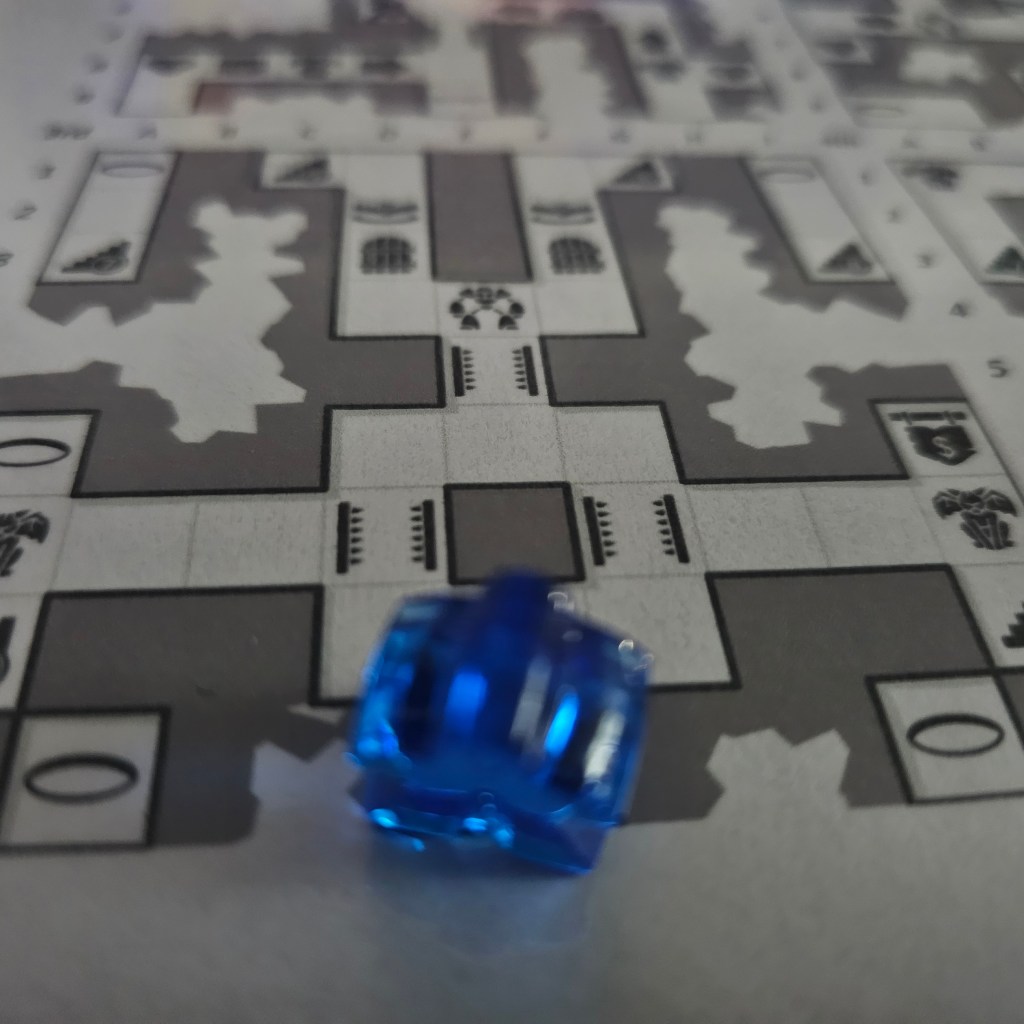
Character on map

It can seem that 40 turns is a lot, but this game is snappy. Turns are lightning fast, and those 40 turns go quickly. It is a thinky one though, as on one hand you’re trying to bolt to the boss, but you also need to get treasure along the way. Time is your main enemy here, and often you need to leave stuff behind or just tank the hits.

Also, each character and map require its own strategy, and it does change a lot. One thing, more noticeable on solo than on multiplayer, is that the rolls can really make or break a run. Yes, there is mitigation in the form of grit, but if you’re rolling a lot of lows you’re going to move slower and have a harder time.

Still, it’s a game where you rarely feel out of options or just going through the motions. It’s engaging and a ton of fun.

SCORE: 8.5/10

Theme and Art
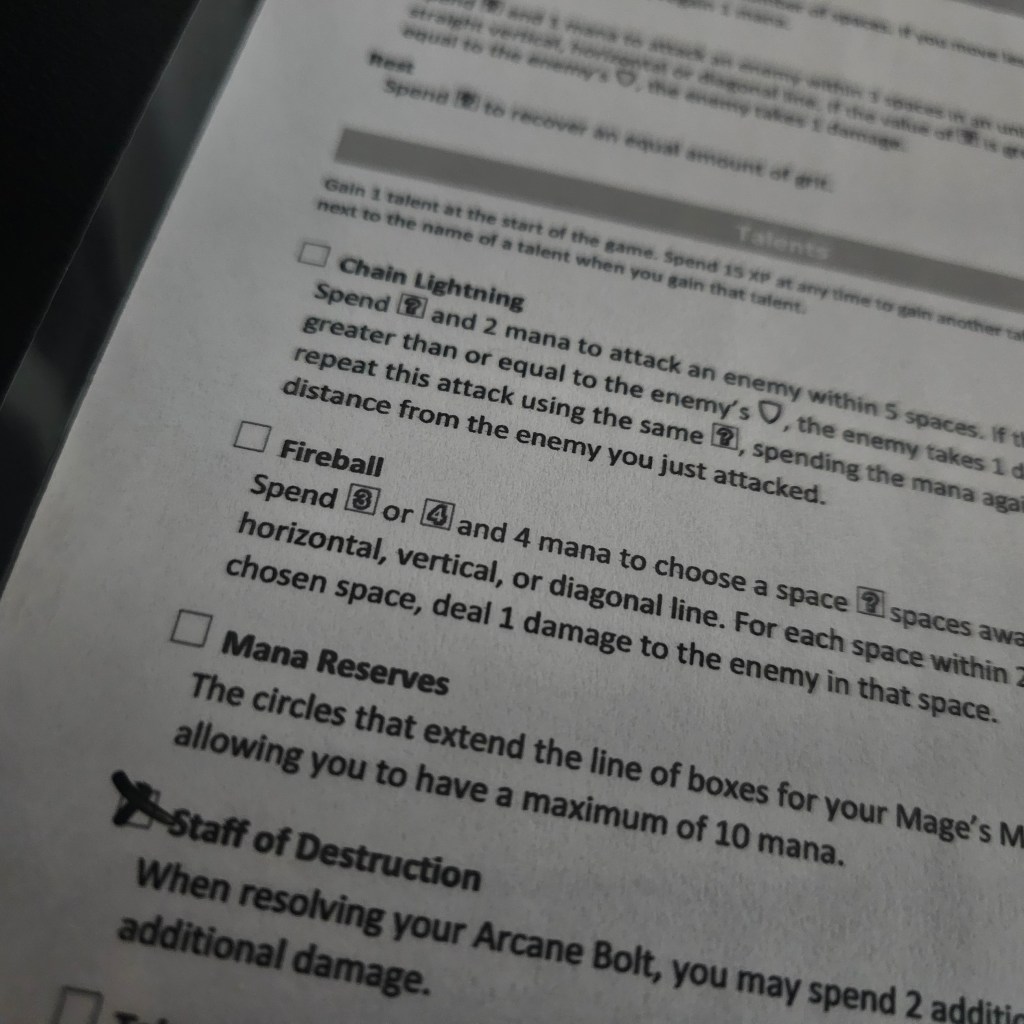
Mage Talents

I’ll preface this section saying that will be a huge caveat on my analysis. Bear with me.

Theme is clear, it unapologetically evokes the old TTRPGs in every aspect, and it does so very successfully. It is a distilled down version of a dungeon run on those games, but every aspect feels thematic. The two characters are very distinctive, with the knight lunging forward while the mage needs to move slower and manage their mana. The three maps on the base game are also filled with unique and interesting twists that make them come alive.

This game art is pretty bare bones. Aside from the illustration on the cover of the rules, everything is just black and white writing, boxes and icons. There is no illustration of the characters, no backdrops or details on the map or on the characters.

But, as for the caveat, this look is exactly what you would get on the TSR age of Dungeons and Dragons. A cool artwork for the cover, and just black and white inside. If you lived that, like I did, it feels right at home. It was a bold, but I feel like a deliberate one. But it’s one that needs that nostalgia from the player to work.

SCORE: 7.5/10

Conclusion

I tried my best to keep my review as neutral as possible, analyzing the game on a modern lens, and on that we find a simple looking but intensely engaging and highly thematic dungeon crawler.

But I feel like I am the exact niche this game appeals to. I didn’t just play TTRPGs, that was my childhood and teenage years. So I felt at home, every aspect clicking in a special way that triggers my nostalgia bad.

In either case, I would give this one a go. The decision space alone is enough to make interesting games.

Rules and Components8/10
Gameplay8.5/10
Theme and Art7.5/10
Final Score8/10
PnP Review

PnP Review: Mich in the Downgeon

1-5 Players

Designer: Alexz Martinez

Publisher: RAWR! Games

Follow Mich, an adventurous cat into the dangerous downgeon, where they will face enemies, find treasure and seek the precious golden fish. But will this adventure make you purr with excitement or does it spell CATastrophe?

Gameplay

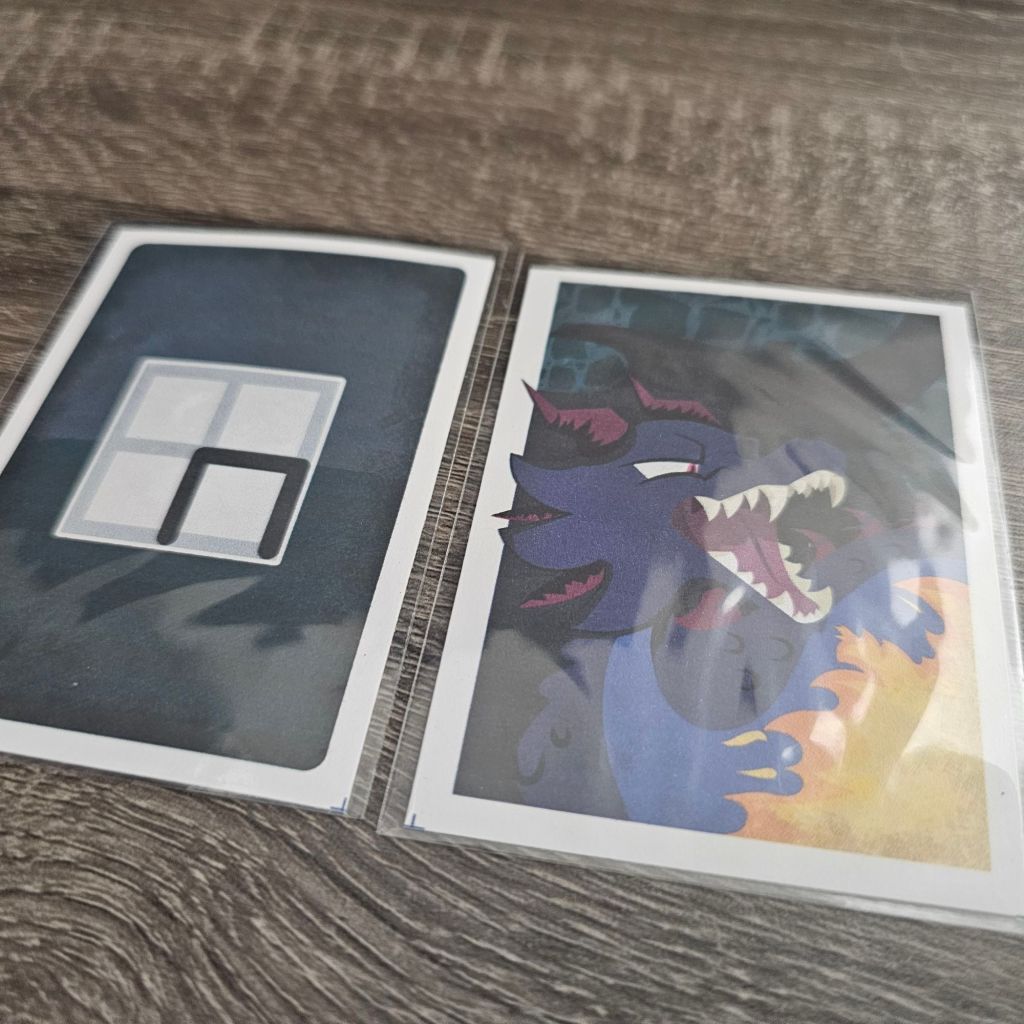
Path Cards

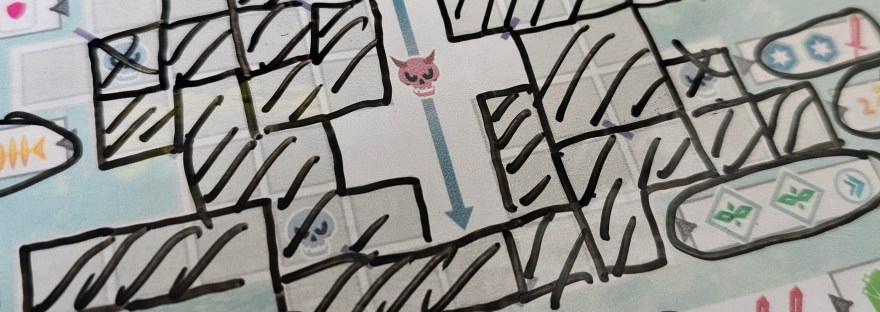
Turns are shared are divided in two phases. First, during exploration, two cards are revealed. Players then draw both anywhere that is connected to existing paths already drawn. Any shapes you form during this phase turn into resources, depending on the size and shape. Additionally, if you complete rows you get additional bonuses. There is also a map specific card that have its own specific effect and triggers a re-shuffle.

Then, on the action phase, players spend their resources for various actions. Torches and maps allow you to draw additional paths, swords lets you fight enemies, gems and chests give you even more resources.

Game continues until players can’t draw more paths or some map specific conditions, like 4 dragon attacks.

Solo Gameplay

Solo Section

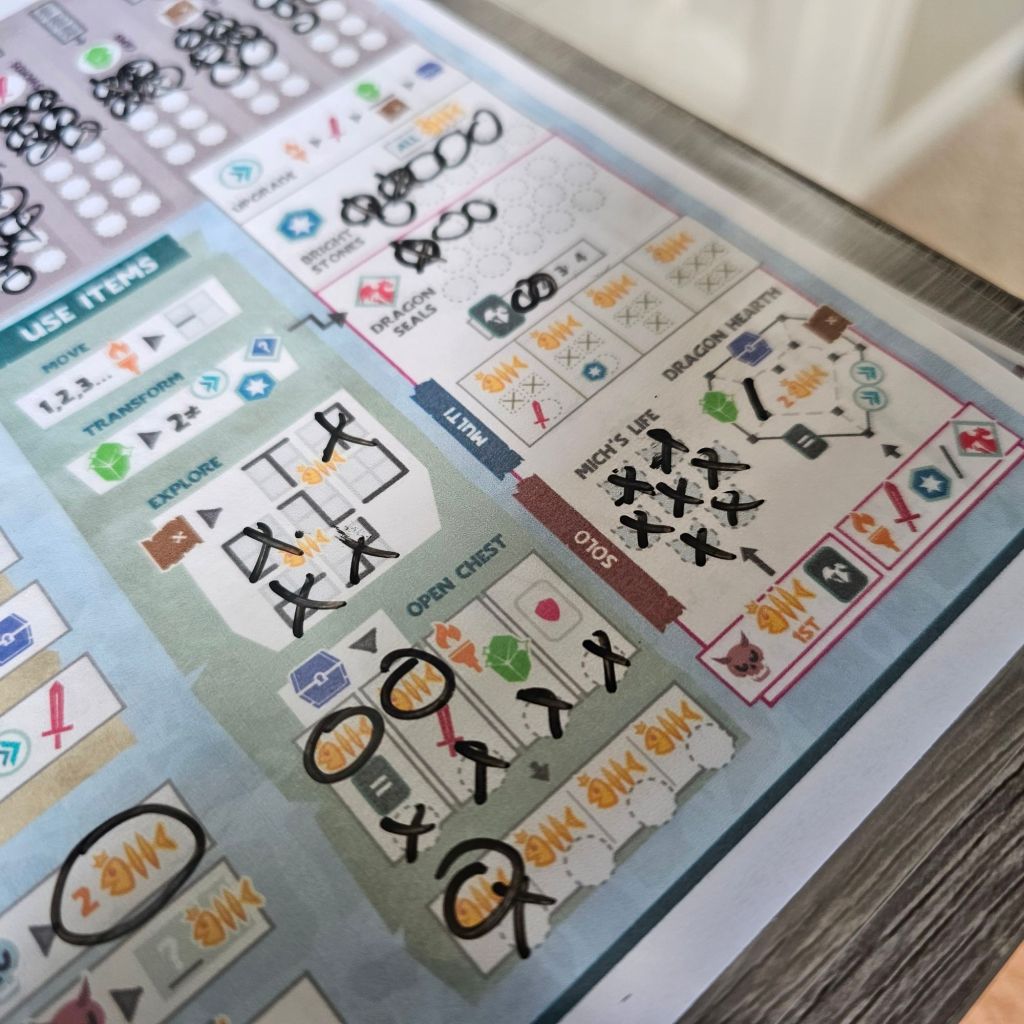
Each map has solo specific rules on how the dungeon card acts and some additional end game triggers, as well as a threshold of golden fish for a victory. On the first one you take damage you get fish on when the dragon attacks, the second the thief keeps stealing resources and yo have to prevent him, and on the third you have to prevent too many monsters from rising.

Components

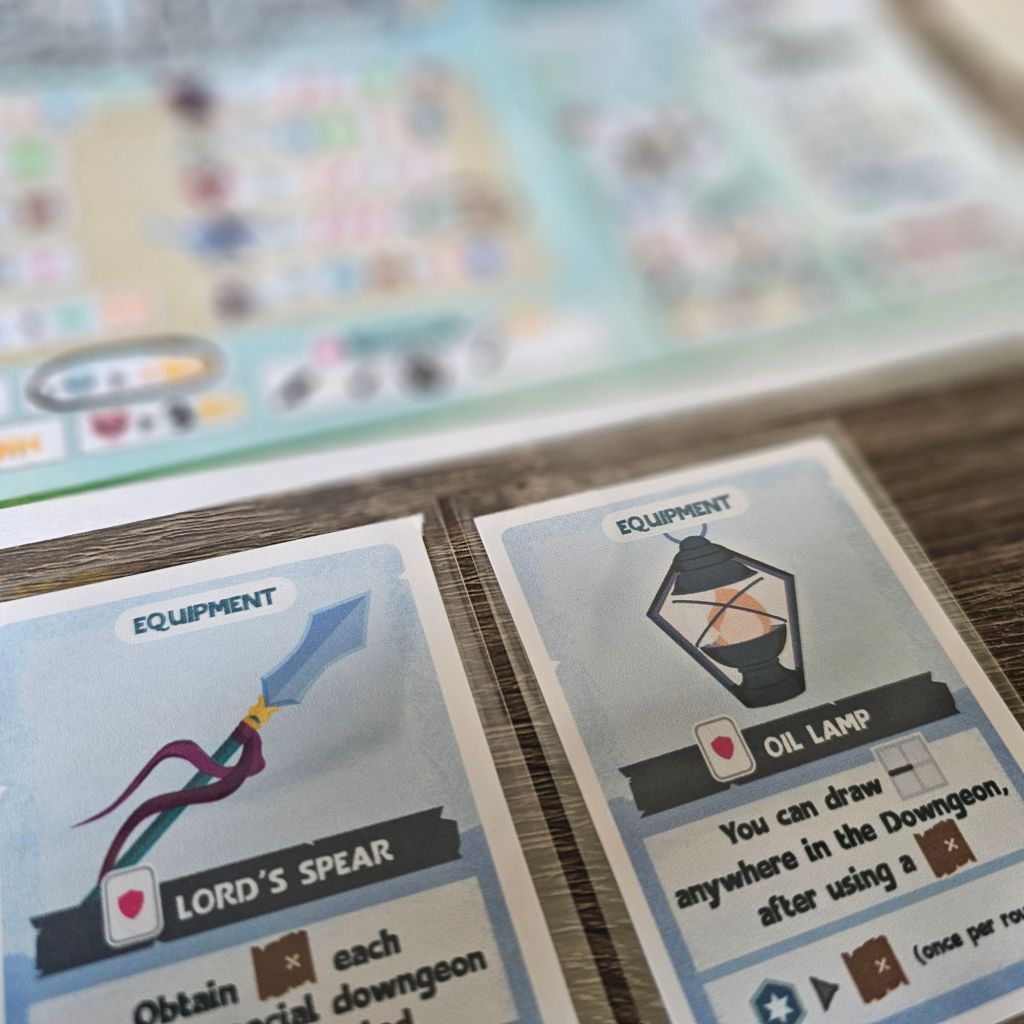
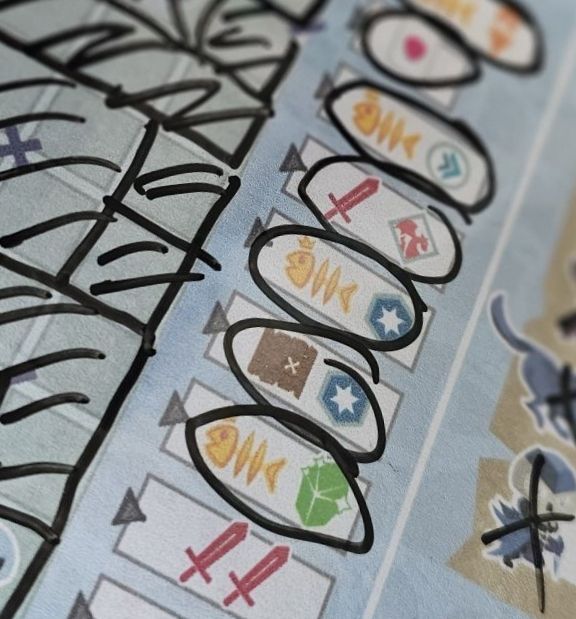
Equipment Cards

The art has an anime-ish style, and it’s vibrant and exciting. The game is mostly based on iconography, but the icons are easy to understand.

Rules are mostly fine, but there are a few areas that could have been clearer. Things are left implied, but nothing too game breaking.

The only possible issue is production, and your mileage may vary on this, is that you do have to print a lot of cards. As someone that lacks the proper techniques, it was a bit of work. Other than that, you just need a sheet for each player.

Conclusion

Completing rows

Out of the gate, there is something that bothered me about this game: the dungeon specific cards. They advance the game somehow to an end, and they can be quite swingy. Luckily, when you draw them, you reshuffle whatever was drawn and put on the bottom, so it gives you time before you face them again. But, depending on how the draw went, the game can be a bit too quick, specially on the solo version.

When the game is allowed to fire at all cylinders, it can be thrilling. The map fills quickly, and the game is fairly generous with resources. That can create action turns where you can Chain many effects and have super exciting moments. “I fill this area, get a sword, kill that enemy, get a map, fill more areas…”. If the variation does not bother you, Mich is absolutely a game to try. Each map does feel. unique, and equipment cards can have pretty changing effects, so there is replay value. Plus, even on the worst of luck, it’s a quick enough game to just pick up and play again.

Score: 8/10

PnP Review

PnP Review : Treasures Lost

1-99 Players

Designer: Nuka Zombee

Artist: Nuka Zombee

Publisher: Nuka Zombee Games

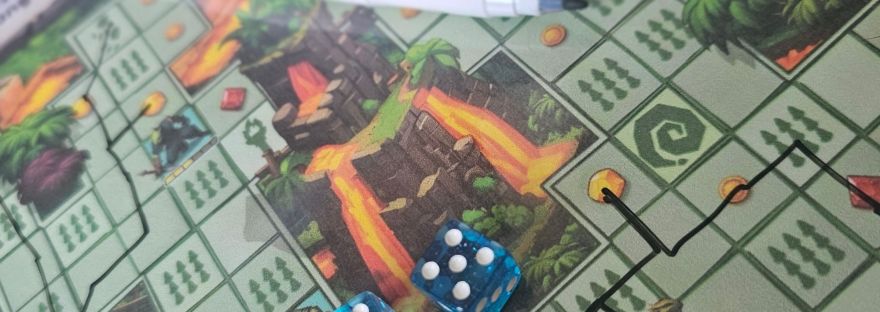
Another print and play roll and write, this time all about managing time and finding valuable treasures. But are those treasures found or is the value forever lost?

Gameplay

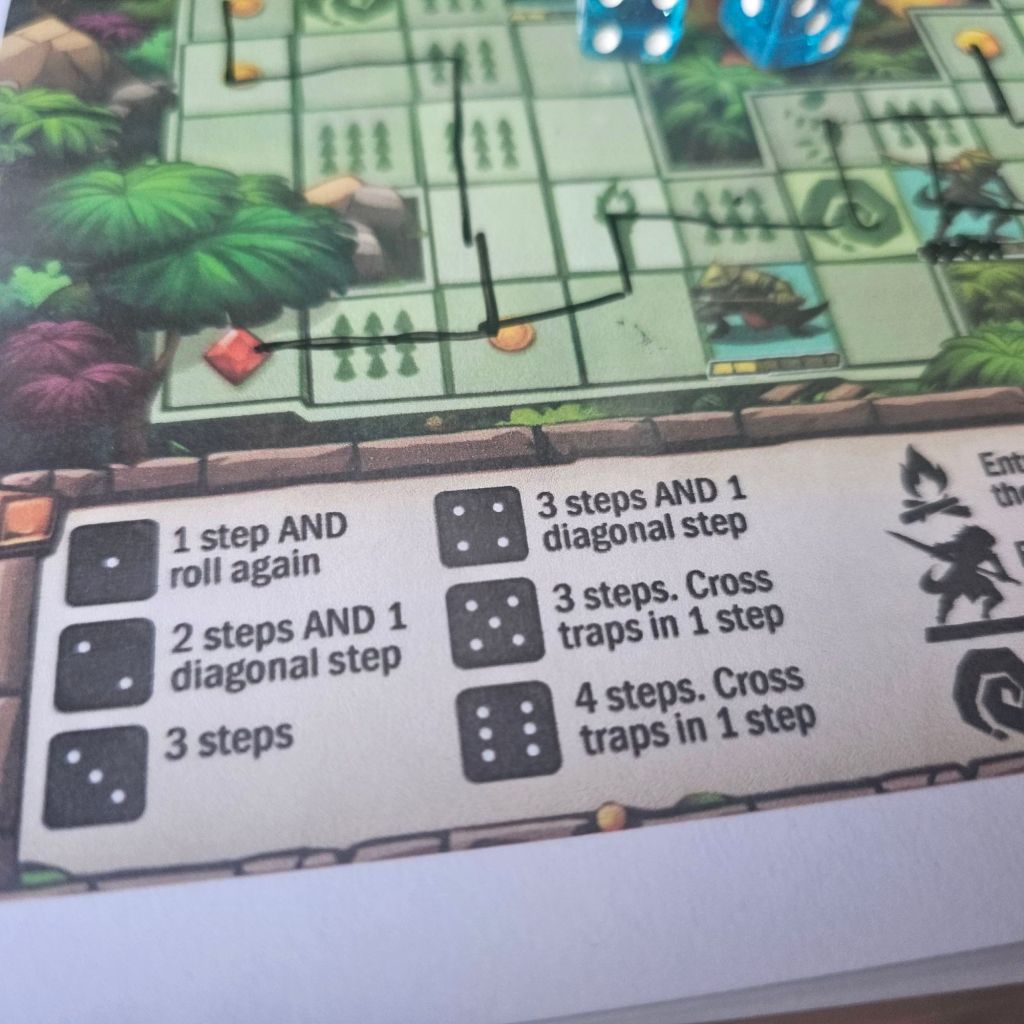
Movement Table

Turns are shared, and on players’ turns, first someone roll a single d6. Players move according to the table, that involve some orthogonal steps, and depending on the roll some diagonal or passing easier through traps.

Things on this game don’t really hurt you. You don’t even have a health bar or something similar. Everything affects your time. Warps halt you in place, enemies get you stuck until you beat them, traps cost you extra movement.

Players go until they run out of turns on the day track on each of three stages of the scenario. There are also a few spots that are for the night that players can extend to, but at the cost of time on the next map.

The goal is to go around collecting coins and treasure. Gems go on their on tracks, chests must be paired with keys, and coins go in a grid to collect resources when rows and columns are complete. However, how each one work varies by character. The apothecary favours blood gems, the Explorer likes the artifact, and the rascal doesn’t even need keys for chests. It’s all very thematic.

Solo Gameplay

There are no differences between the multiplayer and single player game, aside from beating your own score or beating your opponent’s. The track itself has bronze, silver and gold crowns to mark your score for a quick reference.

Components

Character Sheets

The game really looks gorgeous. All the dungeons are thematic to their region and have details on their specific version. The characters are also well illustrated and have tons of thematic touches. I mentioned before, each track is different, but also each ability has a name and adds to the personality.

But absolutely none of this interferes with the usability of the game. Icons are clear, things are easy to manage on the gameplay, and nothing adds complexity. This is, after all, a simple game.

But, even though the game is simple, the rules could have been a little clearer. There are some instances that something is implied and can be understood, specially around movement, but I would prefer it to be spelled out.

Conclusion

Treasures Lost is easy to pick and play and very dynamic. I like the fact that they simplified the risks on just time, and everything is about efficiency. Do you risk fighting that monster and getting stuck, or is the way around more guaranteed? Do you count on that movement that leaves you needing a diagonal step to be worth it? I also love how thematic it feels. Each scenario has its own quirks, each character does truly feel unique on its own, but it never gets too complex. Over the first couple of turns you already got what the game is about. But every second I spend on it I feel the tension and the excitement of treasure hunting.

Score: 8.5/10

Review

Let’s Review More: Metrorunner

1-5 Players

Designer: Stephen Kerr

Artist: Ignacio Bazán Lazcano

Publisher: Thunderwork Games

Thunderworks stepped out of the Roll Player universe and allied with designer Stephen Kerr to have a go at the classic cyberpunk big corporations world with Metrorunner. But is this job a hit or bust?

Gameplay

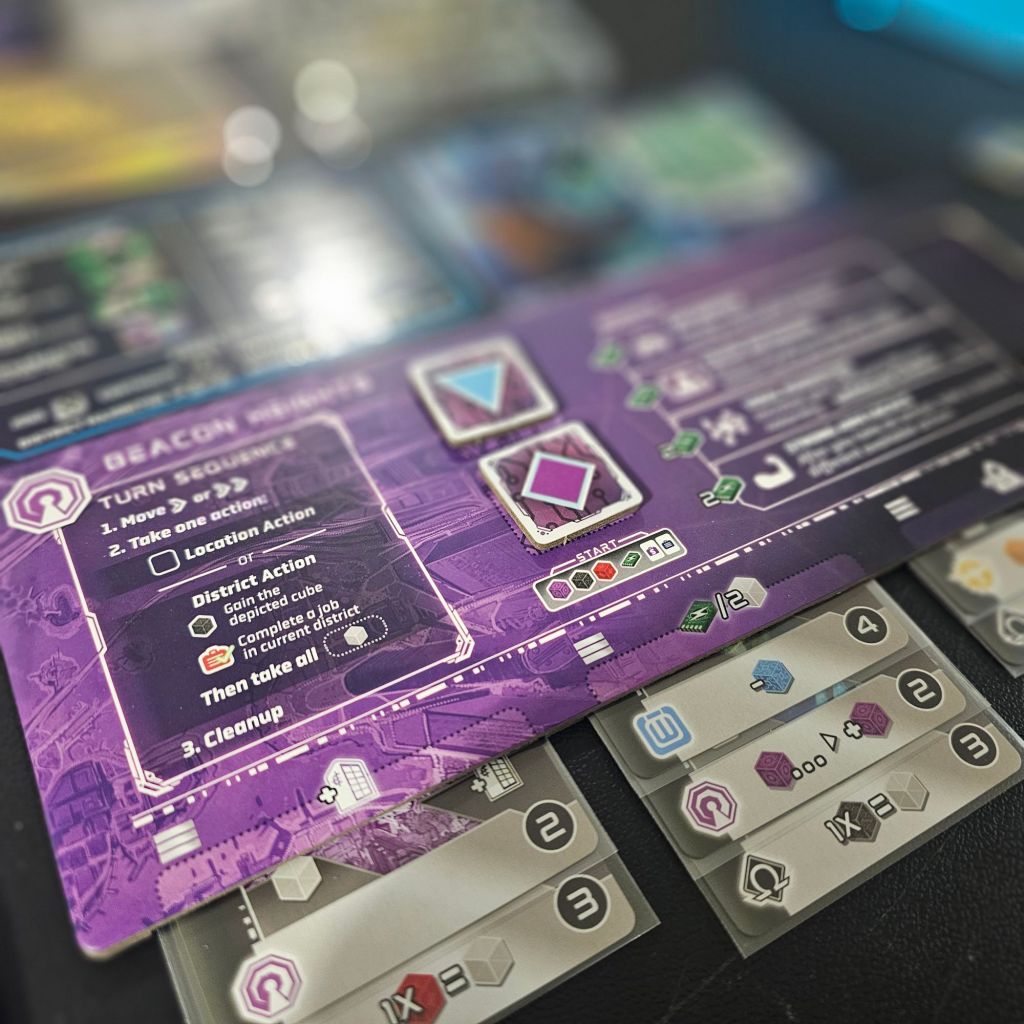
Player boards

On a player’s turn, they will first move one or two spaces clockwise on the track, then either do the space action or a district action. Space actions are simple, like getting resources, getting more jobs, or playing a route mini-game to get resources and some track advancements. A district action is getting resource cubes and finishing jobs from that district.

Whenever a player completes a job, they tuck the completed card on one of three spots (each holding three cards). This gives additional resources or advancements, and also allow the player to compete for majorities and specific combinations.

Players keep going until someone crosses either the notoriety or the influence, every one has one last turn and the game is over.

Solo Gameplay

Solo Cards

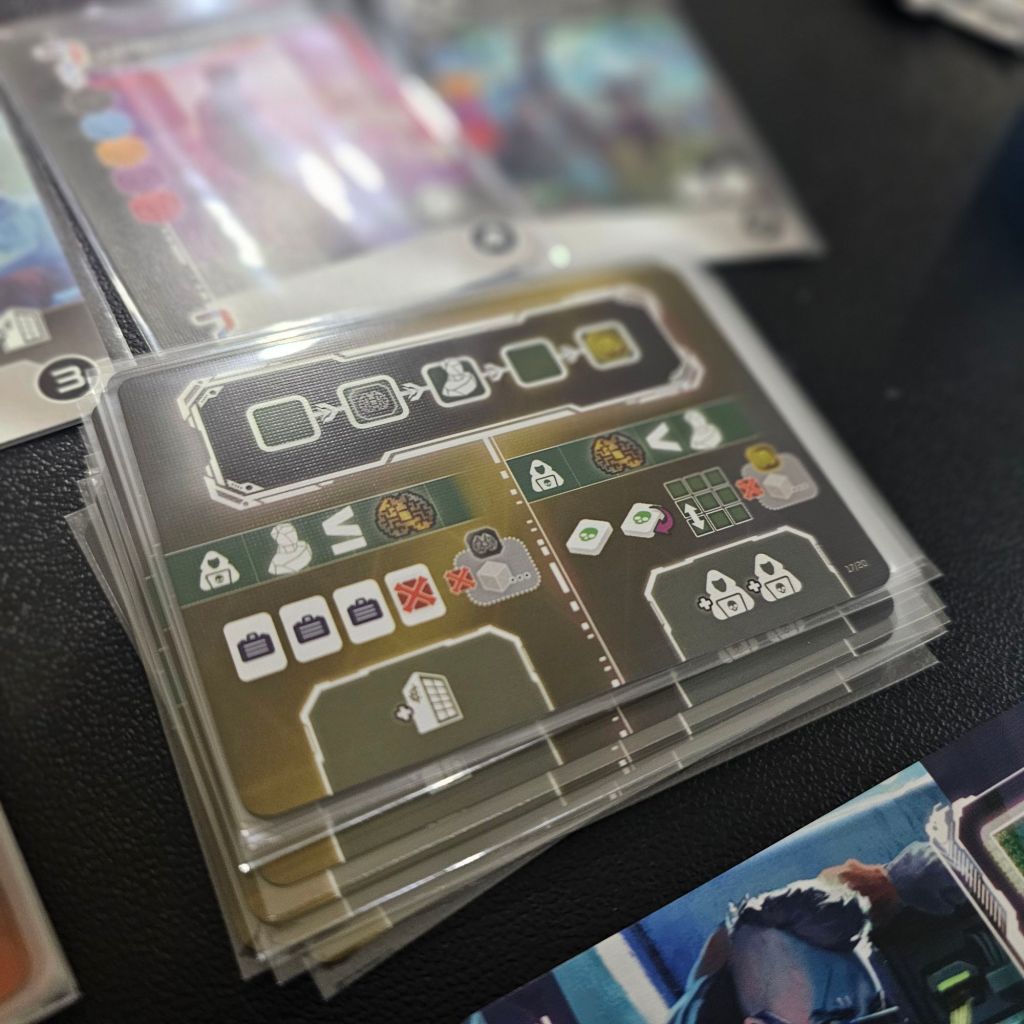
The AI system is very simple. You play with two tokens to represent them, and after you turn you turn over one AI card. They will move to block spaces, take jobs away, and or remove cubes, and advance on tracks depending on how it’s notoriety compares to you. However, the Automa does not score, instead the game has a beat your own score system.

Components

Metal. hacking board

Everything has a classic cyberpunk look, with lots of acrylics and pseudo code flying around. However, the presentation never superceeds usability, and the iconography is simple and objective.

One thing I highly highly highly appreciate is how the players board are made. They have elevated slots on the back that you can easily tuck the cards with messing everything around. Having played a lot of games with cards being tucked behind player boards, that is a very welcome addition.

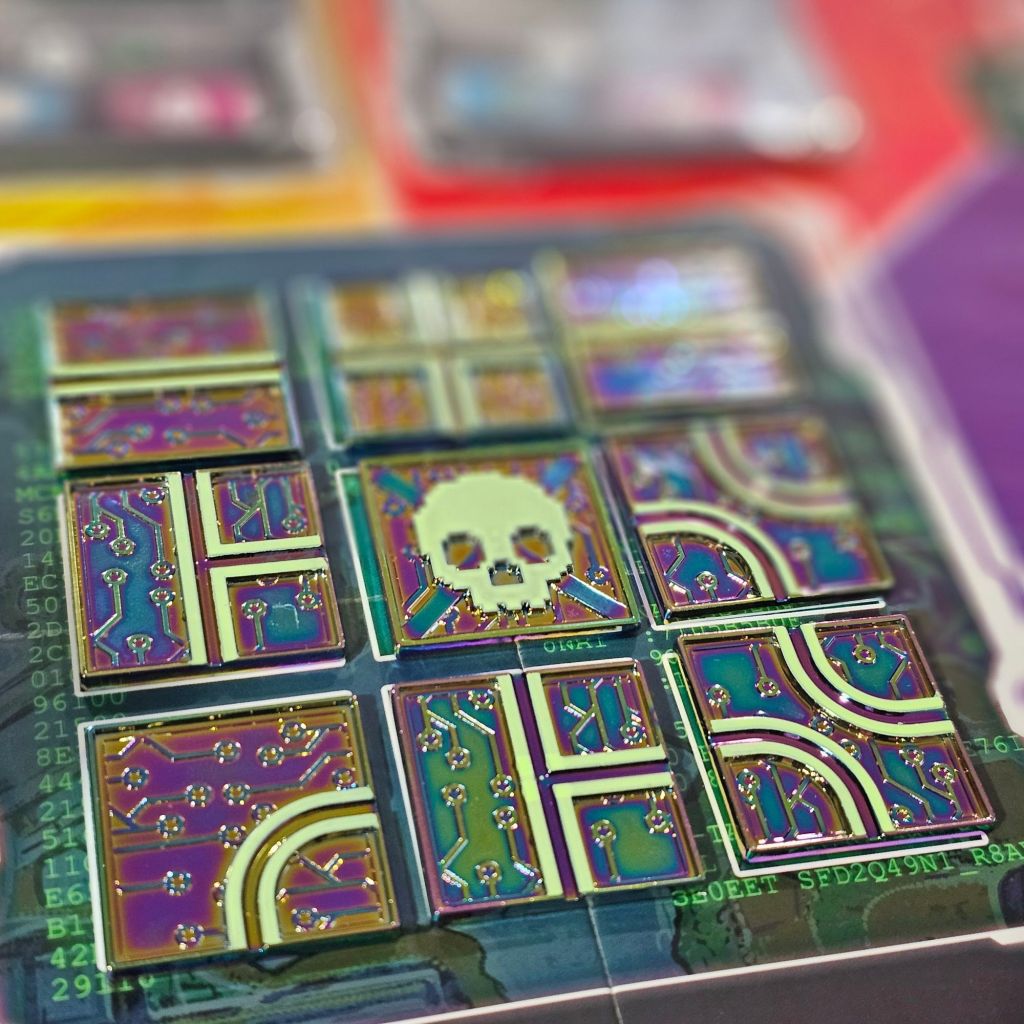
Just one additional note, you have the option to get the metal version of the hack tiles. It’s totally unnecessary, but wow is it satisfying to manipulate!

Conclusion

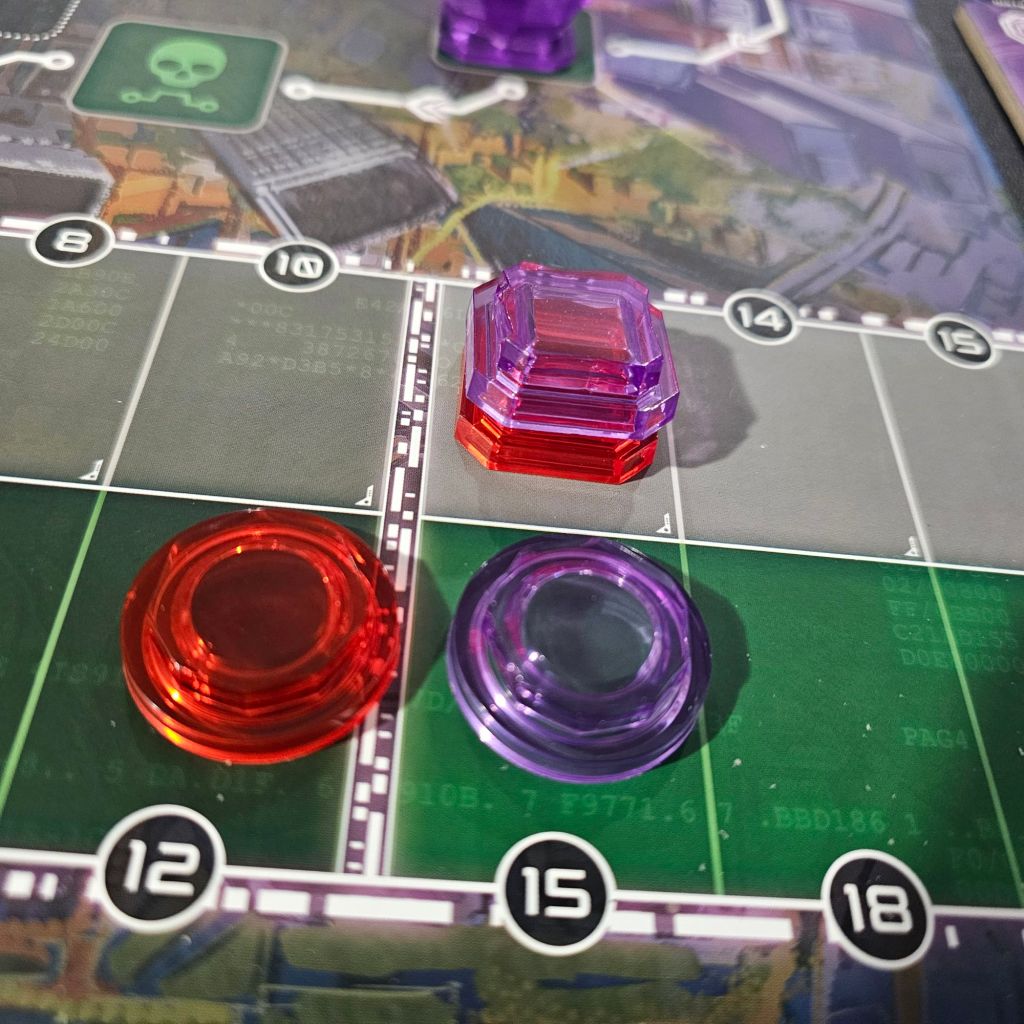
Influence and Notoriety Tracks

Metrorunner is an incredibly well produced game, but, most importantly, it’s engaging and fun. It’s a fairly light and quick game, but it takes that spirit and runs with it, pun intended. Rules are easy to understand, that game doesn’t overstay its welcome, but I do feel it rewards repeated plays to learn the efficiency puzzle. If you’re into this weight, it’s a great addition to your collection.

Score: 8.5/10

PnP Review

PnP Review: Cavern

1-99 players

Designer: Brad Hiscock

Artist: Peter Zalba

Publisher: Conviveal Games

This game takes us, surprisingly enough, to a cavern to look for treasures, fight enemies, and use all of our courage and guile to make it out. But is this adventure as thrilling as it sounds or do are we kept in the dark?

Gameplay

On player’s turns, you roll a d20 for movement. That movement can be 2 or 3 spaces and either only orthogonal or diagonal as well. Dark and rough spaces cost more to leave, and you can only ever go on each space twice. Then you can get equipment or weapons, face enemies, or roll for events, like finding the exit or fighting the boss.

Fighting is easy, just roll the d20 and try to beat the foe’s target number. All enemies are static, just varying the level. You only get one shot, and take 1 damage if you don’t succeed. Game ends when you find and decide to go out of the exit. Then you can either keep your level and try the next level, or just count the points.

Solo Gameplay

This game plays the same either solo or multiplayer. The only difference is comparing the scores to each opponent or to a table.

Components

First thing I noticed in the game is how gorgeous the art is. Instead of going for the usual minimalistic or simplistic look most one page pnp games, Cavern opts for a full graphic design with unique well rendered backs for each map and great iconography.

However, usability was not well thought. A lot of information is relegated to the rulebook only, and it’s information that needs to be consulted fairly often. With the real state on each map, a lot could have been added to ease up the play. My main gripe is the lack of a table for the events, since they only happen once. A way to keep track of which happen and to mark them on the map was critical, and it’s missing.

Conclusion

Cavern is, without a doubt, a fun game. It’s a light and quick exploration game, where you have to plan how much you risk and how much if enough. However, there are a great number of one page games on the market, and specifically there are a few with the same theme and feel of Cavern. And, with that, Cavern feels that it was not cooked long enough. It lacks polish on the structure and lacks a impending sense of tension and time crunch.

Score: 6 / 10

PnP Review

PnP Review: Dreamscape Kingdoms

1-4 players

Designer: Kamil Sklorz

Artist: DicePen Studios

Publisher: DiceTiki

Besides the gorgeous map, I was attracted to Dreamscape Kingdoms for a good area majority one page game with good solo support. Does it deliver or does it become a nightmare?

Gameplay

Map

On each turn, a player rolls dice equal to the number of players plus one, than each one drafts one to place. The dice indicates either the column or row to place their minions and the player decides from their available groups which value to write on the chosen spot. Then the player spreads to the same number of adjacent spots. Then the first player passes to the right and another turn begins. When players place all their 8 groups, game is over.

Scoring is about majority counting the number in each section plus one for each marked area adjacent. Players count majorities on each row, column, area, and terrain type.

Solo Gameplay

Nightmare Machine

The automated player, called nightmare machine, can be included in any count but 4, with one being mandatory for 2 players and 2 for solo.

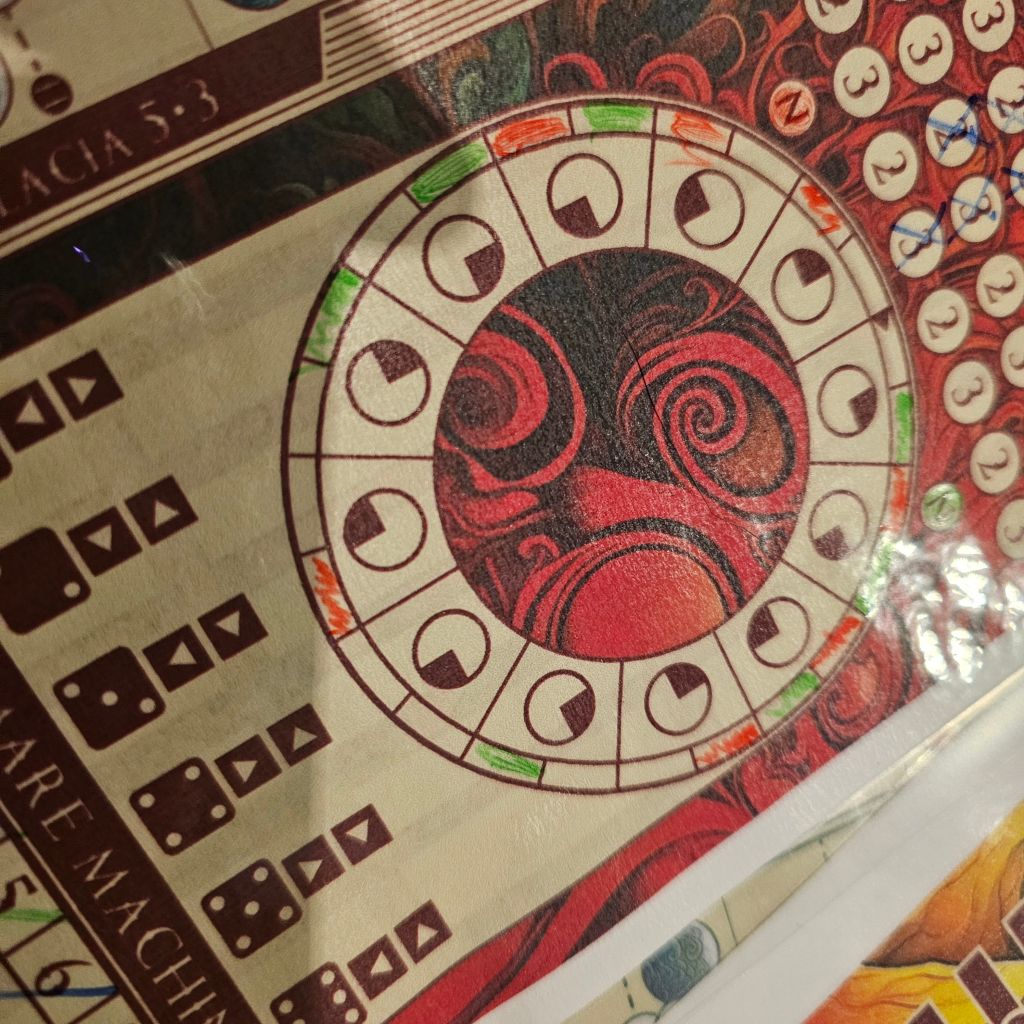
The machines act after the players, but can have multiple turns in a row. You roll two dice for roll and column, then two more for starting position and subsequent spread, and the machines always place 3 strength groups, which makes things easier. The scoring works mostly the same, but your trying to get a certain amount of points more than the highest scoring machine.

Components

Scoring sheet

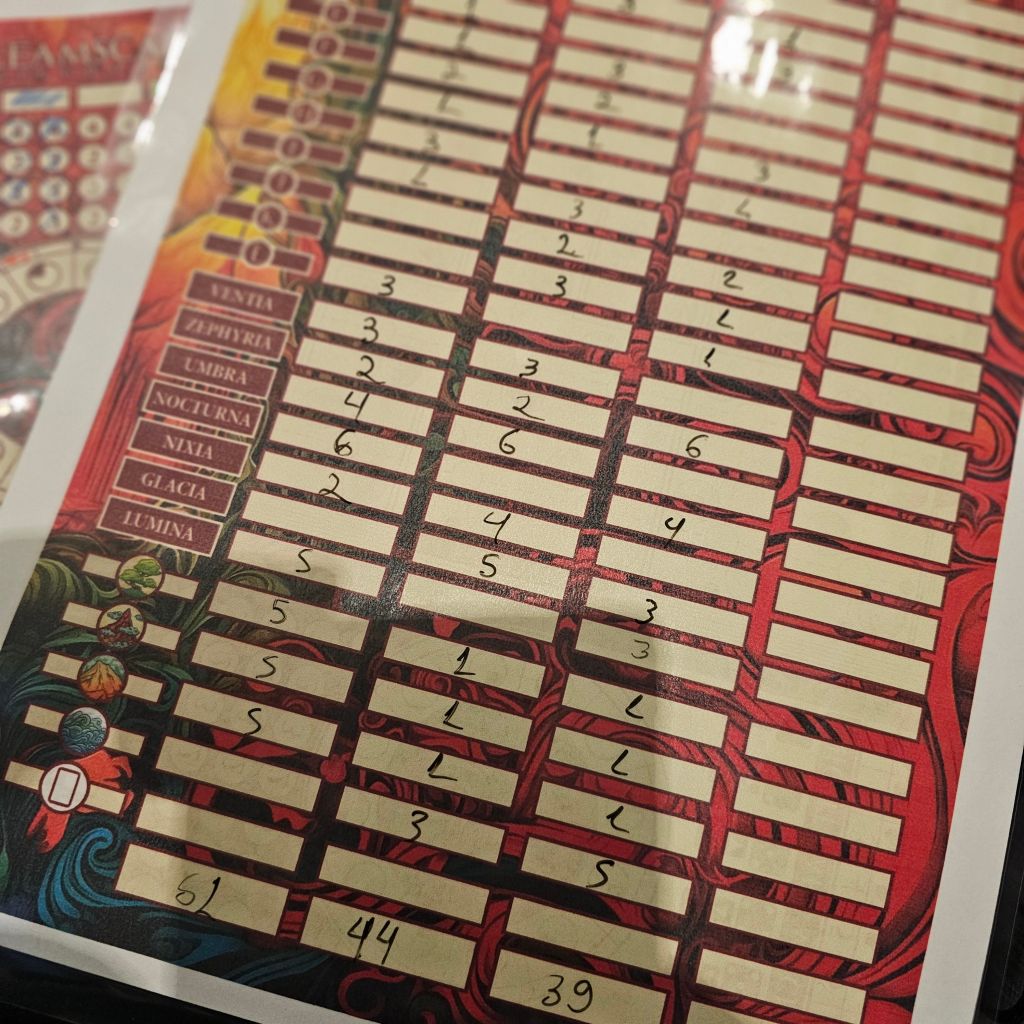
My printer will need to forgive me, but I had to print this full color. The style of the sheet is gorgeous, and iconography is clear and the layout is well done. It is very colorful and ink consuming, but that is forgivable S it is one sheet for all players.

There are multiple additional maps that offer variety not only on layout, but add in more aspects, like new scoring conditions, goals and such.

Conclusion

There are two aspects of this game that really elevate it from a simple area majority to something great. First is the variable power placement. It adds a lot of thought on each individual placement and how it will interact with each scoring opportunity. Second is the spread. Not only it keeps the game quicker by filling up more map, but also allows tactic reaches and blocks.

In addition, the solo mode is well thought. It feels alive and competitive, and the point adjustment helps bridge the needed gap.

Overall, it’s a great package. It’s a well thought well balanced endeavor that offers a ton of interesting decision space.

Score: 8.5/10

PnP Review

PnP Review: Chateau

1-99 Players
Designer: Martin Van Rossum
Artist: Luis R. Blanco
Publisher: Rolling Rhino Games

As part of the crowdfunding campaign for Artic Roll, Rolling Rhino made available their previous games, including Chateau, a game about building castles in Europe. It looked good, so I decided to try it out. Is it just a fancy exterior, or does it have a good foundation?

Gameplay

Building your Castle

Each player gets a castle sheet, and needs a writing utensil. Interesting that, unlike most roll and writes, each player gets a different sheet with their own layout and special powers, which is interesting. You also need two dice.

At each turn, a player rolls both dice, and players use them to add shapes to their castle. 1s are actually marked in the castle of the player to your left, 2s and 3s are shapes that can be used over and over again, 4s and 5s and shapes that can be used only once, and 6s you choose a symbol and mark off all of those symbols. If you ever can’t, or don’t want to, mark a shape, you mark a single one. Each castle also has their own unique power that can used in addition, usually a few times per game. The first player to completely fill their castle is the winner.

Solo Gameplay

Special power of a castle

Single player is almost the multiplayer version, and you’re trying to fill your castle in the least amount of turns. Everything is the same, except the 1s need to marked in the most open space possible.

Components

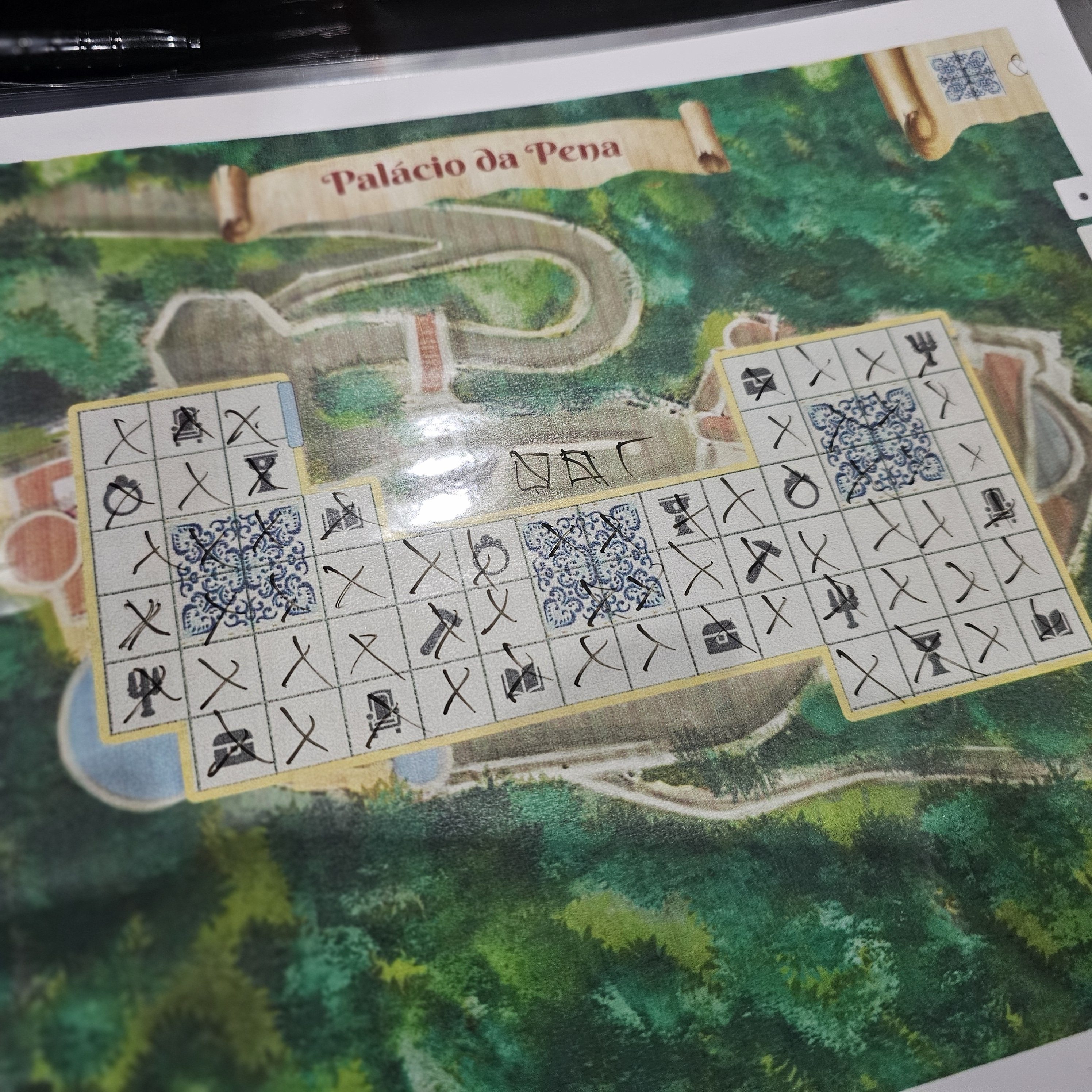
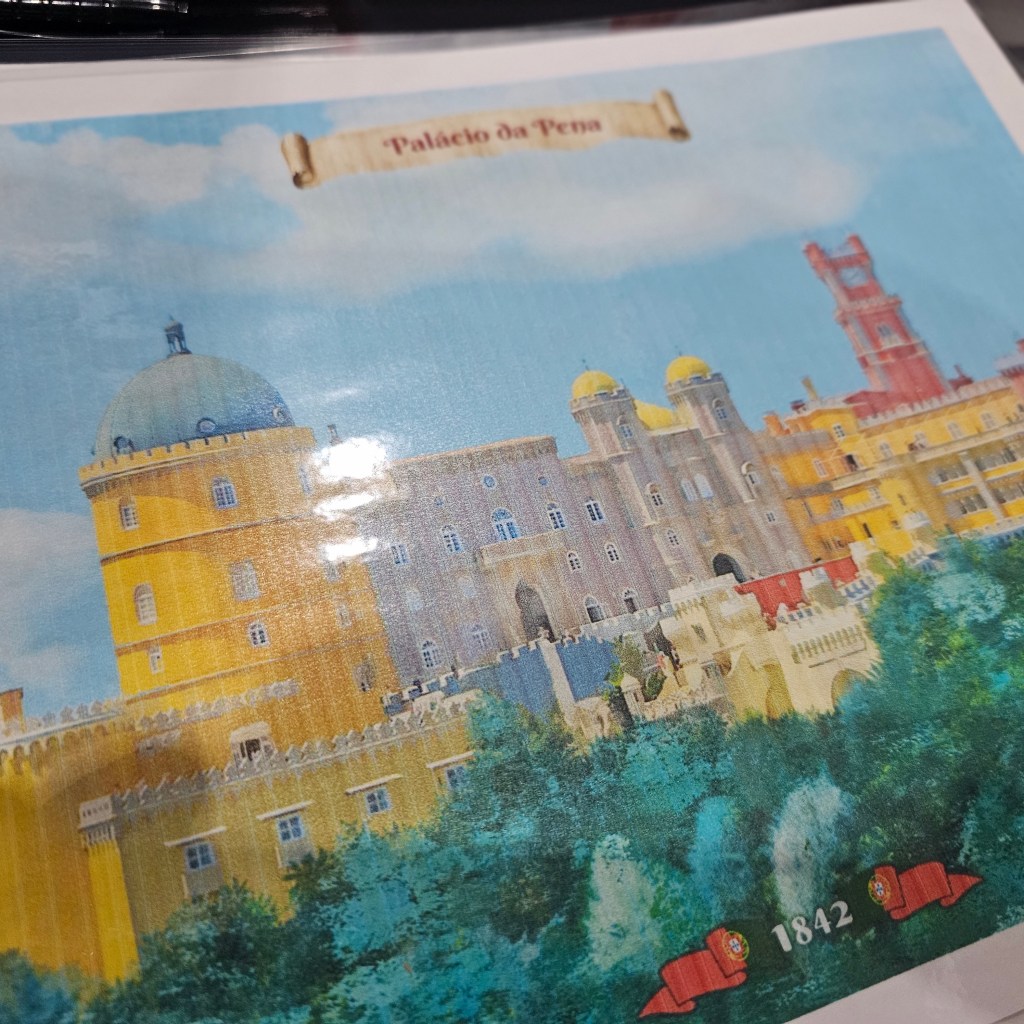
What initially caught my attention was how beautiful the maps are. All of them are actual castles, and the drawing is based on their actual layout using a top-view depiction. Each map also have a beautiful picture on the back with what the castle actually looks like, and all of them have a little snippet in the rules about their history, which I appreciate.

Speaking about the rules, they are well laid out and explained, leaving almost no issues to be had. It is indeed a simple game, but the rules do a good job encompassing all nuances of each map. Aside from the history, each map also get a little snippet of strategy.

Conclusion

The first time I read the rules, the game seemed actually a bit too simple for my taste. There aren’t a lot of restrictions on the placement, other than the obvious ones. But once I tried my first map, it left me with an important question in mind: WHY CAN’T I STOP PLAYING THIS?
It is rules light, yes, but there is a lot of planning and thought behind it. You need to see what shapes you want to use and when, what spaces you leave open and when to use your castle power. It’s a quick game, but so satisfying.
I’m so glad to get that, it is a very fun addition to my collection, one I can’t wait to have more people play and explore. Also, I’m not a great in balancing powers, but all castles do seem to be very well balanced, so kudos to Rolling Rhino

Score: 9/10

PnP Review

PnP Review : Voyages

1-100 Players

Designers: Matthew Dunstan, Rory Muldoon

Artist: Rory Muldoon

Publisher: Postmark Games

Take on the high seas with 3 dice, a pen and a sheet with Voyages. You’ll be managing the winds, taking on tasks with your crew and encountering all sorts of stuff. Does this PnP sail smoothly or does it sink?

Gameplay

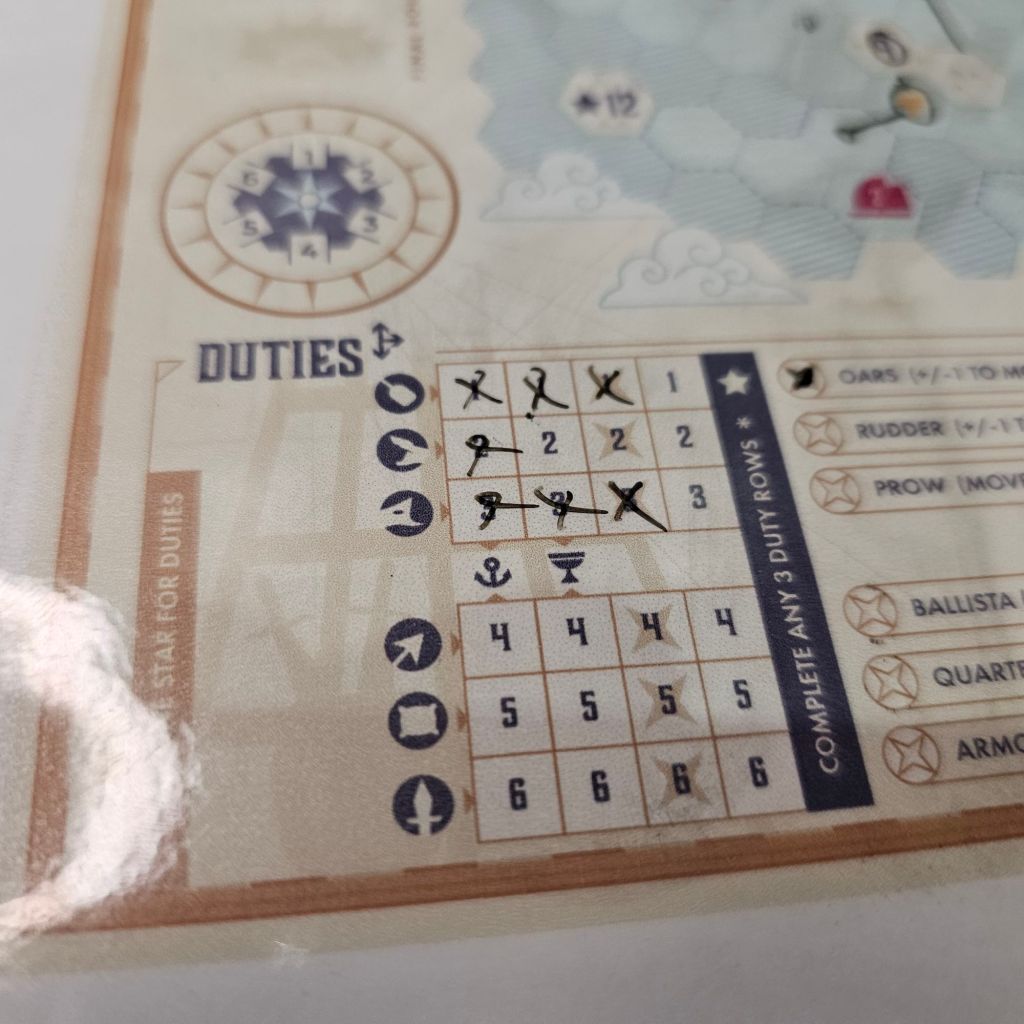
Duties

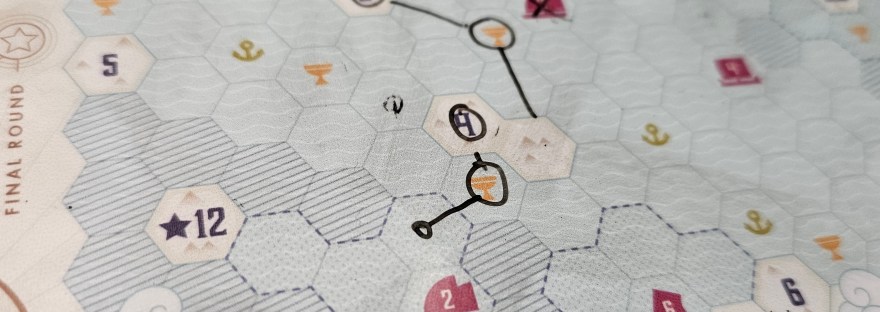
Each turn, a player rolls 3 dice, and players assign them to one of three aspects. One will dictate the direction the ship goes and one on its speed. Whenever you land on an icon exactly (or hit land), you gain the associated benefits. The final die is assigned to the duties of the ship, and it varies for each of the different Voyages available for the game, 5 at the time of this review. Accumulating certain bonuses will give you stars, which are worth points and also trigger the end of the game.

Scoring is each star you got, each region and Island visited, and various other bonuses also depending on the voyage.

Solo Gameplay

Same as Multiplayer, but stars do not trigger the end of the game, instead it’s a fixed number of turns. You have to get at least 3 stars, and then you check if you beat your own score.

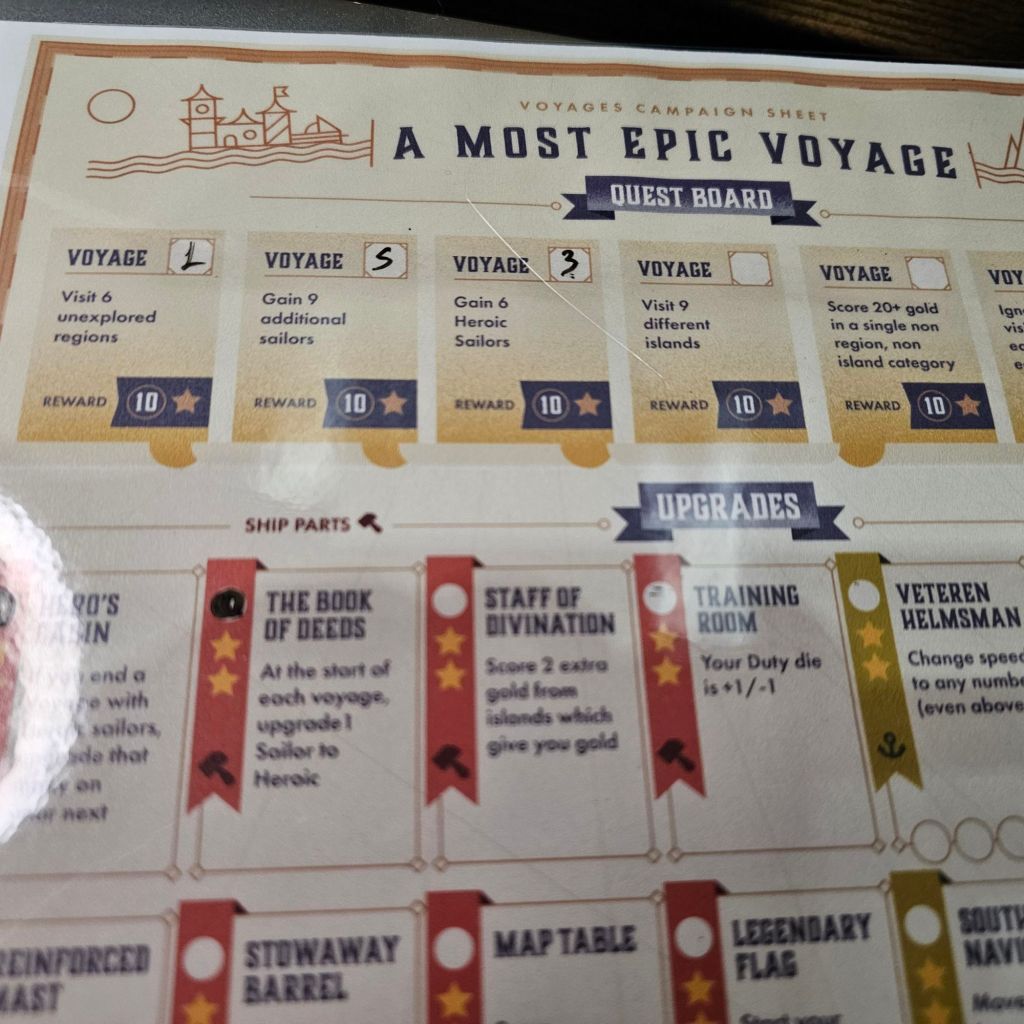
Campaign Sheet

The game also offers a solo campaign, where the better you perform at each map the more benefits you get. However, there are additional challenges to be faced.

Components

Each player needs its own sheet and writing utensil, and three shared dice. The maps are well laid and iconography is quite clear. Each map has its own set of additional rules, but all work very well within the base system of Voyage 1, while also adding its own unique forms of scoring and challenges. Some have you facing enemy ships, while others have hidden islands to be discovered.

Conclusion

Easily this became one of my most played PnPs as soon as I first got it. There are a ton of ways to accomplish your goals on each map, but they are mostly mutually exclusive, so each turn you have gruelling choices to make. And with each new map, the game gets better for the variety, though none of the maps are duds, even the first one. It’s a quick, simple, challenging and rewarding experience.

Score: 9/10

Review

Let’s Review More: Lata

1-4 Players

Designers: Rola & Costa

Artist: Marina Costa

Publisher: Pythagoras

With the second edition of Cafe, Pythagoras started its small box collection called Quinas. The second of this collection is last year’s Lata, about the production of can sardines and mackarels. Can this be a good game or is this collection just fishy?

Gameplay

Action Bidding

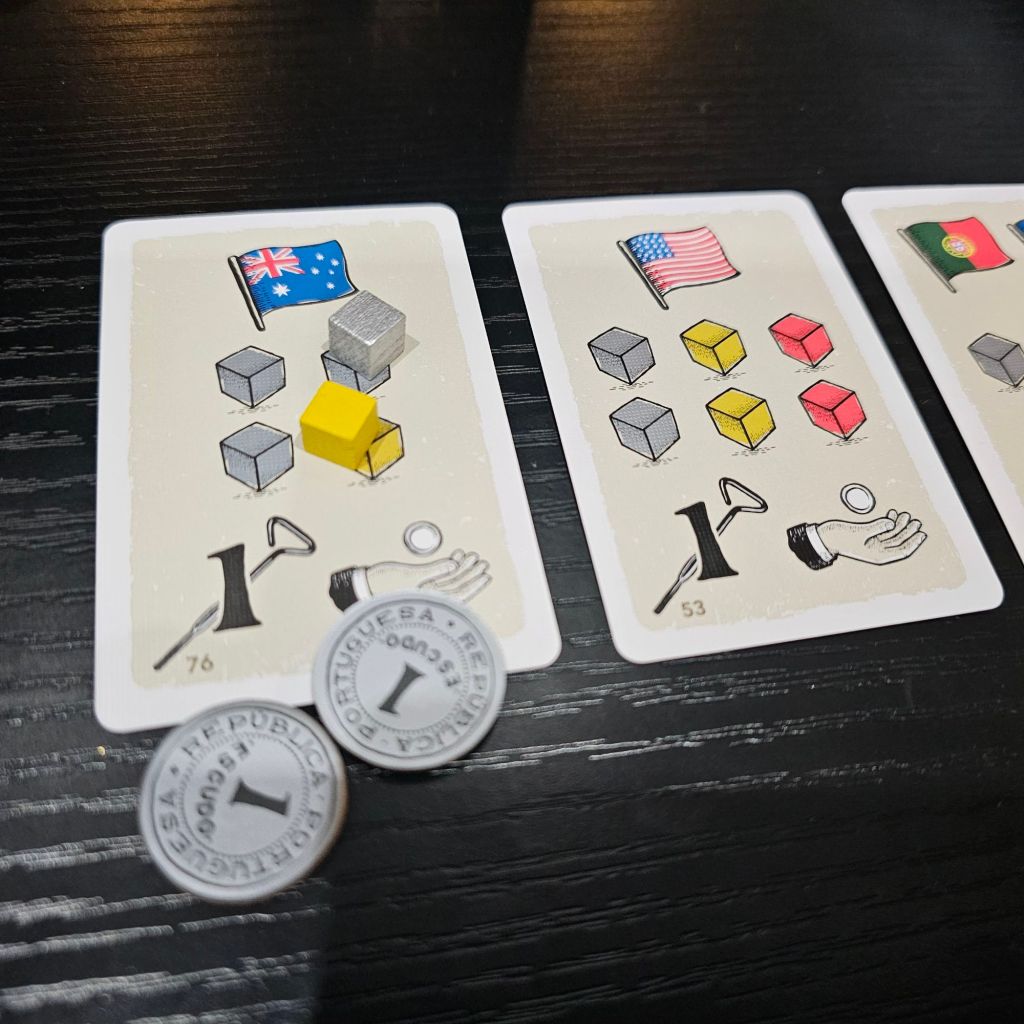
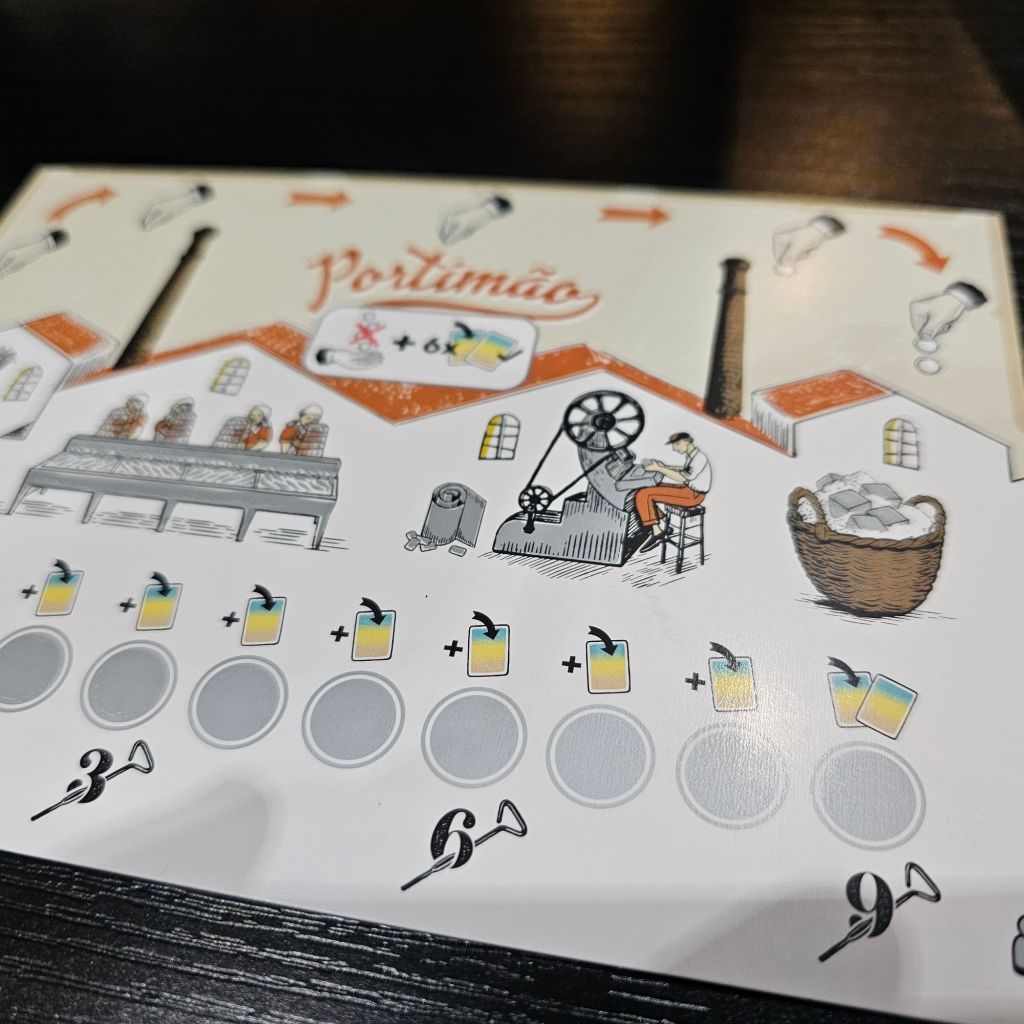
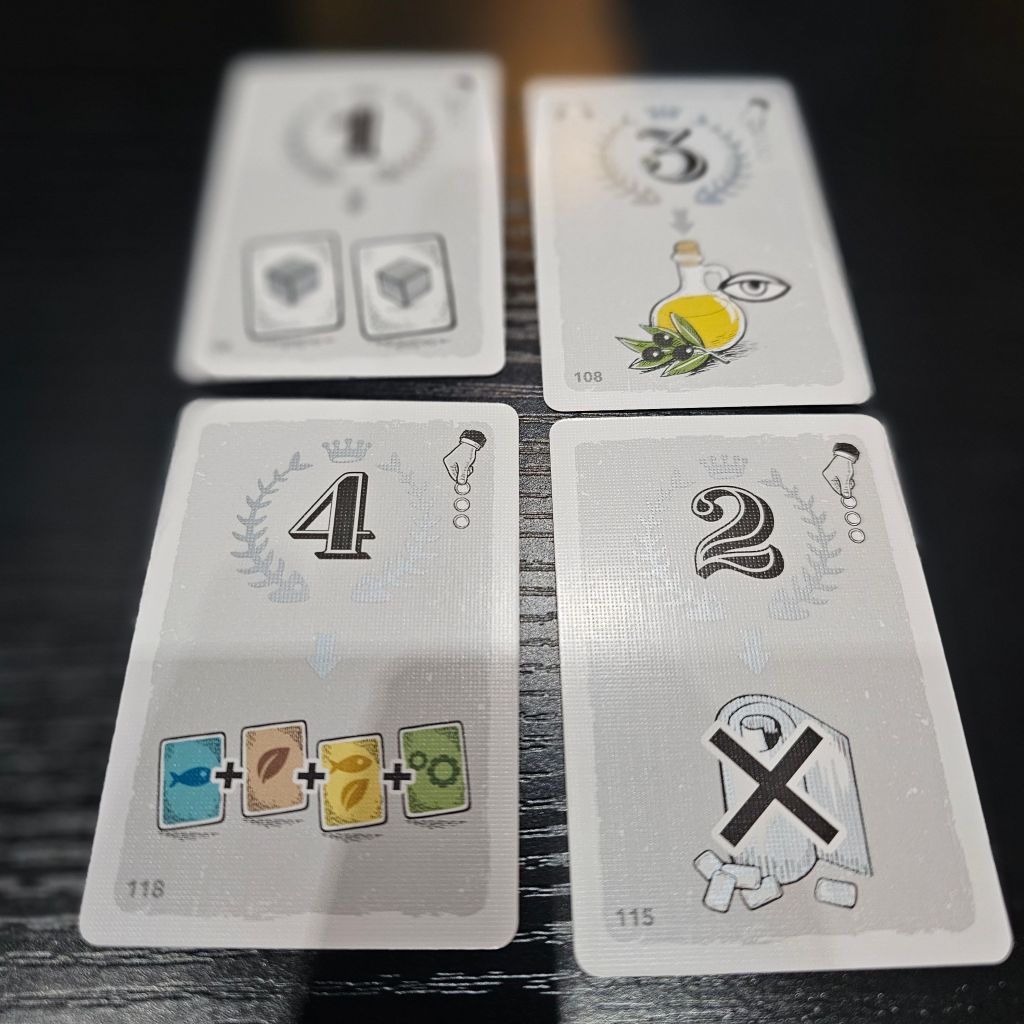
At the beginning of each of six rounds, players bid with their action points for turn order. Then, following that order, they get more cards for their factory, then spend actions to activate their production cards, spend that production to fulfill contracts for money, and to get end of game scoring.

Fulfilling contracts

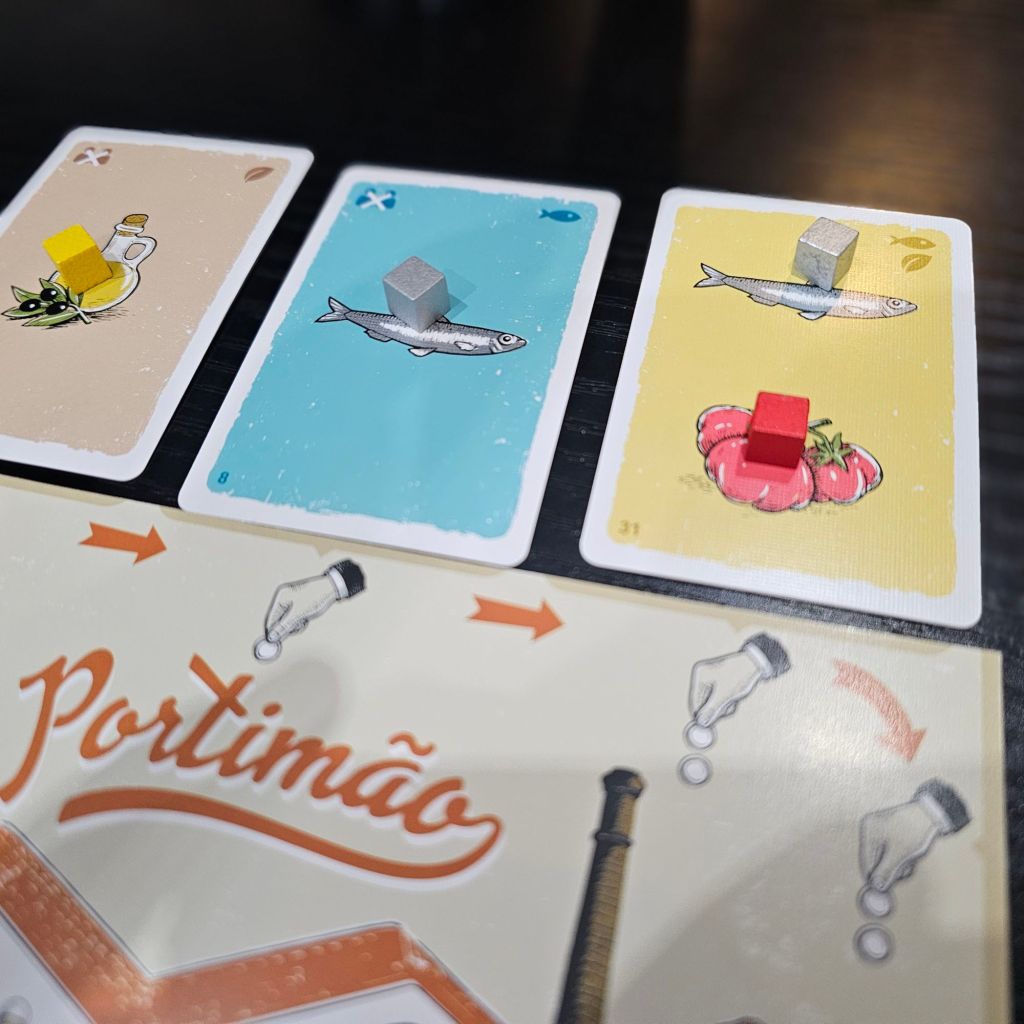
At the end of each round, the contract and end of game scoring are refilled and every production is discarded except for regular sardines.

Solo Gameplay

Solo side of the player board

The game flow is the same for solo, except or instead or the initial bid, the player spend their actions to see more production cards. Since they have to add two, and some spots cost money, the player can be forced to place unwanted cards and disrupt their engine. There is no win or lose, it’s a beat your own score type of deal.

Each of the player boards have a solo specific side with its own twists, like one starts with no money and another only have options of pairs.

Components

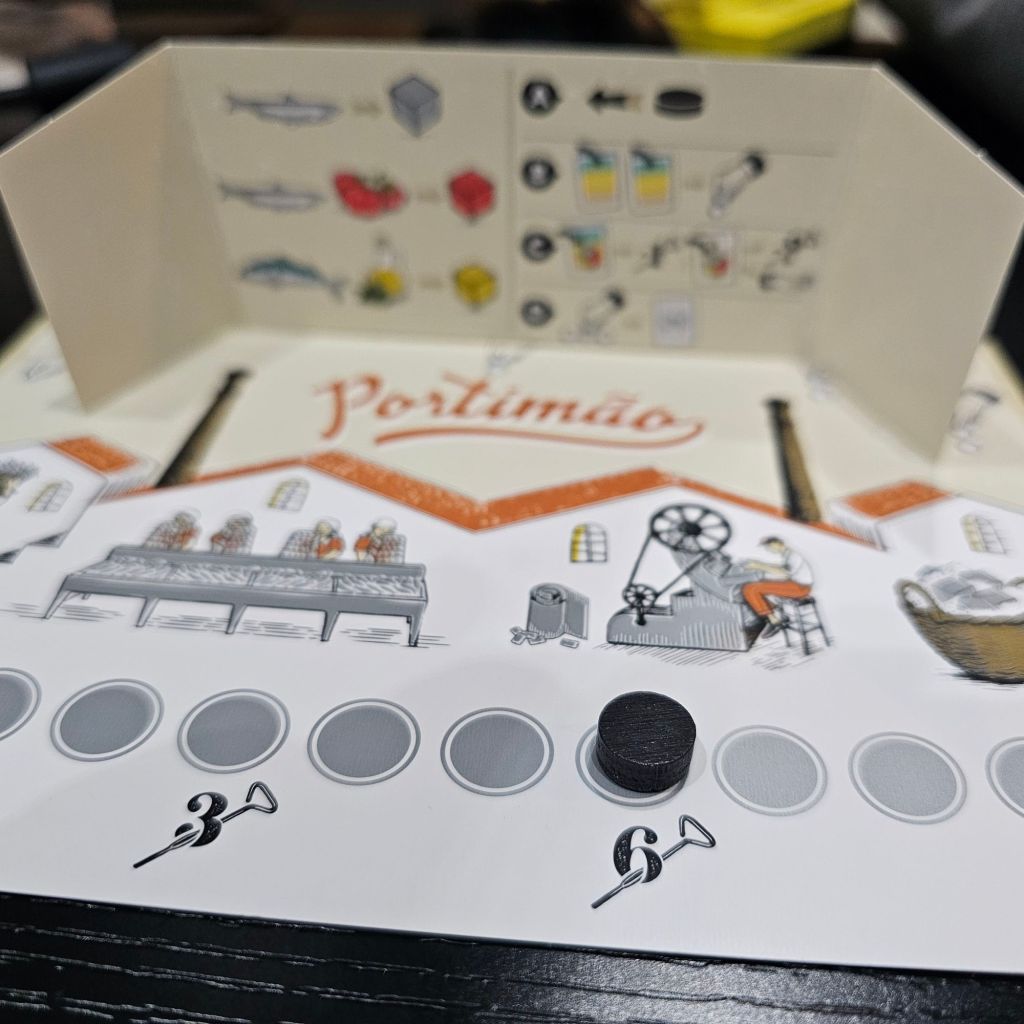
Production

As usual for Pythagoras, the components are somewhat minimalistic and very theme driven. That means that it’s not the most obvious for gameplay, but they do look good. The cards have a nice quality, and the artwork is well done. Symbology is fine, not the best, but the rulebook is clear enough that I didn’t find a lot of issues playing, even on the first time.

Conclusion

End of game scoring

I really enjoyed Cafe, their first on the collection, but I like Lata even better. It feels like a tighter and more cohesive game, while still having the high efficiency gameplay elements.

Specifically for solo, this feels more well tested and developed, which I appreciate. And the fact we have four different boards add to the variation.

Score: 8/10

PnP Review

PnP Review: Villagers of the Oak Dell

100 players
Designers: Przemysław Fornal, Michał Łopato
Artist: Roman Kucharski
Publisher: Two Accorn Games

I was drawn to Villagers of the Oak Dell because it seemed like a fairly ambitious euro in just two sheets of paper. But did it live up to the expectations?

Gameplay

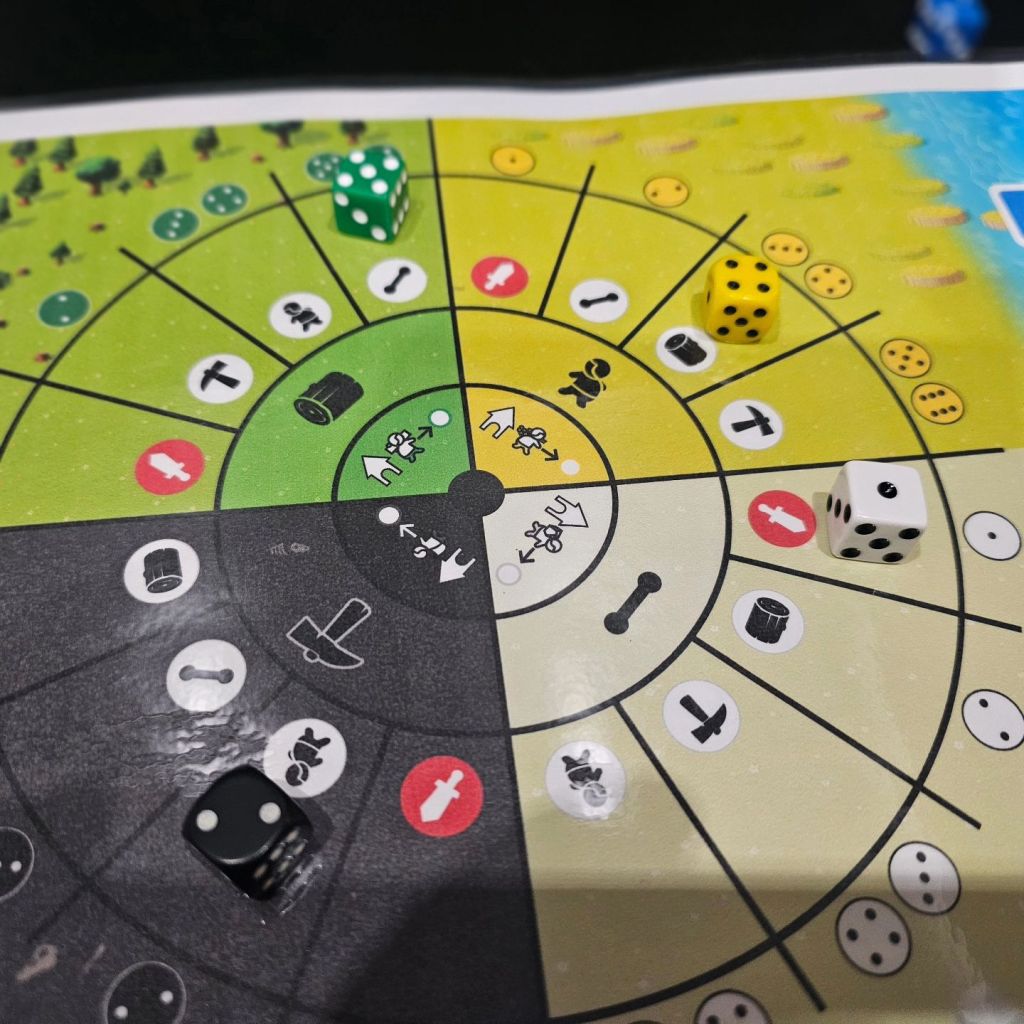
Dice wheel

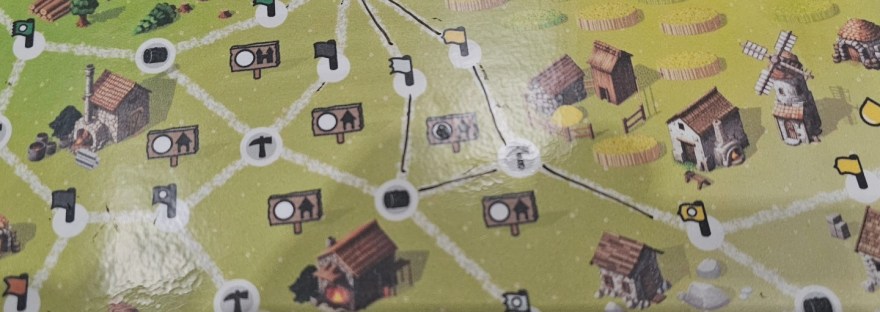
On each turn, four dice are rolled and assigned into one of each section or the wheel. All 1s are attacks, all others generate different resources. The resources are people to either go to the castle or defend the village, connections to reach resources in the village, wood to build buildings, and digs.

But for a lot of the usage of the resources generated, you can Chain into other actions. Also, at the end of each turn, the color you selected activates on the Castle, potentially generating more resources. And every so often, there is a produce round, where your buildings produce even more. Things can get crazy!

Solo Gameplay

Exactly the same, you’re just beating your own high score.

Components

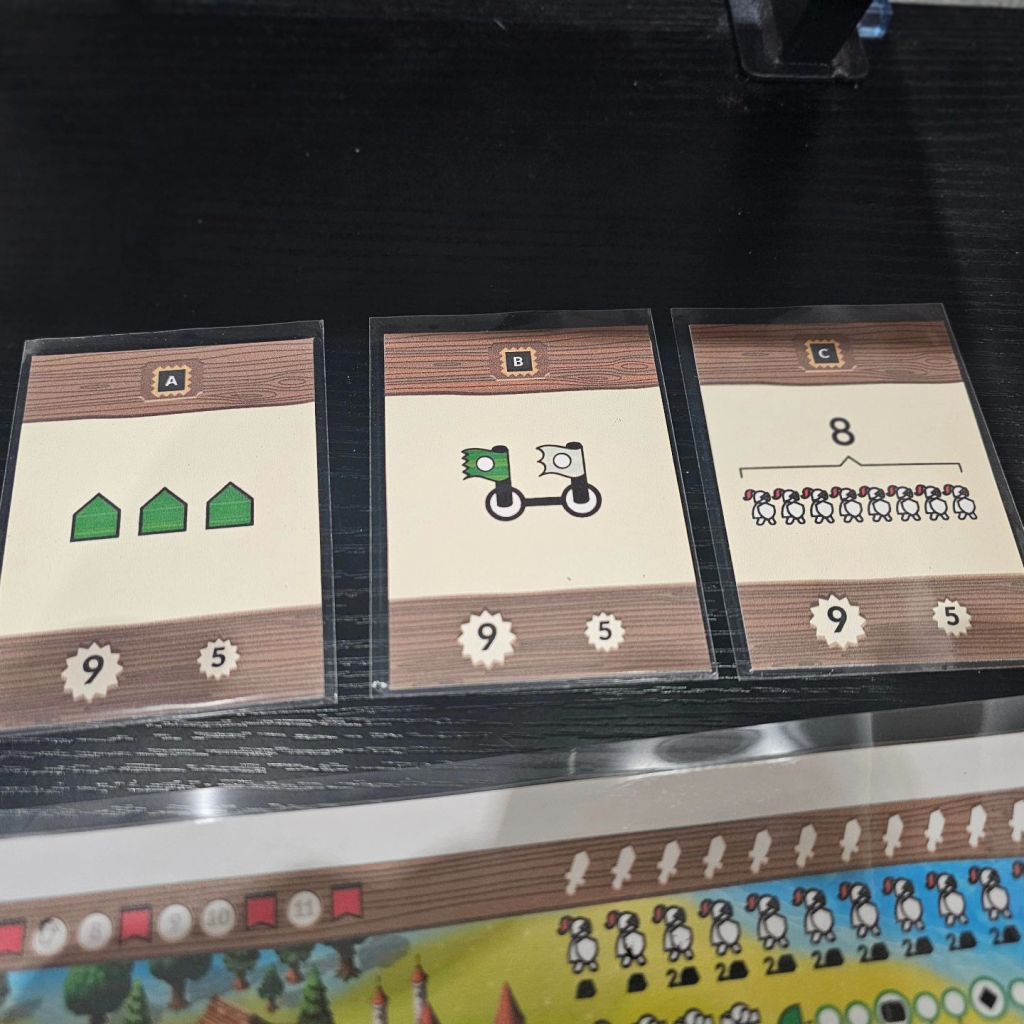
Goal Cards

To play, you need four dice, preferably in the four colors of the wheel, a village sheet and a dice wheel sheet. Additionally, there are 9 goal cards. They are also releasing season specific sheets that add in special mechanisms.

Conclusion

A little bit Hadrian’s Wall, a little bit Fleet the Dice Game, and a whole lotta crazy combo going around. Oak Dell is a very generous game, but efficiency is so rewarding here. The generosity is very tied to the planning of each resource, and how balanced you are.

The base game is already a bunch, but each new sheet brings in new challenges. Either the resources in the castle are limited, or there is flood, or even fishing.

What a little gem. Highly recommended if you like intense but quick playing Roll and writes

Score: 9 /10